From Vietnam's "30th Zodiac Fortune" to Bazi Daily Flow: How Do Heavenly Stems and Earthly Branches Affect Daily Life? A Rational Breakdown of the Cultural Logic Behind Folk Customs
The “30th zodiac fortune” featured in Vietnamese media is a common folk cultural phenomenon in Southeast Asia. It is rooted in the interaction between the daily stem-branch (Liu Ri) and the favorable and unfavorable elements of a Bazi cha
Opening Introduction
On specific dates, Vietnamese internet often features zodiac daily fortune content like “30 tháng 8 con giáp nào may mắn”. This folk phenomenon does not arise from nothing; it is rooted in the daily stem-branch system of traditional Chinese Bazi culture.
Starting from this hot topic, this article uses favorable and unfavorable elements as the core to deconstruct the logic and limitations of zodiac daily fortune, and restore how folk customs transform stem-branch symbols into life advice.
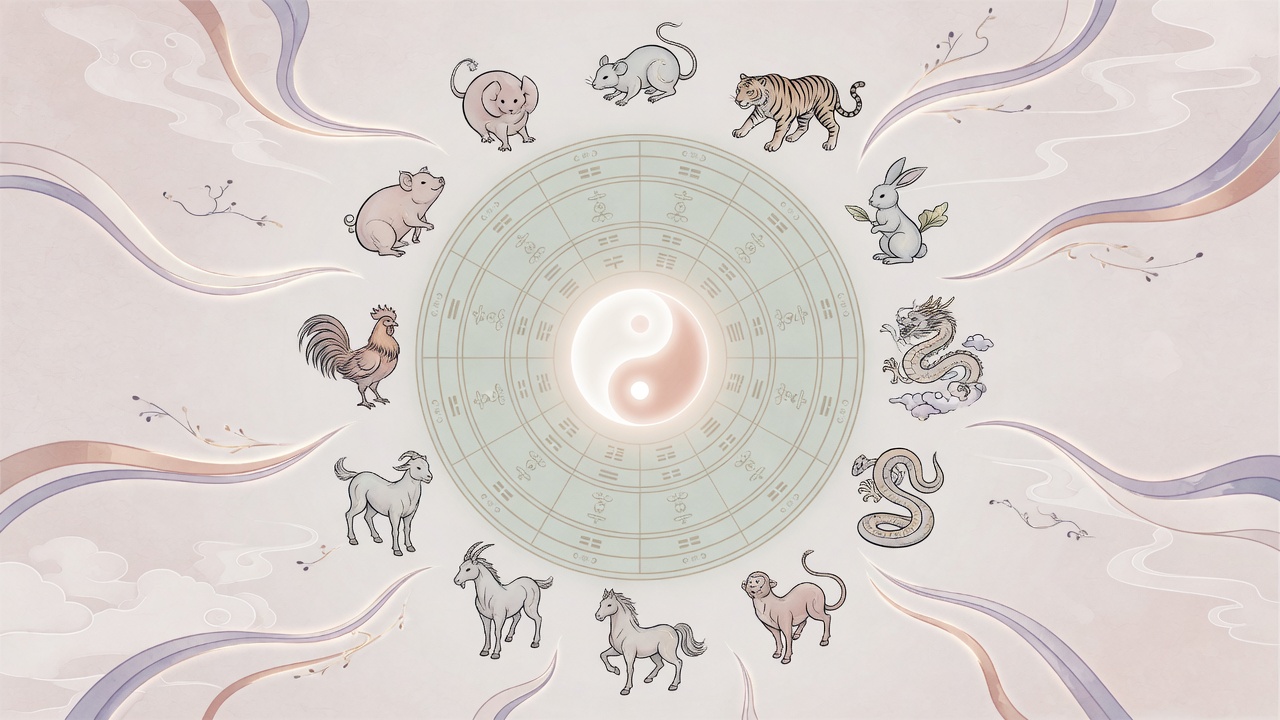
Basic Clarification: Zodiac Daily Fortune ≠ Just Looking at Your Animal Sign
Common Misconceptions
Many people think zodiac daily fortune is simply “people born in the Year of the Rat have good luck today,” which is an oversimplification of traditional destiny analysis.
- Misconception 1: The zodiac sign equals the entire Bazi chart. The zodiac is merely the Earthly Branch of the year pillar, while a Bazi chart includes year, month, day, and hour pillars. Looking only at the animal sign loses over 70% of the information.
- Misconception 2: Auspiciousness and inauspiciousness are fixed labels. The same zodiac sign on different dates does not have absolute good or bad luck; it must be judged in combination with the individual's Day Master and the favorable and unfavorable elements of the chart.
- Misconception 3: Folk advice can be directly applied. Suggestions in the media like “suitable for signing contracts” or “avoid long journeys” are rough derivations based on a single stem-branch relationship and cannot replace personalized destiny analysis.
Core Points: How the Daily Stem-Branch Affects the Bazi Chart
1. What is the Daily Stem-Branch (Liu Ri)?
Liu Ri refers to the day's stem-branch combination, composed of a Heavenly Stem and an Earthly Branch, such as Jia Zi or Yi Chou. The stem-branch calendar cycles through the sixty Jia Zi combinations, and each day carries a unique Five Element aura.
In the Bazi system, the daily stem-branch interacts with the four pillars of stem-branch derived from the individual's birth time, generating relationships such as generating, controlling, clashing, combining, punishing, and harming, which create the so-called “ups and downs” of fortune.
- Heavenly Stem: Represents the outward manifestation, indicating explicit opportunities or pressures. For example, a Jia Wood day may bring opportunities to demonstrate leadership.
- Earthly Branch: Represents the inner aspect, containing Hidden Stems (Ren Yuan), influencing emotions, interpersonal relationships, and potential changes.
- Five Element Strength: Each stem and branch carries a Wood, Fire, Earth, Metal, or Water attribute. The daily flow temporarily alters the Five Element balance of the chart.
2. How Do Folk Customs Transform Stem-Branch into Behavioral Advice?
The zodiac daily fortune in Vietnamese media typically first identifies the day's daily stem-branch, then compares it with the twelve zodiac signs (i.e., the year branch) to extract relationships such as clash, combination, punishment, and harm.
For example, if the daily Earthly Branch is “Yin,” then those born in the Year of the Monkey (Shen) form a Yin-Shen clash. Folk custom interprets this as “many changes, not suitable for making major decisions.”
If the daily branch forms a Six Combination or Three Combination with the zodiac sign, it is seen as “noble people helping, suitable for cooperation.” These simplified correspondences form the basis of daily behavioral advice.
- Clash: e.g., Zi-Wu clash, Yin-Shen clash, often interpreted as running around, conflict, and advice to avoid important matters.
- Combination: e.g., Chen-You combination, Wu-Wei combination, often seen as harmony, cooperation, and advice to socialize or sign contracts.
- Punishment: e.g., Chou-Xu punishment, often associated with gossip and disputes, with folk advice to be careful with words and actions.
- Harm: e.g., Zi-Wei harm, often indicating hidden sabotage, with advice to guard against petty people.
3. The Favorable and Unfavorable Elements of the Chart Are the True “Switch”
The biggest limitation of folk zodiac daily fortune is that it ignores the overall favorable and unfavorable elements of the personal Bazi chart. Even if the daily branch clashes with the zodiac sign, if the chart treats clash as favorable, it may actually bring breakthroughs.
Favorable Deity is the Five Element the chart needs, while Unfavorable Deity is the one to avoid. Whether the Five Element of the daily stem-branch is favorable or unfavorable directly determines whether this day is a help or a hindrance for you.
- Simulated Case: Suppose a person's Day Master is Geng Metal, weak and favoring Earth and Metal. If the daily stem-branch is Wu Shen (Earth-Metal), although it clashes with the year branch Yin Wood, because Earth and Metal are favorable, it may actually bring career progress.
- Opposite Case: If the same Geng Metal person is strong and avoids Earth and Metal, then even on a Wu Shen day without any clash or combination with the zodiac, they may feel increased pressure, yet the folk daily fortune might not hint at this at all.
- Key Point: Zodiac daily fortune can only reflect a single line between Earthly Branches, while complex interactions such as Heavenly Stem coverage, Hidden Stems in branches, and Ten Gods combinations are all filtered out.
4. The Simplification Process from Stem-Branch to Advice
In traditional date selection, references are comprehensively made to the Twelve Establishment Gods, Twenty-Eight Lunar Mansions, Peng Zu's Hundred Taboos, etc. However, for popular understanding, media daily fortune often retains only the clash and combination between the zodiac and the daily Earthly Branch.
For example, if “30 tháng 8” corresponds to a lunar calendar date with the stem-branch “Jia Shen,” Shen combines with Si and clashes with Yin. Thus, those born in the Year of the Snake are said to have good luck, while those in the Year of the Tiger are reminded to be cautious. This deductive logic is clear but crude.
- Jia Shen Day: Jia is Wood, Shen is Metal; Metal and Wood clash, inherently carrying conflicting imagery.
- Zodiac Matching: Snake (Si) because Si-Shen combine into Water, may be interpreted as “gaining noble help”; Tiger (Yin) because Yin-Shen clash, interpreted as “guard against verbal disputes.”
- Omitted Information: The Ten God attribute of the day stem Jia Wood, the favorability of Shen Metal in the personal chart, and the influence of the hour are all not considered.
Guidance on Avoiding Pitfalls: How to Rationally View Zodiac Daily Fortune
Points to Note
- Do not treat folk advice as precise prediction: Media daily fortune is a cultural entertainment product; its conclusions are based on a single Earthly Branch relationship and are far from personal real destiny analysis.
- Clash or combination does not equal absolute good or bad luck: A clash may bring change and opportunity, while a combination may lead to entanglement. The key is the chart's favorable and unfavorable elements, not superficial harmony or conflict.
- Beware of the universality of “daily dos and don’ts”: The same daily flow has completely different effects on people with different Bazi charts. Generic advice may be totally opposite.
- Do not use zodiac daily fortune to make major decisions: For investments, marriage, surgery, etc., seek professional destiny analysis combining the full Bazi chart, annual luck, and major cycles.
- Understand the cultural value of folk customs: Zodiac daily fortune is a popularized dissemination of stem-branch culture, serving as an entry point to understand traditional calendars, but should not be overly superstitious.
- Learn to observe your own energy cycle: Record your daily feelings and combine them with the daily stem-branch to gradually perceive the changes in the Five Element aura. This is more meaningful than reading zodiac fortune.
Summary and Recap
Vietnam's “30th zodiac fortune” is essentially a popular dramatization of the clash and combination relationships between the daily stem-branch and the zodiac Earthly Branch. It carries the fun of stem-branch culture but cannot replace the personalized analysis of Bazi favorable and unfavorable elements.
By rationally viewing such folk content and understanding the underlying Five Element logic and simplified limitations, we can truly draw nourishment from traditional wisdom without being trapped by superficial auspicious or inauspicious labels.