Rigidity Breaks Easily, Softness Overcomes Hardness: The Wisdom of Bijie and Guansha in Bazi through Lee Hao-Yu's Home Plate Collision
Taiwanese baseball player Lee Hao-Yu collided violently in a home plate collision and exited early, causing countless fans to worry. On the competitive field, every full-force sprint is the ultimate release of Bijie energy, while the limits of th
Introduction
In a September 2026 game, "Taiwan's Strongman" Lee Hao-Yu collided violently with the catcher in a home plate collision and left the game early due to the impact, with subsequent examinations showing significant injury. This collision brought out fans' admiration for an athlete's fighting spirit, and also raised an ancient cultural question: Where is the boundary of fierce strength?
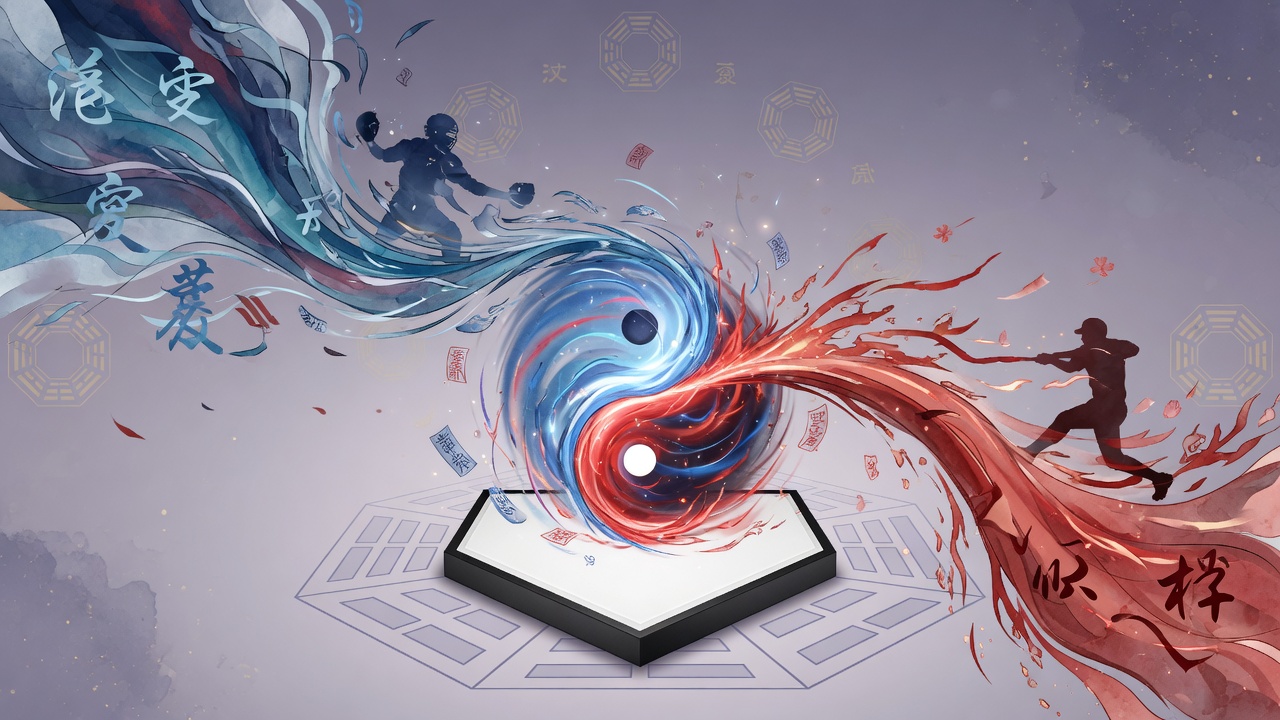
In Bazi destiny analysis, every such collision can be seen as a clash between the two energies of Bijie and Guansha. We do not intend to calculate anyone's personal chart; rather, we use this sports event to explain how traditional wisdom views hardness and softness, attack and defense, fighting and preservation on the competitive field.
Clarifying Basics
The Cognitive Boundary between Bazi and Competitive Sports
Before diving deeper, it is necessary to clarify a few common misconceptions. Bazi destiny analysis is an analytical tool for personality and energy trends, not a divination method predicting match outcomes, and it certainly cannot determine whether a particular collision would inevitably happen.
- Misconception 1: Bazi can predict when an athlete will get injured. Destiny analysis reveals energy tendencies, not specific events. Those with overly strong Bijie may be more prone to accumulating risk from overexertion, but this is by no means fatalism.
- Misconception 2: Bijie means impulsiveness and recklessness, and Guansha means pressure and disaster. Every one of the Ten Gods has two sides. Bijie also represents cooperation and physical strength, while Guansha also represents discipline and protection. The key lies in the overall configuration and balance.
- Misconception 3: Destiny analysis can replace real-world decisions. An athlete's self-protection, the coach's tactical planning, and the medical team's scientific rehabilitation are the true lines of defense for the body. Bazi culture only offers a philosophical perspective on human nature and energy.
Core Points
Bijie Star: The Primal Kinetic Energy on the Field
In the Bazi Ten Gods system, Bijie refers to stars with the same five-element nature as the Day Master, whether the same or different yin-yang polarity. They represent peers, siblings, and friends, and also symbolize physical strength, competition, and self-assertion. Athletes, especially those in sports requiring explosive power and direct confrontation, often have vigorous Bijie energy in their charts.
People with strong Bijie are naturally unwilling to admit defeat. When facing challenges, their first reaction is "I'll take it on" rather than "I'll avoid it." Lee Hao-Yu's collision at home plate was the ultimate expression of this Bijie spirit—for scoring, for the team, he was willing to use his body to force an opening.
However, the ancients had long observed that excessive Bijie without restraint is like a runaway wild horse. Its power may be great, but it tends to overlook surrounding risks. On the field, this manifests as over-reliance on head-on collisions, neglecting skillful evasion, and the body's cumulative impact may eventually trigger that invisible red line.
- Bijie represents competition: On the sports field, Bijie is that primal drive of "I want to win"—every full-force sprint, every fearless diving catch.
- The hidden worry of overly strong Bijie: When Bijie dominates the chart without sufficient Guansha to restrain it, it tends to manifest as "rigidity breaks easily"—excess strength but insufficient flexibility, like a bow drawn to the maximum, easily snapped.
- Not denying the fighting spirit: Destiny analysis never denies the value of Bijie. On the contrary, without Bijie's sharpness, competitive sports would lose their soul. What it reminds us is that fierce strength needs boundaries.
Guansha Star: The Web of Rules and the Body's Red Line
Directly opposing Bijie is Guansha. Guansha is what restrains the Day Master: the Proper Authority (Zhengguan) constrains gently, while the Seven Killings (Qisha) apply pressure intensely. In a sports context, Guansha can be understood as the opponent's defense, the rules of the game, the physical limits the body can endure, and the inner alertness to injury.
In a home plate collision, the catcher as the last line of defense is a quintessential "Guansha" role. He represents rules and obstruction, forcing the runner to make a choice: charge through or veer around? Lee Hao-Yu chose a frontal confrontation—at that moment, Bijie and Guansha collided violently.
In destiny analysis, Guansha is not entirely negative. Proper Guansha restraint can transform Bijie's bravery into disciplined aggression. An excellent athlete often has Guansha with roots in their chart; they respect tactics, know how to read the game, and understand when to hold back and when to release. This wisdom of "holding back" is exactly the key to avoiding "rigidity breaks easily."
- Guansha restrains the self: It is both pressure and protection. The Proper Authority represents self-discipline and rule awareness, keeping athletes disciplined in training and competition.
- The Seven Killings attack the body: Symbolizing powerful opponents and sudden risks. If the Seven Killings attack too strongly without resolution, the body is prone to acute impacts, like that one fatal collision in the game.
- Guansha controls Bijie: Bijie's impulsiveness needs Guansha's coolness to balance it. People with effective Guansha in their charts often make safer decisions at critical moments, such as choosing to slide rather than collide head-on.
Harmonizing Hardness and Softness: From "Softness Overcomes Hardness" to Longevity in Sports
Traditional Chinese culture has always revered Yin-Yang balance. Laozi said, "The soft and weak are companions of life; the hard and strong are companions of death." This does not negate strength, but emphasizes the survival wisdom of blending hardness and softness. In Bazi destiny analysis, this balance is achieved through the generating and restraining cycles of the Five Elements.
When Bijie is overly strong, besides using Guansha to directly restrain it, one can also use Shishang (Output) to vent and express it, transforming excess physical energy into technique and creativity; or use Yinxing (Resource) to nourish the body, enhancing endurance and recovery, supporting rigid output in a flexible way. These configurations form a "buffer zone" in the chart.
Returning to the baseball field, a home plate collision is not the only solution. Skilled runners will observe the catcher's positioning and use slides, detours, and other techniques to score with minimal physical cost. This is exactly the "softness overcomes hardness" in destiny analysis—not refusing to fight, but fighting smartly and sustainably. Lee Hao-Yu's fierce collision is moving, yet from the perspective of extending an athletic career, the measure between hardness and softness may be a lifelong lesson for every athlete.
- Shishang vents and expresses: Transform Bijie's brute force into flexible tactics, such as clever base stealing and precise hitting placement, replacing head-on collisions with technique.
- Yinxing transforms Sha: The Resource star can defuse the ferocity of the Seven Killings, just as athletes enhance their body's stress resistance through scientific training and adequate recovery, making Guansha's restraint less lethal.
- Flow of the Five Elements: The highest state in destiny analysis is circulation. Bijie generates Shishang, Shishang generates Wealth, Wealth generates Official... When energy circulates, hardness and softness are no longer opposed but nourish each other. This is the systemic thinking behind the ancient "softness overcomes hardness."
- Lessons for longevity in sports: Many legendary athletes have extremely long careers. Beyond talent, they understand how to incorporate flexible wisdom into their ferocity. Not every play requires a full-force collision; sometimes, stepping back is for going further.
Pitfall Avoidance Guide
Viewing the Combination of Destiny Analysis and Sports Rationally
- Never use Bazi to predict specific injuries: Destiny analysis reveals energy tendencies, not precise events. Any claim attributing a collision directly to "unfavorable annual luck" ignores countless real-world variables and is neither scientific nor responsible.
- Don't draw conclusions based on just one or two Ten Gods: Strong Bijie doesn't necessarily mean prone to injury, nor does heavy Guansha inevitably mean overwhelming pressure. One must consider the entire chart structure, the flow of major luck cycles, and Five Element preferences comprehensively; taking things out of context is highly misleading.
- Destiny analysis is cultural philosophy, not a substitute for medical care: After an injury, trust professional medical diagnosis and rehabilitation plans. Feng Shui adjustments and Five Element supplementation can only serve as auxiliary psychological comfort and must never replace real treatment.
- Respect athletes' privacy: Lee Hao-Yu's birth time has not been publicly disclosed, so any speculation about his Bazi chart is groundless. This article only uses the trending topic to explain the Ten Gods concept and never involves specific charts; readers should also be wary of similar "destiny decoding" online.
- The wisdom of balance lies in daily practice: Instead of seeking explanations from destiny analysis after the fact, incorporate flexibility training, recovery management, and psychological development into daily practice. These are the real "Guansha controlling Bijie" in modern competitive sports.
Summary and Review
Lee Hao-Yu's fierce collision is a microcosm of the ultimate fighting spirit in competitive sports, and inadvertently reflects the eternal struggle between Bijie and Guansha in Bazi culture. The ancients said, "The rigid and strong break easily," not to teach retreat, but to remind us that true strength lies in knowing when to be hard and when to be soft.
May every athlete, while releasing the fire of Bijie, also possess the clarity of Guansha and the buffer of Yinxing. Softness overcoming hardness is not about not fighting, but about fighting longer and further.