From WEST. Shigeoka Daiki to Bazi Fate Analysis: Character Foundation, Life Choices, and Ten-Year Cycles
In the autumn of 2026, as WEST. celebrated its 10th anniversary, member Shigeoka Daiki sparked fan debate with an “after-the-fact marriage report” and candid remarks. Leaving entertainment façades aside, the traditional Bazi (Four Pillars
Introduction
In September 2026, the well-known Japanese idol group WEST. marked its 10th anniversary, while central member Shigeoka Daiki faced emotional distancing from some fans due to an “after-the-fact marriage report” and public remarks described as “unemotional true feelings” (not sentimental honest words).
Behind the clamor of entertainment news, traditional Chinese Bazi culture offers a rational framework: a person’s character tendencies, major life decisions, and time cycles often resonate deeply. Using this hot topic as an opening, this article spreads general knowledge of Ten God dispositions, Major Luck cycles, and the interplay of timing and circumstances from Bazi studies, without making any auspicious or inauspicious judgments about real individuals or events.
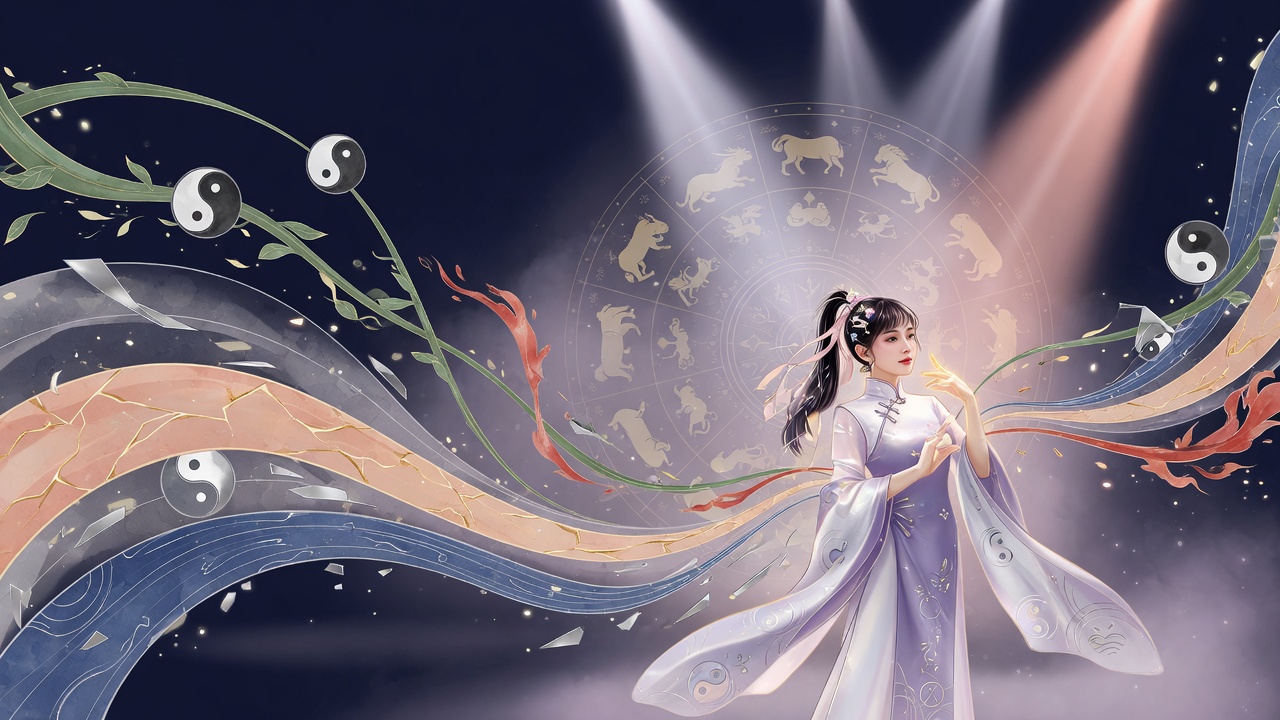
Clarifying Bazi Basics
Common Misconceptions
- Misconception 1: Bazi is a fatalistic prophecy. Bazi does not predestine everything; it is more like a blueprint revealing an individual’s innate Five Element energy tendencies, with environment, education, and personal effort being equally crucial.
- Misconception 2: Bazi can precisely predict events. Traditional Bazi analysis examines the strengths and weaknesses of the Five Elements, the combinations of the Ten Gods, and the trend of Major Luck cycles, showing only a range of possibilities, not allowing precise locking of a marriage date or specific remarks.
- Misconception 3: Japan lacks a similar culture. Japan has embraced Yin-Yang and Five Element thought since the Asuka period, later developing Four Pillars Divination (Shichū Suimei), which shares the same roots and principles as Bazi and is still referenced by the public and entertainment agencies.
- Misconception 4: It is harmless to calculate a public figure's Bazi. A complete birth time is private information; unauthorized charting and dissemination are inappropriate. All descriptions here refer only to cultural imagery and general principles, never singling out any real individual.
Ethical Boundaries of Public Discussion
We cannot know Shigeoka Daiki’s specific birth time and have no intention of fabricating a natal chart. All the following fate-related descriptions are based on universal personality models and cyclical patterns from traditional culture, intended to provide a cultural lens for observing life, not to make definitive conclusions about any individual.
Character and Life Cycles from a Bazi Perspective
1. The Disposition of the Ten Gods: The Underlying Character Behind Public Expression
A Bazi natal chart, through the arrangement of Heavenly Stems and Earthly Branches, evolves ten types of relationship symbols, known as the Ten Gods – including Direct Officer, Seven Killings, Direct Resource, Indirect Resource, Eating God, Hurting Officer, Friend, and Rob Wealth. Each Ten God maps to typical psychological traits and behavioral tendencies.
For instance, the Eating God and Hurting Officer represent a person’s expression of talent and emotional style. Eating God is gentle and sentimental, while Hurting Officer is sharp and straightforward, disliking pretence. Friend and Rob Wealth relate to self-awareness and peer competition, often displaying a direct, uncompromising personality.
Shigeoka’s “unemotional honest words” during the 10th anniversary, if viewed through the Bazi framework, could be understood as a manifestation of a Hurting Officer protruding to the Heavenly Stem or strong Friend/Rob Wealth. Such individuals tend to dislike creating an artificially emotional atmosphere and are more inclined to speak their true thoughts, even if that may cause friction.
Of course, character is not determined by a single Ten God; it also depends on favorable and unfavorable elements and their combinations. The final image a person presents in public is the result of long-term adjustment between innate character and acquired social roles. In many successful artists’ charts, the Direct Resource and Direct Officer play a moderating role, helping them balance directness and tact.
It must be noted that without a specific Bazi, we cannot determine Shigeoka’s chart composition. Here we only use the topic to discuss the universal logic of personality classification in Bazi culture.
- Eating God: gentle talent expression, words often carrying emotion and consideration.
- Hurting Officer: sharp creativity and critical spirit, outspoken, sometimes perceived as cold.
- Friend/Rob Wealth: strong self-awareness, less compromising in actions, valuing equality.
- Direct Officer: sense of responsibility and rule consciousness, dignified and steady public image.
- Direct Resource: introverted, mindful of the bigger picture, adept at absorbing tradition and knowledge.
- Seven Killings: decisive and bold, but potentially impulsive and controversy-provoking.
2. The Cycling of Major Luck Cycles: Shifts in Mentality and Decision Windows Every Ten Years
The core of dynamic Bazi analysis is the Major Luck cycle. It changes in ten-year units, starting from the month pillar, with forward order for yang male and yin female, reverse order for yin male and yang female, and each person’s starting age differs. Entering a new Major Luck cycle alters the dominant Five Element energy, and a person’s inner focus, behavior patterns, and even life decisions may undergo significant shifts.
WEST. reached its 10th anniversary, meaning the members have collectively traversed one Major Luck cycle. During these ten years, Shigeoka grew from a teenager to a mature artist. According to Major Luck patterns, he likely experienced one or even two alternations of Major Luck cycles during this period, and such transitions often trigger major life decisions such as marriage or career turning points.
From a fate analysis perspective, when the Major Luck enters a prosperous Wealth Star phase, a male (for whom Wealth represents the wife star) will more strongly desire emotional stability and family belonging, enhancing the inclination to choose a partner and marry. If the annual luck also meets Red Luan or Heavenly Happiness peach blossom stars, or the spouse palace is activated, it can easily lead to a marriage announcement. However, the specific timing still depends on the person’s subjective will, environmental pressure, and PR strategy.
The so-called “after-the-fact marriage report” may reflect that the artist was in a Officer Star or Wealth Star luck period, eager to establish a responsible relationship, yet due to his straightforward personality and insufficient anticipation of fan reactions, he adopted a “shoot first, report later” approach. In terms of fate analysis, this is a decision resulting from the combined influence of innate character and Major Luck drive, rather than any single factor.
The shift of a ten-year Major Luck cycle often comes with psychological “reckoning” and “rebooting.” At the 10th anniversary, the member might be in the transition zone between old and new cycles, prone to the impulse to review the past and reposition oneself, leaning toward candor rather than packaging. This creates a temperature difference with fans’ expectations of “group love,” which is understandable.
- Ten-year Major Luck cycle: the basic unit of dynamic Bazi analysis, determining the life theme of a phase.
- Principle of arranging Major Luck: starting from the month pillar, yang year male and yin year female move forward; yin year male and yang year female move backward.
- Marriage/romance timing indicators in fate analysis: the Wealth Star (wife star for males) or Officer Star (husband star for females) being activated by Major Luck or annual luck; or the spouse palace forming combinations, meetings, or clashes.
- Annual luck triggering: Major Luck is the background, annual luck is the trigger. Key events often occur in years when annual luck forms special combinations with the natal chart and Major Luck.
- Subjective initiative: Fate analysis indicates a trend interval, but exactly which year to announce and how to announce are decided by the person based on real-world factors.
3. Resonance of Timing and Circumstances: The Interweaving of a Group's 10th Anniversary and Individual Fortune
Bazi culture not only concerns personal destiny but also emphasizes the interaction of Heaven, Earth, and Human. An individual's fortune can resonate or clash with their group and the trends of the era. WEST., as a group, has its own “group Bazi” – which can be determined from the founding date to observe the fluctuations of its Resource Star (reputation), Wealth Star (income), and Eating God/Hurting Officer (creativity and fan affinity).
The 10th anniversary should be a time when the group’s Resource Star shines – accumulating reputation and receiving respect. However, if an individual member’s personal Major Luck enters a phase of Wealth destroying Resource or Eating/Hurting Officer controlling Officer, they might prioritize personal emotions or true expression, downplaying collective image maintenance. This difference in inner drive will manifest in public words and actions.
Shigeoka’s “unsentimental” remark, viewed in the framework of group and individual fate interaction, can be seen as an outburst of Eating God/Hurting Officer energy. Eating/Hurting Officer represents breaking norms and speaking “inappropriate” truths. When personal Eating/Hurting Officer energy clashes with group Resource energy, we get the scene that fans found “not emotional enough.”
Furthermore, the fan community itself can be abstracted as a Five Element force – typically akin to the group’s Resource Star (support, nourishment) or Friend (growing together). When an artist enters an Eating/Hurting Officer phase, excessive Eating/Hurting Officer will overcome and control the Resource Star, presenting the image of “words and actions impacting supporters.” This is not a curse of fate but a cultural metaphor for energy interaction.
Bazi emphasizes the dynamic balance of generating, overcoming, controlling, and transforming. A public opinion storm is essentially a temporary imbalance of multiple Five Element forces. Understanding this can transcend simple right-or-wrong judgments and offer a broader perspective on the complex karmic gatherings and separations between idols, groups, and fans.
- Resonance of timing and circumstances: personal Major Luck echoes or clashes with group cycles and era trends.
- Group Bazi: erected from the debut date or formation date, used to observe its developmental rhythm.
- Combinations and clashes: when a personal chart, Major Luck, annual luck, and group fortune form combinations, clashes, meetings, or harmonies, public changes or conflicts often arise.
- Five Element metaphor: fans can be likened to the Resource Star (support), and an artist’s excessive Eating God/Hurting Officer can “destroy the resource,” causing a loss of support – a traditional cultural model, not actual mechanics.
- Artist's choice: whether to align with the group’s Resource Star or follow personal Eating/Hurting Officer has no absolute right or wrong; it depends on the life phase and value priorities.
Guidelines to Avoid Pitfalls: Five Reminders for Rational Application of Fate Analysis
How to View Bazi and Public Events
- Don’t label: Bazi character analysis provides macroscopic tendencies and must never serve as an absolute standard for judging character or behavior. Shigeoka’s “honest words” do not necessarily correspond to a single Ten God; every person is a complex whole.
- Don’t ignore reality: Real factors such as artist contracts, PR strategies, and the fan economy are far more explanatory than fate analysis symbols. Traditional culture is best used as an auxiliary perspective, not a substitute for factual analysis.
- Don’t chart and judge lightly by yourself: Professional Bazi analysis requires a complete birth time and profound knowledge. Laypeople who chart with online tools and hastily draw auspicious or inauspicious conclusions can easily cause misunderstanding or anxiety.
- Don’t fatalize cycles: A Major Luck shift every ten years is a natural pattern, but the initiative remains in one’s hands. Changing one’s mindset, adjusting the environment, and proactive communication can all improve circumstances under the concept of balancing the Five Elements.
- Respect privacy boundaries: Public figures’ birth information is protected; publicly charting and disseminating it is inappropriate. All descriptions in this article refer only to cultural imagery and general principles, absolutely not targeting any individual.
Summary and Reflection
From the aftershocks sparked by Shigeoka Daiki, we glimpse a traditional cultural model where one’s character expression intertwines with life cycles. Bazi fate analysis is not obscure fatalism, but an Eastern systemic way of observing the harmony of Heaven’s timing, Earth’s advantage, and Human’s unity. The 10th anniversary, the marriage announcement, and the “unsentimental” remarks – these apparently isolated choices reveal deeper patterns within the framework of Ten God dispositions, Major Luck cycling, and the resonance of timing and circumstances.
Ultimately, understanding fate analysis is about better comprehending human nature and the vicissitudes of life, not predicting the auspiciousness of events. May readers, beyond the entertainment news, gain a calm wisdom and foster a bit more respect and curiosity for the symphony of traditional culture and modern life.