Singapore’s Rainy Season Lessons: The Art of Balancing the Water Element in Bazi and Everyday Life
On the evening of August 29, 2026, Singaporeans are once again glued to the KLST weather forecast. The predicted showers and high humidity are a routine refrain in this equatorial island state. Yet, shifting the lens back to tradition, Bazi metap
Opening Guide
On the evening of August 29, 2026, the KLST weather forecast once again captured Singapore’s attention. The predicted showers and high humidity are daily footnotes of life on this equatorial island.
Yet, peering back into tradition, Bazi never saw weather as mere external information. It is a mirror reflecting the resonance between the body’s small cosmos and the grand environment of heaven and earth—this is the philosophy of climate adjustment (Tiao Hou).
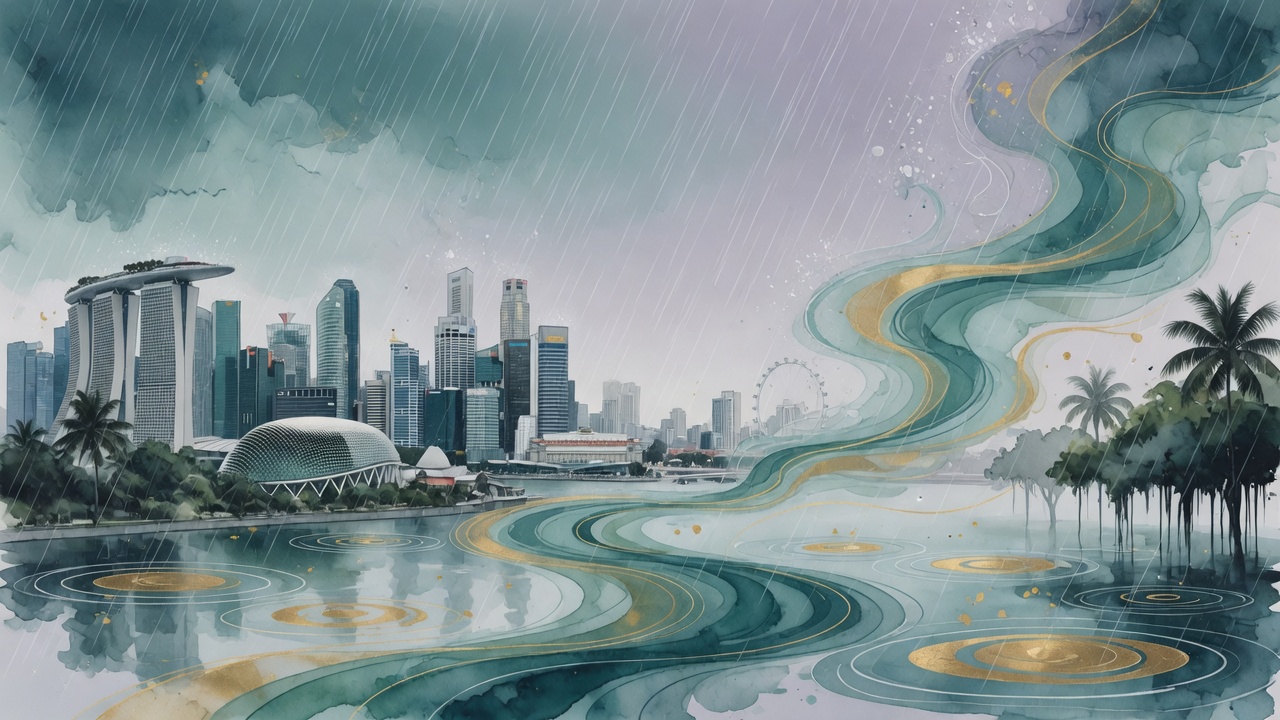
Basic Clarifications: How Does Bazi View Weather?
Common Misconceptions
Many mistakenly believe Bazi is only for personal destiny charts or equate it with fortune-telling. In reality, Bazi is fundamentally a system for categorizing the energy fields of time; it is first and foremost a symbolic system for observing natural rhythms.
- Myth 1: Bazi directly predicts today’s rainfall. Wrong. Bazi does not replace meteorological science; it analyzes macro-period trends of cold, warmth, dryness, and dampness, not short-term precipitation probabilities.
- Myth 2: Living in a water-rich area means everyone needs to replenish water. Wrong. Singapore’s external environment is abundant in water, but individual constitutions vary; the focus of climate adjustment is balancing the contrast between internal and external conditions, not blanket supplementation.
- Myth 3: Climate adjustment is metaphysical fantasy. Wrong. It is the ancients’ accumulated experience in modeling natural regulation—just like layering clothes when cold or drinking cool fluids when hot—only this logic is systematized through the generation and overcoming of the Five Elements.
Core Insights: Singapore’s ‘Water’ Environment and Climate Adjustment Wisdom
1. Regional Five Elements: The Inherent Pattern of Equatorial ‘Water’ Abundance
Situated on the equator and surrounded by sea, Singapore is constantly shaped by monsoons and rainfall. In Bazi’s regional classification, this is typically a water land—the images of Ren and Gui water encompass oceans, clouds, rain, and humidity.
As the classic *Drip of Heavenly Essence* states: ‘The qi of the Five Elements varies in partiality and completeness.’ The environment here is saturated with water qi, meaning those who live here, regardless of their natal chart, are enmeshed in an external field of high water energy.
This not only relates to physical moisture but also influences the ascending and descending of the body’s qi dynamic. An excess of water dampness easily ensnares the spleen’s yang, creating a constitutional tendency where external dampness triggers internal dampness—this is the foundational backdrop for wellness in Singapore.
- Five Element Positioning: Singapore is a land vigorous in water, yet mixed with the summer heat of fire, forming a dynamic pattern where Water and Fire interact yet frequently fall out of balance.
- Body Mapping: Water governs the kidneys, bones, and fluid metabolism. When external water overflows, the body’s burden to expel dampness increases, easily leading to heaviness, poor appetite, or skin issues.
- Historical Anchor: Ancient seafarers who landed here often suffered from ‘miasmic diseases’, which were extreme manifestations of bodily water imbalance under high heat and humidity. Earlier generations handled this with methods to dry dampness.
2. The Core of Climate Adjustment: The Art of Using ‘Earth’ to Control Water and ‘Fire’ to Warm the Chart
Facing a water-dominant environment, the first principle in Bazi climate adjustment is ‘controlling water for utility’. It is not about eliminating water, but rather establishing a dynamic balance through other elemental agents, allowing excessive energy to flow smoothly.
In the Five Element cycle, earth can overcome water, and fire can warm the chart and generate earth. Hence, Singapore’s climate adjustment direction naturally leans towards the intervention of dry earth and warm fire, which directly shaped early settlers’ life decisions.
The Qing Dynasty Bazi masterpiece *Qiong Tong Bao Jian* stresses: ‘When water is abundant, earth must be used; damp earth will instead darken fire and harm the body.’ This emphasizes the critical distinction between dry and damp earth, especially in diet and environment.
- The Merit of Dry Earth: Like spreading dry soil over a marsh, Wei and Xu dry earth can absorb water and consolidate the foundation, symbolizing how solid, desiccating media neutralize water dampness.
- The Need for Warm Fire: Bing and Wu solar fire can steam away dampness and disperse gloom, echoing a life philosophy of moderate sun exposure, warm foods, and bright surroundings.
- Balance, Not Antagonism: Though water abounds in Singapore, it is precisely this that nourishes its lush greenery. Climate adjustment does not defy the larger weather patterns; it builds a boat amid floodwaters, aligning with and regulating the current.
3. Ancient Wisdom in Modern Life: Climate Adjustment Practices in Singapore
The ancients’ wisdom of observing weather and geography has long merged into everyday Singaporean life, though not often labeled in Bazi terms. From traditional cuisine to architectural style, traces of climate adjustment logic are everywhere.
Using today’s weather forecast as a cue, when KLST warns of an impending downpour, we can borrow this mindset—not waiting for bodily discomfort before adjusting, but proactively aligning with environmental energy to build balance beforehand.
Below, we explore three dimensions—clothing, diet, and dwelling—to decode how the Bazi water element forms the core, transforming climate adjustment concepts into a rational life aesthetic, rather than mystical old wives’ wisdom.
- Dietary Climate Adjustment: Singapore’s beloved Bak Kut Teh, Laksa, and curries all employ pungent, warming spices like pepper, cinnamon, and turmeric. This uses fire and dry earth energies to neutralize external water dampness and warm the spleen and stomach.
- Clothing Choices: During the rainy season, avoid staying in wet clothes close to the skin. Opt for breathable, quick-dry natural fibers to reduce persistent external water assault on the body surface and maintain skin respiration—aligning with the ‘Water does not saturate Metal’ logic.
- Dwelling Wisdom: Traditional shophouses feature high ceilings, louvered windows, and internal courtyards designed to channel ventilation and invite sunlight—using fire and flowing air to dispel stagnant indoor water dampness. Modern dehumidifiers and air-conditioners’ dry mode are their contemporary heirs.
Avoidance Guide: Boundaries and Common Obsessions in Climate Adjustment
Points to Note
While climate adjustment has sound reasoning, both excess and deficiency breed harm. Listed below are boundaries to observe in actual practice, to avoid turning a wellness aesthetic into rigid dogma.
- Avoid Overdoing Dry-Heat: Singapore already struggles with summer heat; excessive consumption of pungent-hot foods can deplete yin fluids, causing mouth ulcers or constipation—the ‘Fire flaring and Earth parched’ syndrome. We seek to adjust damp water, not harm normal bodily fluids.
- Distinguish Personal Cold-Heat Patterns: Bazi climate adjustment places utmost importance on individual differences. Someone whose chart is already fire-strong may actually need to replenish water despite living in a water-rich locale. Never blindly prescribe dampness-draining for everyone just because the region is water-dominant.
- Don’t Blindly Suppress Water: Water represents mobility, communication, and wisdom. Over-suppression can make one feel dull and less adaptable. The essence of balance is ‘unimpeded flow’, not blockage. For instance, overusing desiccants or running air-conditioners’ dehumidifiers until skin cracks has already strayed from the middle way.
- Eating Rhythm Matters More Than Ingredients: Cool drinks are not absolute poison; timing is key. After a heavy rain when the body feels clammy, a room-temperature barley water (embodying earth and metal qi) surpasses ice-cold beverages, which conversely seal dampness inside.
- Harness Natural Yang Qi: After an evening shower, if the sky clears, briefly expose yourself to fresh circulating air and residual daylight. This uses natural Bing fire energy to disperse residual surface dampness—more aligned with climate adjustment’s dynamic philosophy than simply shutting windows.
- Emotions Are the Internal Environment Too: Excess water dampness can breed lethargy and procrastination. Timely exposure to bright colors (red, orange, which are fire attributes) and uptempo music (vibration is fire too) represents climate adjustment at the psychological level without any material intake.
Recap and Reflection
Singapore’s sudden showers are a live Five Element lesson. From the KLST forecast to Bazi climate adjustment, what we see is not mystieious prophecy but the ancients’ rational attempt to link environmental humidity and temperature changes with bodily sensation.
Its core principle is: ‘Use earth to control water, use fire to warm the chart, seek balance through the middle way’. When we grasp the interactive code between ourselves and this land, every rainy season transforms from mere mugginess into an opportunity to align with the time and refine our life rhythm.
This, perhapes, is the most simpple yet most elegant life aesthetics that has been lost behind modern meteoological charts.