How Shang Guan and Qi Sha Shape Emotional Expression and Conflict: A Look at Celebrity Controversies Through the Lens of Bazi’s Ten Gods
Recently, Korean celebrity 여에스더 publicly responded with anger to 홍혜걸’s “Assassins” exposé, even saying, “I won’t do the company anymore.” Such emotional outbursts under public pressure are often linked in Bazi to the personality traits of **Shang Gua
Opening Introduction
Recently, Korean celebrity 여에스더 publicly responded with anger to 홍혜걸’s “Assassins” exposé, even saying, “I won’t do the company anymore.” Such emotional outbursts under public pressure are often linked in Bazi to the personality traits of Shang Guan (Hurting Officer) and Qi Sha (Seven Killings). This article explores how the Ten Gods depict communication styles and conflict-handling tendencies, offering a rational perspective on how personality unfolds under stress.
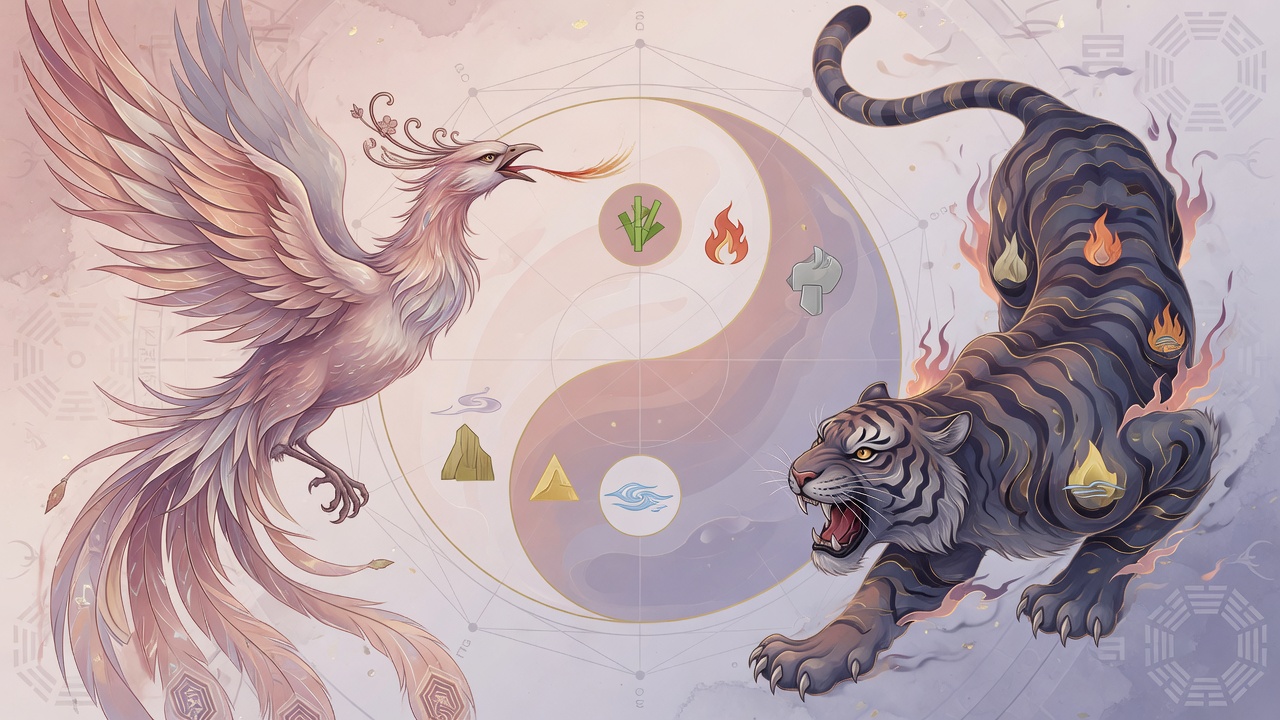
Basic Clarification: The Ten Gods Are Not Destiny Labels
Many people associate Bazi with superstition, but the Ten Gods system is actually a sophisticated set of personality-analysis symbols derived from the Five Elements interactions of Heavenly Stems and Earthly Branches—no spirits or supernatural forces involved. It functions more like a psychological mirror, helping us understand behavioral tendencies.
Common Misconceptions
- Misconception 1: Bazi is superstition and cannot explain personality. In reality, Bazi deduces ten archetypes of disposition through the relationships between the Day Master and other stems and branches, echoing modern personality typologies—just expressed in a different framework.
- Misconception 2: Shang Guan is always bad, and Qi Sha is always violent. All Ten Gods are neutral symbols. Shang Guan represents talent, creativity, and rule-breaking; Qi Sha symbolizes boldness, pioneering spirit, and crisis-management ability. Their auspiciousness depends on the overall chart and interactions.
- Misconception 3: A single Ten God can determine a person. Bazi requires a comprehensive analysis of the Day Master’s strength, combinations of Ten Gods, the flow of Five Elements, and the influences of luck cycles. Isolated labeling only leads to misjudgment.
- Misconception 4: Bazi fixes destiny and cannot be changed. The Ten Gods reveal innate tendencies, but self-cultivation, environmental adjustments, and self-awareness can transform energies—turning Shang Guan’s sharpness into incisive insight, and Qi Sha’s impatience into decisive action.
- Misconception 5: Public figures’ Bazi can be interpreted at will. Any metaphysical analysis should be based on respect. We only discuss the Ten Gods as cultural symbols and their general characteristics, and never fabricate birth data or invade privacy for specific individuals.
Core Insights: How the Ten Gods Shape Expression and Conflict Patterns
Overview of the Ten Gods: Ten Archetypes of Personality
In Bazi, the Heavenly Stem of the Day Pillar represents the self (Day Master). The other stems and branches form ten types of relationships with the Day Master, known as the Ten Gods. Among them, Shang Guan is what the Day Master generates but with opposite yin-yang polarity—representing the outflow of talent and unconventionality. Qi Sha is what overcomes the Day Master with the same yin-yang polarity—representing pressure, authority, and competition. Both are closely tied to expression and conflict.
The Ten Gods system fully covers a person’s social relationships and inner drives: Bi Jian (Peer) and Jie Cai (Rob Wealth) reflect self and peer dynamics; Shi Shen (Eating God) and Shang Guan (Hurting Officer) represent creativity and expression; Zheng Cai (Direct Wealth) and Pian Cai (Indirect Wealth) relate to material desires; Zheng Guan (Direct Officer) and Qi Sha (Seven Killings) reflect rules and challenges; Zheng Yin (Direct Resource) and Pian Yin (Indirect Resource) represent knowledge and protection. Everyone is a blend of these ten energies.
When a luck cycle or annual influence activates Shang Guan or Qi Sha, the related traits are amplified. For example, someone in a Shang Guan luck cycle may suddenly become more outspoken and critical; encountering a Qi Sha annual influence can make external pressures feel overwhelming, triggering a counterattack instinct. A public figure’s intense words at a specific time are often linked to such energetic triggers.
Understanding the Ten Gods is not about making excuses for behavior, but about offering a lens for observation: the same stressful event will elicit very different reactions depending on a person’s Ten God configuration. A Shang Guan type may retaliate with words, a Qi Sha type may confront directly, while a Zheng Yin type may choose silence and self-reflection.
- Essence of the Ten Gods: The Ten Gods are not independent spirits but dynamic relationships defined by the Five Elements’ generating and overcoming cycles. What the Day Master generates are Shi Shang (Output); what overcomes the Day Master are Guan Sha (Authority); what the Day Master overcomes are Cai (Wealth); what supports the Day Master are Yin (Resource); and those with the same element are Bi Jie (Companion).
- Shang Guan Positioning: Shang Guan is generated by the Day Master with opposite yin-yang polarity, a venting energy that represents intelligence, eloquence, and artistic talent, but also carries a rebellious and unrestrained quality.
- Qi Sha Positioning: Qi Sha overcomes the Day Master with the same polarity, an unfeeling form of control that symbolizes enemies, challenges, and high-pressure environments, yet also endows a person with strong stress resistance and leadership boldness.
- Energy Transformation: The Ten Gods can be classified as “Useful Gods” or “Annoying Gods.” If Shang Guan is a Useful God, its sharp expression does not wound others; if Qi Sha is a Useful God, its decisiveness is not reckless. The key lies in overall balance.
- Luck Cycle Triggers: The ten-year luck cycles shift the power balance among the Ten Gods. A normally mild person may become outspoken during a Shang Guan luck cycle; a normally cautious person may actively seek challenges during a Qi Sha luck cycle.
- Celebrity Case Reflection: 여에스더’s angry response under media fire can be seen, from a Ten Gods perspective, as the simultaneous activation of Shang Guan’s outspokenness and Qi Sha’s confrontational instinct, manifesting as an emotional public declaration—a typical display of personality archetypes under stress.
Shang Guan: The Double-Edged Sword of Outspokenness and Rebellion
People with strong Shang Guan are usually quick-witted and eloquent, but dislike being constrained, and their words tend to hit the mark directly. They are born critics who see flaws others miss and dare to speak out. This trait is a huge advantage in fields like art, commentary, and law, but in social situations requiring tact, it can become a fuse for conflict.
Under pressure, Shang Guan’s rebellious streak intensifies. When feeling attacked or misunderstood, a Shang Guan type’s first reaction is not to retreat but to counter with sharper words. A celebrity’s public response to “Assassins” may be a release of Shang Guan energy—defending the self with sharp expression, yet easily sparking larger controversy due to harsh wording, falling into a cycle of “the more you explain, the worse it gets.”
Another side of Shang Guan is emotionality. Shang Guan generates wealth but also clashes with authority. When emotions breach the rational line, expression loses its measure. A public figure’s angry remark in front of the camera can instantly ignite public opinion—a result of Shang Guan’s “outspokenness” meeting “poor timing.”
Notably, Shang Guan is not solely destructive. Many reformers and thinkers carry strong Shang Guan traits, using words to break conventions and drive progress. The key is whether one can pause for three seconds before speaking, transforming Shang Guan’s sharpness into constructive criticism rather than mere emotional venting.
- Positive Shang Guan: Boundless creativity, excellent eloquence, daring to challenge authority, suited for fields requiring independent thinking and expression, such as writers, speakers, and designers.
- Negative Shang Guan: Sarcastic speech, disregard for occasion, prone to offending others; high emotional volatility, may blurt out words under pressure, straining interpersonal relationships.
- Expression Pattern: Shang Guan types speak directly, dislike beating around the bush, and often hit the nail on the head. This style may be tolerated in close relationships but is easily magnified in the public domain.
- Conflict Handling: Facing conflict, Shang Guan tends to “use words as a sword,” suppressing the opponent with logic and eloquence while neglecting emotional resonance, which can easily escalate disputes.
- Timing Choices: People with strong Shang Guan are prone to speak when emotionally charged, lacking foresight about consequences. Public figures could avoid many PR crises by filtering their statements through a team beforehand.
- Self-Regulation: Shang Guan energy can be channeled through creative work, sports, etc., redirecting the expressive urge into works rather than interpersonal confrontations, achieving positive output of talent.
- Relevance to the Event: In this celebrity controversy, the back-and-forth of public sniping and counter-sniping is a textbook case of Shang Guan-style expression—both sides defending their stance with sharp words, potentially ending in mutual damage.
- Cultural Perspective: In the Korean entertainment industry, outspoken artists are often labeled “bold speakers,” which actually aligns with the dual appeal and risk of Shang Guan personality.
Qi Sha: Aggression and Breakthrough Power Under Pressure
Qi Sha represents challenges, enemies, and sudden pressure. People with strong Qi Sha act decisively, possess a strong sense of purpose and leadership, but tend to adopt a confrontational mindset when facing trouble. Like a tiger in the jungle, they lurk in calm but strike back with full force once threatened. This trait is a survival weapon in highly competitive environments but can also create enemies through overreaction.
When feeling targeted by “Assassins,” Qi Sha’s instinct is to counterattack rather than endure. Qi Sha types believe “the best defense is a good offense” and find it hard to sit still under attack. A celebrity’s public expression of anger, even saying “I won’t do the company anymore,” reflects Qi Sha’s aggression being triggered—using an extreme stance to declare one’s bottom line.
Qi Sha’s conflict-handling mode leans toward direct confrontation. They are not good at roundabout tactics and prefer head-on clashes. This style may quickly resolve issues in business or sports arenas, but in the court of public opinion where PR skills are needed, it often makes the situation harder to contain, because the public expects restraint and wisdom, not emotional brinksmanship.
However, Qi Sha is also a key driver for overcoming adversity. Many entrepreneurs and reformers have strong Qi Sha, enabling them to turn the tide in crises and transform pressure into execution power. The key is whether one can sublimate Qi Sha’s “aggression” into “enterprising spirit,” assessing strategy before striking back, rather than being led by emotion.
- Positive Qi Sha: Fearless of power, strong execution, boldness, quick decision-making in crises, suited for leadership roles and high-pressure industries.
- Negative Qi Sha: Impatient and impulsive, suspicious and combative, prone to overreaction, appearing domineering in interpersonal interactions, which may trigger unnecessary conflicts.
- Pressure Response: Qi Sha types experience an adrenaline surge under pressure and tend to act immediately, but sometimes action precedes thought, leading to regret.
- Conflict Pattern: Facing conflict, Qi Sha chooses direct confrontation, even at great cost, defending their stance. This “better to break than bend” attitude may seem heroic but is not necessarily the optimal solution.
- Timing and Strategy: Qi Sha needs to learn “delayed reaction,” giving themselves a cooling-off period at the moment of conflict, turning aggressive energy into strategic responses rather than instinctive counterattacks.
- Self-Awareness: People with strong Qi Sha can release excess energy through intense activities like sports or martial arts, while cultivating meditation habits to enhance emotional control.
- Event Mapping: In this exposé incident, the perceived “assassination” threat triggered Qi Sha’s defense mechanism, and the public angry declaration is a typical Qi Sha counterattack—using a strong posture to assert sovereignty, but potentially freezing business collaborations.
- Korean Social Context: In the fiercely competitive Korean entertainment and business circles, Qi Sha traits are often seen as success factors, yet they also bring high conflict risk. Balancing boldness with tact is a key challenge for public figures.
Avoidance Guide: Applying the Wisdom of the Ten Gods Rationally
Key Points to Note
- Don’t take it personally: Bazi is a complex system; looking at Shang Guan or Qi Sha alone is insufficient to draw conclusions. Everyone is a synthesis of the Ten Gods, so avoid labeling yourself or others based on just one or two symbols.
- Understand the dual nature of personality: Shang Guan and Qi Sha are not monsters; they are also core drivers of achievement. The key is to channel energy constructively through self-awareness.
- Luck cycles and annual influences are only triggers: Emotional outbursts are often linked to energy activations during specific periods—think of them as personality “weather forecasts”—but the final choice remains in your hands.
- Public figures need emotional management teams: Knowing your own Ten God tendencies helps in choosing more rational timing and methods of expression during public storms, avoiding irreversible damage from momentary impulses.
- Don’t use Bazi to excuse others’ behavior: Ten God analysis is for understanding, not justification. Any words or actions that harm others still carry corresponding responsibility; cultural tools cannot replace moral judgment.
- Respect privacy boundaries: The birth data of public figures is private. This article only uses public events as a cultural introduction and absolutely does not encourage metaphysical snooping into specific individuals.
- Integrate with modern psychology: The Bazi Ten Gods can be combined with modern psychological methods like emotional management and conflict resolution to form a more comprehensive self-growth system.
- Be mindful of cultural differences: The Ten Gods theory originates from traditional Chinese culture and has also spread to Korea and other East Asian countries, but interpretation must consider local social and cultural contexts to avoid mechanical application.
- Beware of fatalistic determinism: Even if a chart shows strong Shang Guan and Qi Sha, they can be transformed through self-cultivation. Many successful people have maximized Shang Guan’s talent and Qi Sha’s boldness while cultivating tactful worldly wisdom.
- Keep an open mind: Treat the Ten Gods as a mirror reflecting your personality tendencies, not as chains locking your destiny. True freedom comes from deep self-knowledge and continuous self-transcendence.
Summary and Review
Through the lens of the Ten Gods, we see how Shang Guan’s outspokenness and rebelliousness, and Qi Sha’s aggression and decisiveness, can easily ignite intense conflicts under pressure, yet also serve as vital forces for breaking through adversity. A public figure’s emotional outburst is not random but a concentrated display of personality archetypes at a specific moment. Understanding these metaphysical symbols is not about fatalistic labeling, but about viewing human nature more rationally, helping us find balance between conflict and expression.