NTT Stock Upgrade and BaZi Wisdom: A Millennium Dialogue on Character, Timing, and Choice
In August 2026, Japanese telecom giant NTT received a “bullish” rating from analysts, with its target stock price raised to 190 yen, attracting market attention. This reflects investors’ precise judgment on timing and value. Inter
Introduction
In August 2026, Japanese telecom giant NTT received a “bullish” rating from analysts, with its target stock price raised to 190 yen, attracting market attention. This reflects investors’ precise judgment on timing and value. Interestingly, the ancient Eastern practice of BaZi (Four Pillars of Destiny) also revolves around character, choice, and the momentum of the times. It doesn’t predict stock prices, but it offers a unique framework for understanding the cycles of personal fortune. Leveraging the NTT hotspot, this article explains how BaZi thinking can help evaluate decisions through the lens of “favorable timing, advantageous situation, and harmony among people,” assisting readers in staying rational and clear-headed amid volatility.
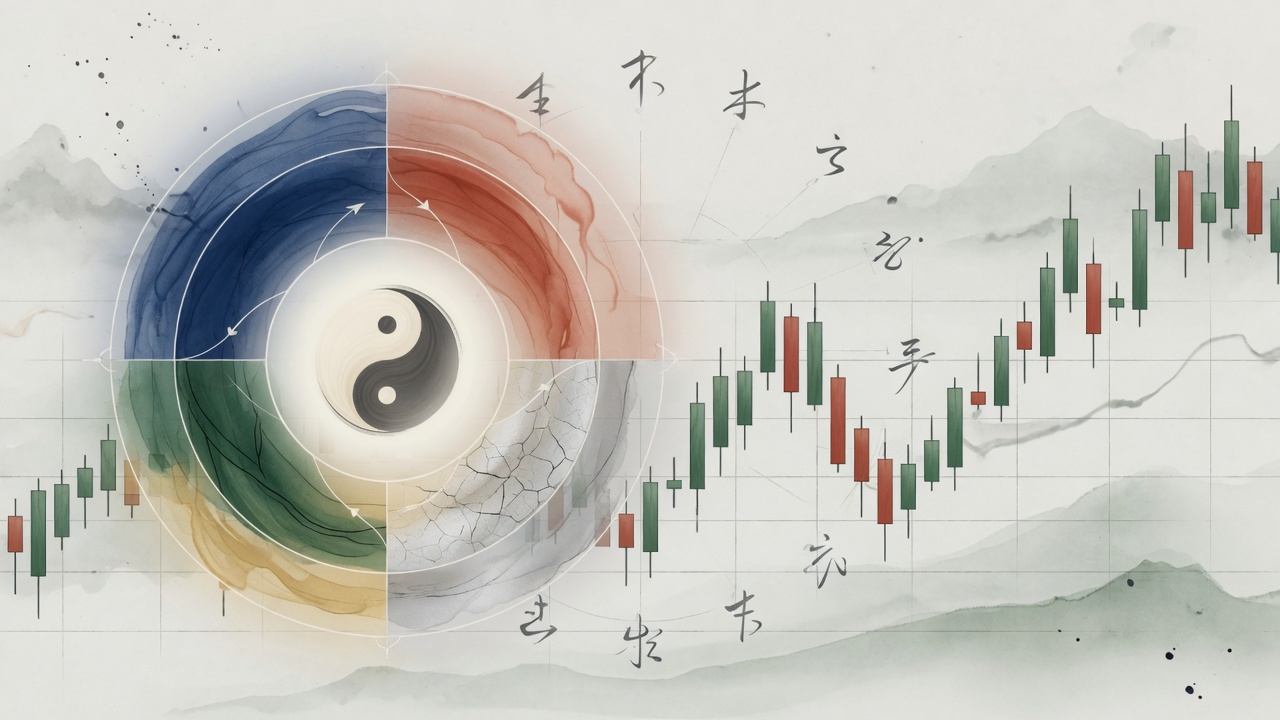
Clarifying the Basics: BaZi Is Not a Stock Price Calculator
Common Misconceptions
Many people misunderstand BaZi, especially when it’s linked to financial markets. Let’s clarify a few key points to prevent misuse.
- Misconception 1: BaZi can precisely predict stock price movements. BaZi analyzes the cosmic energy configuration at an individual’s birth time, reflecting innate traits and the rhythm of life’s fortune. It is not a financial quantitative model. It won’t tell you if a stock will rise or fall tomorrow, but it can indicate whether a certain period is suitable for taking risks or playing it safe.
- Misconception 2: BaZi is fatalistic; everything is predetermined. Quite the opposite—BaZi reveals trends and possibilities, not absolute outcomes. It’s like a weather forecast saying “high chance of rain tomorrow”—you can choose to bring an umbrella or stay indoors. The power of choice always lies with you.
- Misconception 3: Only certain people have a good BaZi chart. Every chart is a unique combination; there’s no absolute good or bad. A so-called “good chart” typically means the chart is balanced, the Useful God is strong, and it aligns well with the Luck Pillars. An ordinary chart can achieve extraordinary things during good luck cycles.
- Misconception 4: BaZi can be used in isolation from reality. Any decision must incorporate real-world information. BaZi provides your personal internal clock, which must be combined with the external environment (market fundamentals, industry trends, etc.) to make wise decisions.
- Misconception 5: BaZi requires a birth time precise to the second. In practice, differences within a two-hour time period are handled through true solar time correction. But for analyzing major life trends, having the correct two-hour time period is sufficient; there’s no need to obsess over minutes.
What BaZi Can Do
When used correctly, BaZi becomes a tool for self-awareness and timing management, not a mystical divination device.
- Understand your character foundation: Through the Day Master and Ten Gods, learn about your decision-making preferences and risk tolerance, and avoid mistakes caused by blind spots. For example, an impulsive person can set cooling-off rules.
- Identify fortune cycles: The Luck Pillars and Annual Cycles reveal life’s rhythms, helping you act proactively during high-energy phases and recuperate during low-energy ones—echoing the investment concept of following the cycle.
- Optimize timing of choices: Based on the Useful God and Avoided God, determine which years or months are better for launching projects, switching tracks, or staying defensive, thus increasing your success rate in life decisions.
Core Insights: Character, Timeliness, and Choice in BaZi
1. The Day Master and Five Elements: Your Innate Investment Personality
In BaZi, the Heavenly Stem of the birth day is called the Day Master, representing the self. Its Five Element quality (Metal, Wood, Water, Fire, Earth) and strength form your core character, silently shaping your risk appetite and decision-making style—like reading the factory settings of your investment approach.
Wood governs benevolence: Jia Wood is Yang Wood, like a towering tree—upright, upward-striving, and responsible. It favors long-term value investing and emphasizes corporate fundamentals and social responsibility, often drawn to infrastructure giants like NTT. Yi Wood is Yin Wood, like vines and flowers—flexible, clever, and adept at leveraging; it may excel at diversified portfolios and capturing structural opportunities.
Fire governs propriety: Bing Fire is Yang Fire, like the sun—passionate, exuberant, and highly active, easily chasing market hotspots; it needs to guard against emotional trading. Ding Fire is Yin Fire, like a candle—refined, acute, and perceptive, skilled at discovering undervalued assets.
Earth governs trustworthiness: Wu Earth is Yang Earth, like a defensive wall—solid, pragmatic, and trustworthy, a typical value investor emphasizing margin of safety. Ji Earth is Yin Earth, like a garden—nurturing, patient, and supportive, well-suited for dollar-cost averaging and long-term holding.
Metal governs righteousness: Geng Metal is Yang Metal, like an axe—resolute, decisive, and bold, suitable for short-term or contrarian investing, but must guard against overconfidence. Xin Metal is Yin Metal, like jewelry—refined, perfectionist, and data-sensitive, ideal for quantitative and precision analysis.
Water governs wisdom: Ren Water is Yang Water, like a river—fluid, intelligent, and adaptable, excelling at trend following and swing trading. Gui Water is Yin Water, like mist and dew—extremely soft, highly intuitive, often able to sense subtle market moods.
Beyond the Five Elements, the strength of the Day Master is equally crucial. A strong Day Master (having season, ground, and support) tends to be confident and resilient, may dare to take heavy positions and hold long-term, but can also become overconfident. A weak Day Master is cautious, sensitive, and risk-aware, but may miss opportunities. Knowing your strength helps adjust position sizing and strategy, finding your comfort zone.
Character has no inherent good or bad; what matters is self-awareness and discipline. For example, a Jia Wood Day Master’s sense of responsibility could turn into stubbornly buying dips during market panic; a Bing Fire Day Master might easily chase highs in euphoria. Recognizing these tendencies is the first step of BaZi thinking.
2. Luck Pillars and Annual Cycles: The Resonance of Life and Market Cycles
A BaZi chart is not static; it evolves dynamically through Luck Pillars (each spanning 10 years) and Annual Cycles (changing yearly). Luck Pillars are like climate zones, while Annual Cycles are like daily weather. You can’t change the climate, but you can add or remove clothing and adjust your schedule—very much like the long-term trends and short-term volatility in the stock market.
Since its listing in 1987, NTT has experienced multiple cycles: the bursting of Japan’s bubble economy, the internet revolution, the mobile communication explosion, and digital transformation. Each rise and fall can be seen as a Luck Pillar shift. For individuals, identifying your own golden decade is vital. During a favorable Luck Pillar (with your Useful God), opportunities abound and efforts pay off; during an unfavorable Luck Pillar, it’s better to lie low, focus on learning and accumulating.
Annual Cycles are like event triggers. For example, if the Wealth Star is your Useful God and it appears in a year, investment opportunities may arise; if the Authority Star is your Useful God and it appears, career advancement or breakthroughs may come. However, if the overall Luck Pillar is unfavorable, a good year is like winter sunshine—brief and weak. Therefore, the Luck Pillar is the framework, the Annual Cycle is the detail; both must be considered together.
Though Luck Pillars require professional charting, ordinary people can roughly sense their fortune rhythm by reviewing the major themes of the past decade. If your career rose steadily and your family life was harmonious, you were likely in a favorable Luck Pillar; if not, it was probably an unfavorable one. This reflection helps anticipate future trends and adjust expectations and strategies.
This cyclical mindset helps investors rise above short-term emotions of chasing rallies and selling panics. When your personal fortune is in a low phase, you might reduce trading frequency and focus on research; in a high phase, you can be moderately proactive. But remember, fortune highs and lows don’t directly translate to account gains or losses—they affect your judgment and emotional state. Final decisions must still be rational.
3. Useful God and Avoided God: Navigators of Choice
The core of BaZi analysis is to identify the Useful God—the most critical element that balances the chart and allows the Five Elements to flow harmoniously. The Useful God acts like a strategic compass, indicating the direction to exert effort and the most precious timing. Finding the Useful God requires professional expertise, but the basic principle is: support the weak, suppress the strong, balance temperature, and facilitate flow.
For instance, if the Day Master is Jia Wood born in Shen or You month (autumn), Metal is strong and Wood is withering. If the chart contains Fire to control Metal (the Officer) or Water to nourish Wood (the Resource), then Fire or Water may be the Useful God. Once the Useful God is clear, it guides major decisions: a person whose Useful God is Fire does well to launch projects or expand during Fire-strong years (Snake, Horse years); one whose Useful God is Water benefits in Water-strong periods (Pig, Rat years) for communication, liquidity, and investment.
Conversely, the Avoided God is the element that disrupts the chart’s balance. When it becomes active in a Luck Pillar or Annual Cycle, it often brings obstacles, pressure, or poor judgment. For example, someone whose Avoided God is Earth must be especially cautious during Earth-strong years (Dragon, Dog, Ox, Goat months), avoid stubbornness, and listen more to others.
The Useful God is not necessarily fixed; sometimes the chart’s structure changes due to the arrival of a new Luck Pillar—this is called “Useful God shifts with the cycle.” For example, the Useful God could be Wood early in life and switch to Fire in middle age. Thus, BaZi analysis is dynamic, never a one-time verdict.
NTT’s recent rating upgrade is based on analysts’ assessment of industry trends and company fundamentals—an external environment giving a Useful God signal. For individuals, BaZi thinking teaches us to recognize our own “Useful God moments,” doing the right things at the right time. This isn’t mysticism but a tool for self-awareness and situational analysis, helping us improve our success rate in life’s investments.
Pitfall Guide: Applying BaZi Thinking Rationally
Precautions
When integrating BaZi thinking into investment and daily life, avoid the following common traps to prevent it from backfiring.
- Don’t treat BaZi as a trading system. BaZi doesn’t provide buy/sell signals; never map spirits, demons, or daily cycles directly to stock prices. Decisions must still be based on fundamentals, technicals, and money management; BaZi is only a supplementary cognitive tool.
- Avoid single-pillar or single-deity judgments. Drawing conclusions based only on the birth year or day pillar is like looking at P/E ratio while ignoring industry context—highly error-prone. A reliable analysis requires a comprehensive study of the four pillars, Luck Pillars, Annual Cycles, and chart structure.
- Don’t ignore the real environment. BaZi reveals your internal rhythm, but external factors like markets, policies, and global situations are equally vital. You must combine the internal and external. For example, even a good Luck Pillar warrants caution during a global financial crisis.
- Beware of “master” prediction traps. Fortune-tellers who claim to accurately forecast stock prices or lottery numbers are mostly frauds. True BaZi wisdom lies in self-knowledge and seizing the right moment, not crystal-ball predictions.
- Stay open and flexible. BaZi analysis is not rigid dogma; the same chart can manifest differently in different eras and environments. Continuously adjust your understanding based on real-world feedback, and don’t cling to a single interpretation.
- Don’t use BaZi as an excuse for failure. Blaming a “bad year” for investment losses without reviewing your own decisions is avoiding responsibility. The right attitude: be aware of fortune cycles, but focus even more on your decision process, learning from mistakes.
- Never neglect personal effort. Even the best chart requires action. As the saying goes, “A good chart is not as good as good luck; good luck not as good as a good year; a good year not as good as one’s own efforts,” highlighting that human agency is the key.
Summary and Reflection
The rise and fall of NTT’s stock price is a symphony of market cycles and corporate value; BaZi is ancient wisdom about the interplay between personal internal cycles and external circumstances. Character shapes choices, and choices aligned with the times lead to steady progress. Rather than superstitious predictions, we can use this millennia-old culture to understand ourselves more clearly and find our own rhythm amid volatility. May every reader become a rational investor in their own life.