From Inter Miami vs Cruz Azul: A Rational Look at BaZi – Character, Choice, and Timing
A marquee match between Inter Miami and Cruz Azul draws fans' eyes to the pitch. Victory and defeat belong to sport, but through the lens of BaZi culture, what we see is not prophecy, but a framework of interplay between **character, choi
Opening Introduction
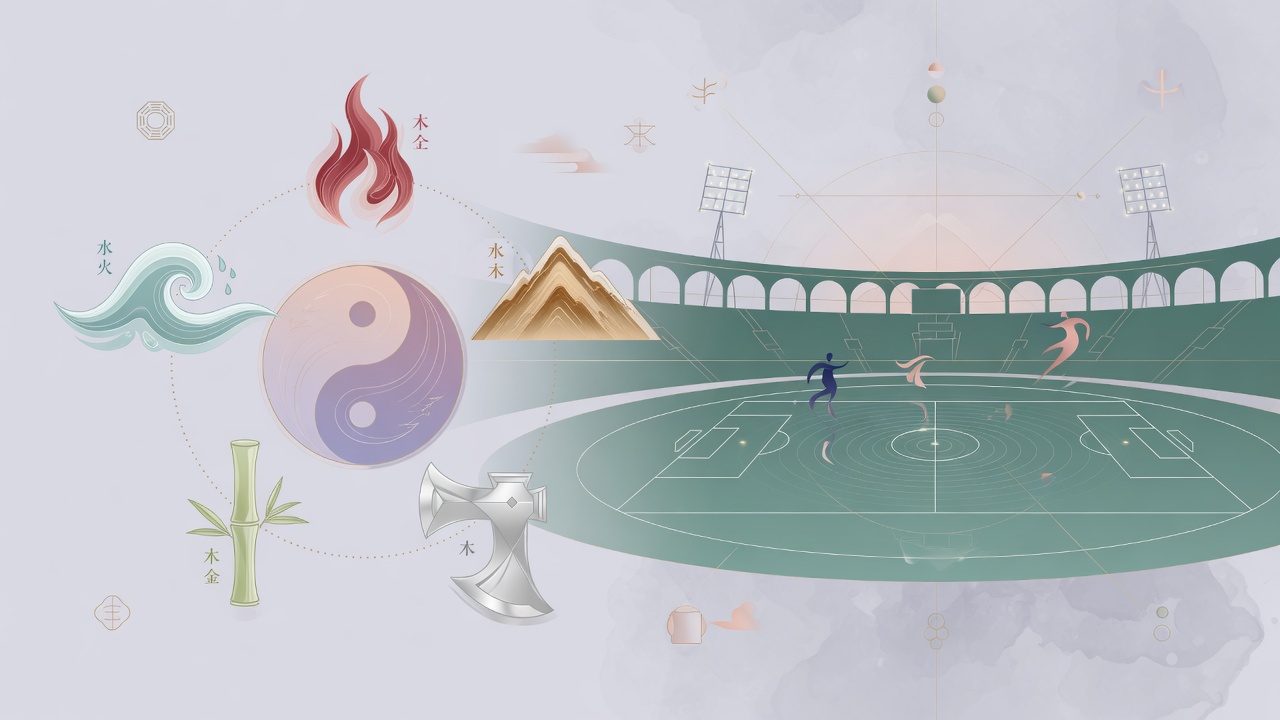
A marquee match between Inter Miami and Cruz Azul draws fans' eyes to the pitch. Victory and defeat belong to sport, but through the lens of BaZi culture, what we see is not prophecy, but a framework of interplay between character, choice, and timing.
Using this trending topic as a springboard, this article offers a rational educational overview: no predictions, no personal judgments—only how traditional culture helps us understand the relationship between people and their environment.
Basic Clarifications
Common Misconceptions
BaZi is often mistaken for mystical prophecy, when in fact it is more like a classification language of character and time-space.
- Misconception 1: BaZi can predict match outcomes. In reality, BaZi analyzes tendencies and energies, not specific events.
- Misconception 2: People born at the same time share identical fates. Postnatal choices, environment, and education dramatically alter life trajectories.
- Misconception 3: A team's victory or defeat can be directly mapped to Five Element affinities. This oversimplifies, ignoring teamwork and in-the-moment performance.
- Misconception 4: BaZi is only for seeking fortune and avoiding misfortune. Its deeper value lies in self-awareness and optimizing decisions.
- Misconception 5: BaZi is equivalent to Western astrology. BaZi is based on the stem-branch calendar, is more complex, and emphasizes dynamic balance.
Core Concepts
Day Master Character: Innate Behavioral Foundation
The Day Master is the core symbol in a BaZi chart, representing the Heavenly Stem of the birth day. It acts like a person's inner operating system, influencing first reactions under pressure and competition.
Football is a team sport; people with different Day Masters tend to have different inclinations in collaboration, confrontation, and decision-making. Note: these are tendencies, not labels.
Understanding Day Master character is not about labeling people, but about comprehending the driving forces behind behavior.
- Jia Wood Day Master: Like a towering tree—responsible, likes to lead, but may be overly stubborn.
- Yi Wood Day Master: Like vines and flowers—flexible, good at coordination, but may lack assertiveness.
- Bing Fire Day Master: Like the sun—passionate, outgoing, highly infectious, but prone to impulsiveness.
- Ding Fire Day Master: Like a candle flame—focused, meticulous, good insight, but may overthink.
- Wu Earth Day Master: Like a city wall—steady, tolerant, pressure-resistant, but may react a bit slowly.
- Ji Earth Day Master: Like farmland—gentle, pragmatic, nurturing, but may be too conservative.
- Geng Metal Day Master: Like a sword—decisive, sharp, high execution, but may lack flexibility.
- Xin Metal Day Master: Like jewelry—refined, sensitive, detail-oriented, but may be overly critical.
- Ren Water Day Master: Like a river—free-spirited, adaptable, but may lack patience.
- Gui Water Day Master: Like rain and dew—delicate, flexible, good at observation, but prone to indecision.
Luck Cycles and Annual Influences: The Seasons and Windows of Timing
BaZi does not only consider birth time; it also emphasizes Luck Cycles and Annual Influences. Luck Cycles shift every ten years, like life's seasons; Annual Influences change yearly, like annual weather.
The stem-branch combination on match day forms a specific spatiotemporal energy field. This is not a good-or-bad verdict, but a reference for understanding the atmosphere of the moment.
Timing is like the wind direction on the pitch—ride it when favorable, adjust when adverse. The key is knowing the timing and leveraging it.
- Luck Cycles: Ten-year periods that set the long-term tone. For example, a Wood cycle may favor growth and expansion-related matters.
- Annual Influence: Yearly energy, stacking with the match-day stem-branch to create a short-term atmosphere.
- Month Order: The match takes place around the eighth lunar month, when autumn Metal energy strengthens. Metal governs severity and competition, naturally resonating with athletic contests.
- Hour Pillar: The match is in the morning, around the Chen hour. Chen is Earth, and Earth generates Metal, potentially reinforcing Metal qualities.
- Energy Overlap: If a person's chart favors Metal, they may feel smoother at this time; if it avoids Metal, more self-regulation may be needed.
- Timing Is Not Fatalism: Under the same energy, different choices lead to different outcomes—this is the rational core of BaZi culture.
- Seasonal Five Elements: Spring Wood, Summer Fire, Autumn Metal, Winter Water—each season has a dominant energy that influences human states.
- Daily Influence: The stem-branch combination of the match day can also be seen as a microcosmic time-slice for cultural observation.
Choice and Balance: BaZi Is Not a Fatalistic Script
BaZi reveals tendencies, but choices determine paths. People with the same BaZi chart can lead different lives due to education, environment, and effort.
In competition, team coordination, tactical execution, and mental state are all postnatal choices. Understanding character tendencies helps make better choices.
BaZi culture emphasizes knowing fate and using fate—by knowing oneself, one can face competition and pressure more rationally.
- Character Tendency: Knowing you tend to be impatient or conservative allows proactive behavioral adjustment.
- Team Complementarity: People with different Five Element personalities can form balanced offense and defense.
- Leveraging Timing: Act actively during favorable Luck Cycles and Annual Influences; conserve energy and adjust during unfavorable ones.
- Avoid Fatalism: BaZi is not a verdict but a reference map.
- Know Fate, Use Fate: Self-awareness enables more rational responses to competition and pressure.
- Dynamic Balance: Five Elements generate and control each other; life involves trade-offs—the key is dynamic adjustment.
- Postnatal Effort: Training, tactics, mentality, and other postnatal factors far outweigh innate tendencies in determining athletic performance.
- Freedom of Choice: BaZi only provides a range of possibilities; which path to take is still decided by individual choice.
Pitfall Avoidance Guide
Important Notes
- Do not use BaZi to predict match results: This misuses traditional culture and easily misleads others.
- Do not assert performance based on players' public birthdays: It involves privacy, and a single data point cannot support a full analysis.
- Do not simply map Five Element affinities to team colors or directions: Five Elements are a systemic way of thinking, not a label-matching game.
- Do not ignore postnatal effort and team tactics: BaZi is only background; athletic outcomes are determined by a combination of factors.
- Do not make major decisions when emotionally charged: BaZi reminds us to recognize our emotional tendencies, but decisions still require rationality.
- Do not blindly trust online 'master' pronouncements: View trending topics rationally to avoid being exploited.
- Learning BaZi should focus on character analysis and self-growth: Not speculation or predicting specific events.
- Treat traditional culture as a thinking tool: Not as mystical prophecy, to realize its true value.
- Respect real people and events: Do not make good-or-bad judgments about players, coaches, or clubs.
- Keep an open mind: BaZi culture is one observational angle, not the only truth.
- Avoid taking things out of context: Looking only at Day Master or only at Annual Influence easily leads to one-sided conclusions.
- Do not spread anxiety: Do not use BaZi to create fear or dependency; rational discussion is the right path.
Summary and Reflection
BaZi culture provides an observational framework for character, timing, and choice, not a prediction tool. The trending match is merely a hook; the real value lies in understanding the relationship between self and environment.
Approach traditional wisdom rationally—use it to optimize decisions and regulate mindset, not to seek shortcuts. This is the best cultural response to trending topics like Inter Miami vs Cruz Azul.