In the “Yuri (Glass)” Era: Viewing Character’s “Fragility” and “Clarity” Through Bazi
The rumored Apple “yuri iPhone” has set the internet ablaze. In Korean, “yuri” means glass—crystal clear, cutting-edge, yet also fragile. This is much like the personality slice of modern people: eager to shine, yet afraid of setbacks. In Bazi metaph
Opening Introduction
Recently, the rumored “glass iPhone” in tech circles has once again made the word yuri go viral. From the perspective of the birthplace of Bazi, glass is not merely a material, but a metaphor for a type of personality: exquisitely clear, yet needing to be handled with care.
The Korean public’s enthusiasm for Saju (Four Pillars) has never cooled. When a tech hotspot meets a millennia-old metaphysical system, we can use this as a starting point to discuss how Bazi interprets personality codes and what role it plays in current choices.
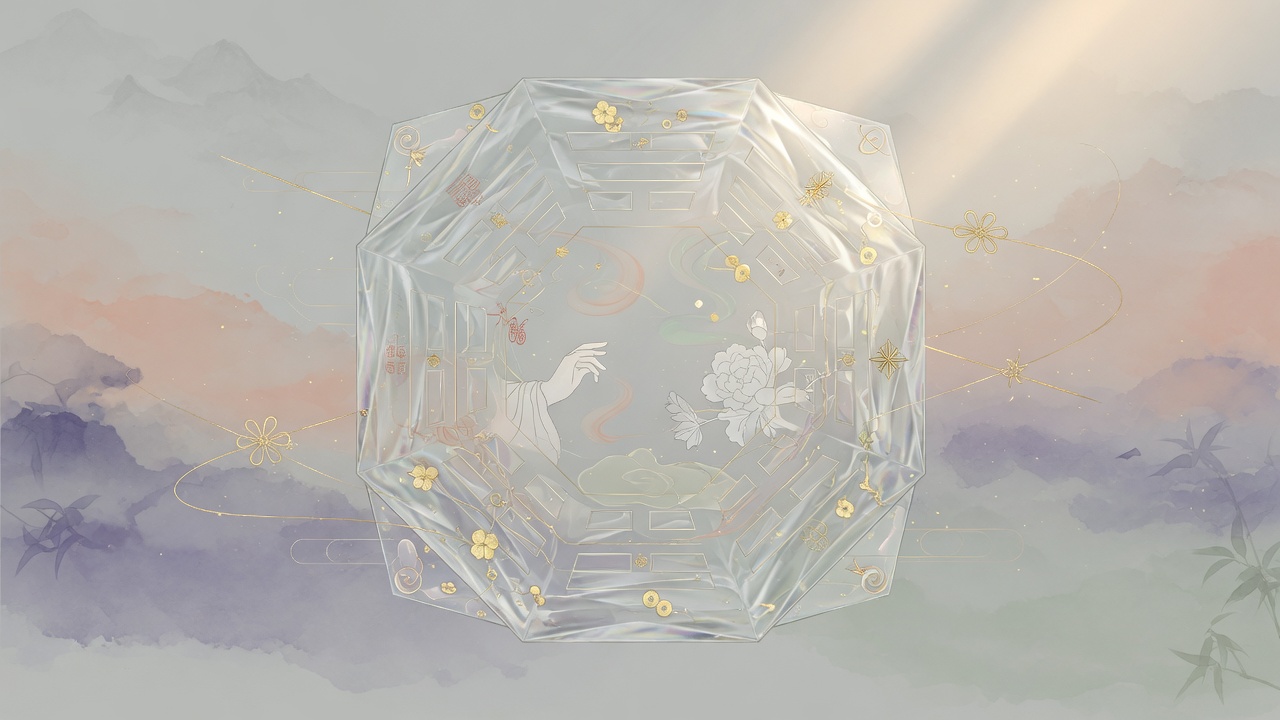
Basic Clarification: Bazi Is Not “Fortune-Telling” but a “Personality Reading” Model
Common Misunderstandings and Correct Interpretations
- Misconception 1: Bazi directly determines whether a whole life is good or bad. Correct view: Bazi only reveals innate energy distribution and dispositional tendencies; later choices and self-cultivation can significantly rewrite the actual trajectory.
- Misconception 2: The Day Master’s element nails down one’s personality. Correct view: The Day Master is only a point of reference; one must integrate the strength and weakness of the Five Elements, the combinations of the Ten Gods, and the warmth or coldness of the chart to depict a complete personality spectrum.
- Misconception 3: Bazi can predict specific events. Correct view: In traditional culture, Bazi analysis is more like a weather forecast, indicating trends and probabilities, never equivalent to making absolute assertions about a particular detail.
Core Points: How the “Glass Personality” in Bazi Is Forged
1. Personality Code: The “Metal” Type with a Glass-Like Texture
In the Five Elements classification, Metal governs hardness and severity, but it also represents transformation and refinement. In particular, Xin Metal, analogous to pearls, jade, and gold and silver ornaments, naturally carries a fragile yet gorgeous quality that strikingly matches the clarity and fragility of glass products.
Many typical Xin Metal Day Masters often possess traits of acute aesthetics, perfectionism, and strong self-esteem. Like finely polished glass vessels, they can reflect exquisite brilliance, but they are also particularly sensitive to environmental bumps and knocks.
Of course, not only Xin Metal has a “glass-like feel.” Geng Metal that is overly sharp without restraint, or weak Metal being refined by Fire, will foster a temperament of outer rigidity and inner brittleness. The subtlety of the Bazi model lies in its ability to present such nuanced differences like a color palette.
- Key indicators: In the natal chart, if Metal is overly strong without an outlet, one becomes stubborn and prone to breaking, just like tempered glass that is hard yet can spontaneously shatter; if Metal is overly weak and is controlled, one tends to be sensitive and suspicious, showing cracks under slight pressure.
- Korean reality check: Korean society’s extreme pursuit of appearance, along with choosing “glass” as the codename for a cutting-edge product, resonates with Xin Metal’s pursuit of “refined perfectionism.” Many K-pop professionals often use Bazi to screen their debut timing for compatibility with their natal charts, essentially leveraging the power of the Five Elements to amplify innate advantages.
2. Choices and Timing: How Major Luck and Annual Stars “Temper the Glass”
A person’s innate character is just a piece of “frosted glass”; what truly shapes their destiny is the polishing by Major Luck and Annual Stars. In Bazi theory, one Major Luck cycle lasts ten years, and each year brings an Annual Star; together they form the seasons of life.
When Metal-type people encounter Earth luck or Metal luck, it is like being thickened and polished: confidence increases and talents are easily displayed. But if they encounter intense Fire luck refining (Fire controls Metal), it is like glass entering a furnace—it may be reshaped and elevated, or it may break and melt.
Using the technological shift symbolized by this “yuri iPhone” as a starting point: if someone’s favorable element happens to be Metal, and the current luck moves into Shen or You (Metal strongholds), they can appropriately accelerate learning new skills or switching tracks. This is not fate but riding the trend and borrowing strength.
- Going with the trend—case example: Suppose a person’s chart has a weak Day Master that favors Metal, and the Major Luck happens to be Xin You (strong Metal); then even a naturally “glass heart” will become resilient and transparent due to the timing’s support. This stage is suitable for entering fields requiring precision, aesthetics, and technology, resonating with the “yuri” wave.
- Against the trend—reminder: If the Major Luck is dry and hot with Fire and Earth, and one’s own Metal is weak, feelings of scattered energy and constant obstacles may arise. The best strategy then is not to charge ahead blindly, but to study calmly, build depth, and wait for the next Metal and Water turnaround.
- Philosophy of timing: Bazi never encourages “resigning to fate”; it emphasizes knowing when to act. As modern Korean Saju theorists like Josanggung (Ancestor Palace) repeatedly point out, luck waves objectively exist—smart people set sail at the crest and repair ships in the trough.
3. Contemporary Application of Bazi Wisdom: From “Fragile” to “Transparent”
True transparency is not the absence of cracks, but letting light shine through them. Bazi provides precisely such a life instruction manual: it lets you see where the stress points are and where to add cushioning.
We do not need to twist our “glass properties” into steel bars. A Xin Metal person with strong Output (Eating God and Hurting Officer) is naturally suited for content creation and creative design; a person with weak Metal protected by the Seal Star is suited for deep cultivation in education and cultural fields. Choosing in line with one’s innate nature is the best “tempering treatment.”
Take the development of the “glass iPhone” as an analogy: it requires a combination of superb aesthetic perception (Xin Metal) and top-tier material craftsmanship (the forging of Geng Metal). The mediating favorable element in Bazi acts like a binding agent that coordinates seemingly contradictory elements. Understanding your own mediating key allows you to build bridges in career and relationships.
- Realistic simulation (not a specific person): Internet professional Xiao A, whose natal chart has Xin Metal sitting on Si Fire, often suffers anxiety and insomnia. A consultant found that their favorable element is Water (Output for temperature regulation), and suggested transitioning into user research that requires delicate observation and verbal expression. Three years later, the “sensitivity” in their personality turned into insight, and their career blossomed.
- Prioritize temperature regulation: For a “glass person” born in summer when Fire is strong, the chart ideally has a little Water to moisten the chart (similar to a cooling process), otherwise emotional overload is likely. In daily life, you can arrange black or blue elements in your workspace, or spend time near lakes and rivers, borrowing natural Five Elements to ease irritability.
- Modern tools: Nowadays in Korea, a model combining AI chart plotting with psychological counseling is on the rise. But technology is only an aid; the true essence of Bazi lies in helping you accept your material: whether you are borosilicate glass or ordinary soda-lime glass, each has its best use cases, and there is no need to force yourself to be bulletproof glass.
Pitfall Avoidance Guide: Five Reminders for a Rational View of Bazi
Pitfalls You Must Avoid
- Do not rely solely on a single Day Pillar: Judging personality and fortune based only on the Day Pillar (e.g., Xin Wei, Geng Shen) is like the blind men touching an elephant. You must integrate Month Branch, Hour Branch, and Major Luck for a comprehensive reading; otherwise the error is huge.
- Time-space calibration is key: Korea has a one-hour time difference from China. A chart for a birth at a borderline hour must be accurately converted to true solar time; otherwise even the Day Master may be incorrectly determined, leading to total error.
- Do not predict extreme events: Bazi analyzes trends; it never predicts life and death, crime, or competition outcomes. Anyone making such assertions with Bazi has deviated from traditional cultural practice—be wary.
- Avoid self-fulfilling prophecies: Hearing that “a certain year is unfavorable” and then being too afraid to act actually creates artificial difficulties. The correct attitude is knowing the danger and preparing for it, not imposing self-limitations.
- Do not confuse cross-cultural terms: Korean Saju (사주) and Chinese Bazi share the same origin, but some Ten God names and methods of selecting the favorable element differ slightly. When consulting, be sure to understand the lineage system and do not mix them up causing errors.
Summary and Review: Glass Is Fragile, Transparency Is Priceless
What “yuri” brings is not just a phone, but a mirror for examining the inner self. Bazi is not a verdict of fate, but a wave analysis chart of personality.
There may be glass components in all of our personalities: longing to be seen, yet worried about scratches. But once you grasp the basic laws of the Five Elements’ generation and control, you can, at every turning point of circumstance, transform the instinct of fragility into the wisdom of transparency.
Key conclusion: Understanding Bazi is not about guessing tomorrow, but about choosing, among millions of possibilities, a path most suited to your material, and then walking it steadily.