"Como's Fairy Tale" Meets "Leipzig's Miracle" — Character, Choice, and Timing Through the Lens of Bazi
In the autumn of 2026, the meeting of Como and RB Leipzig was described by the media as a "fairy-tale duel." The rise of both teams is itself like an inspirational film. When we read it through the lens of traditional Chinese **Bazi astrology
Opening Guide
Why is an ordinary match between small clubs given the name of a fairy tale? Because in a football world driven by capital, the growth paths of Como and Leipzig are full of the unimaginable.
Traditional Chinese Bazi astrology does not predict scores, yet it offers a unique framework of understanding: how character, choice, and the opportunities of an era weave together into the path of a destiny.
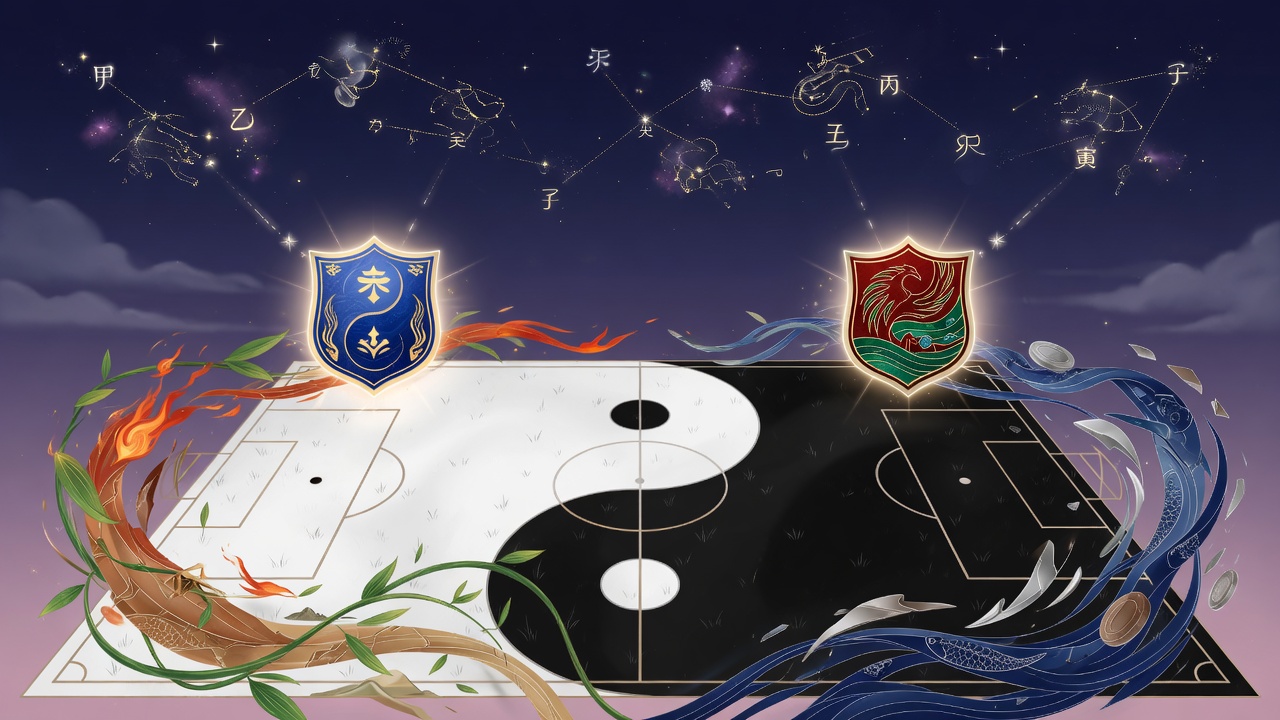
Basic Clarification: Bazi Is Not a Verdict of Fate
Common Misconceptions
- Misconception one: Bazi decides everything, and effort is meaningless. In fact, Bazi is more like a life's factory setting; it only offers potential tendencies, while the weight of later environment and personal choice is very high.
- Misconception two: People with the same Bazi have exactly the same fate. In reality, no two people share the same time-space background, family, and temperament, so their lives differ enormously.
- Misconception three: Reading Bazi is only about predicting the future. The core value of Bazi lies in knowing yourself — understanding the strengths and weaknesses of your character and acting with the flow, not waiting for a prophecy to come true.
Core Points: The Trio of Character, Timing, and Choice
1. The Character Code: A Team's Bazi "DNA"
Bazi is made up of four pillars: year, month, day, and hour. The heavenly stem of the day pillar represents the person themselves and is called the day master. It is like a team's soul style of play, revealing innate temperament.
There are ten day masters, corresponding to the five elements (metal, wood, water, fire, earth) and yin-yang qualities. Different day masters have completely different character foundations, but none is better or worse.
- Jia Wood day master: a towering tree — enterprising, upright, with a desire to lead, like a team's spiritual leader who can bear pressure in adversity.
- Bing Fire day master: the fire of the sun — passionate, highly infectious, with astonishing explosive power, good at igniting the passion of the whole field, similar to an attacking core.
- Wu Earth day master: a thick city wall — steady, trustworthy, full of endurance, the cornerstone of a defensive system, not flashy but reliable.
- Geng Metal day master: the metal of blades — decisive, sharp, strongly rule-oriented, suited to a system with strict tactical discipline and piercing counterattacks.
- Ren Water day master: the water of rivers — wise, adaptable, highly fluid, like a playmaking midfielder, good at finding space and creating chances.
- These innate traits help us understand why certain teams always carry a distinct style label. But character only decides the starting point, not the finish line.
2. The Timing Code: The "Fairy-Tale Window" in Luck Cycles and Annual Fortunes
In Bazi astrology, the luck cycle (da yun) changes every ten years and represents the broader environment of different life stages. The annual fortune (liu nian) is the specific energy of a single year.
The recent rise of Como and Leipzig can be abstractly matched to the rhythm of their respective "favorable timing and place." An old saying captures it well: When heaven lacks its time, the sun and moon lose their light; when earth lacks its time, grass and trees do not grow.
- The role of luck cycles: when a team enters a luck cycle of its "useful god" — that is, the element its Bazi favors is at its strongest — it is like meeting the version of the rules that best fits its own style of play, with transfers, injuries, and fixtures all leaning favorable.
- The trigger of the annual fortune: in a certain year the heavenly stem and earthly branch suddenly form an auspicious pattern with the chart, like a fairy-tale season arriving — a small club may beat strong opponents one after another and make history. Such a window often cannot be sought, only met.
- Analogy through five-element imagery: for example, a wood-fire type team meeting a year when wood and fire shine brightly will see both creativity and impact amplified; if it meets a strong metal-water year, it needs to adjust tactics toward defense and counterattack, since head-on clashes may stall.
- Timing is not everything: at a peak you still need to keep your feet on the ground, and in a trough you can soften the blow by adjusting mindset, tactics, and personnel. Bazi says, "Illness is what makes it valuable; without injury there is nothing remarkable" — a flaw is also a driving force.
3. The Wisdom of Choice: Same "Bazi", Different Fates
Even for two clubs with similar Bazi structures, why do their development paths diverge so greatly? The key lies in the accumulation of a series of micro-choices.
Choice matters more than effort, but more important than choice is making the right decision at the right time — this is exactly the "know your fate and use your fate" that Bazi culture advocates.
- Choosing a direction: spend big on superstars, or go deep in youth development? The Ten Gods combination in a Bazi chart can reveal inner drivers, but the actual decision-making power rests in human hands.
- Matching people: is the coach's philosophy compatible with the team's inherent "temperament"? If a team whose Bazi favors fire hires an extremely defensive-minded head coach, it is like fire doused by water, and the pains of adjustment are hard to avoid.
- Cultivating the mind: facing the same setback, some complain about fate while others treat it as tempering. The Seal star (yin xing) in Bazi represents learning ability and capacity for reflection; continuous cultivation can raise one's threshold for handling pressure.
- Changing the environment: a football club can indirectly change its "qi field" by switching training grounds, adjusting the medical team, and improving the dressing-room atmosphere — similar to feng shui adjustments.
- In summary: Bazi provides a dynamic map, not a fixed script. We are both participants in the story and the ones weaving it. The "fairy tales" of Como and Leipzig are exactly what happens when countless active choices meet favorable timing, place, and people.
Pitfall Guide: View Fate Analysis Rationally and Return to Real Action
Things to Watch Out For
- Do not let Bazi decide your whole life: especially, do not attribute the failures of others or of a team entirely to "bad fate." Success is the result of a complex system, and fate analysis is only one observational tool.
- Avoid self-limitation: after knowing your weaknesses, the point is not to lie down but to find ways to make up for them. If your Bazi lacks fire, you can spend more time with passionate mentors and join motivating teams to actively activate the corresponding energy.
- Refuse labeling: using the five elements as analogies for character is for easier understanding, but human nature is far more complex than ten day masters. Never casually slap hard labels on people around you, like "you're Geng Metal, so you're heartless."
- Respect real-world causation: a team's performance is affected by concrete factors such as training quality, injury management, and dressing-room unity — these must be solved first. Fate analysis can help adjust mindset, not replace hard work.
- Keep critical thinking: no fate analysis should replace independent thought. Especially in Malaysia's multicultural environment, it can serve as a window for understanding traditional Chinese wisdom, not a decision-making bible.
Summary and Review
The "fairy tale" of Como and Leipzig is essentially a character foundation that never faded through a long dormancy, a tide of timing in which a key window was seized, and the fruit of countless correct choices.
What Bazi culture teaches us is exactly this: know yourself, follow the times, and choose actively — when these three resonate, anyone can write their own beautiful fairy tale.