Malaysia’s National Football Team Through the Lens of BaZi: The Timeless Wisdom of Character, Timing, and Choice
When “pasukan bola sepak kebangsaan malaysia” becomes a trending focus, rather than getting caught in the noise of broadcasting rights disputes, let’s use the rational lens of BaZi (Chinese Astrology) to examine the invisible thread linking t
Opening Guide
Recently, pasukan bola sepak kebangsaan malaysia (the Malaysian national football team) has sparked widespread discussion in Malaysia and across Southeast Asia due to the ASEAN Cup and broadcasting rights controversies.
Setting aside match predictions and commercial struggles, we attempt to start from the ancient framework of BaZi to rationally explore the deep connections between team character, timely opportunities, and personal choices, providing a cultural footnote to a trending event.
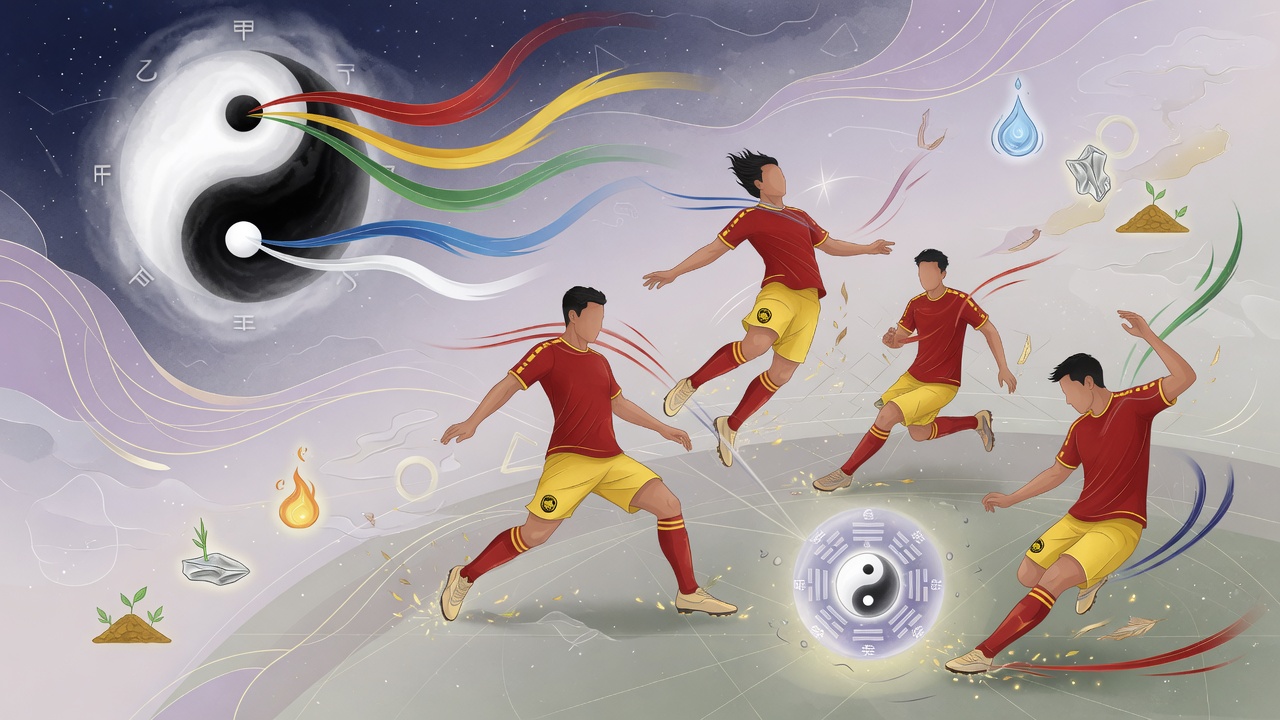
Basic Clarification: BaZi Is Not a Script of Predestination
Common Misconceptions
BaZi is often oversimplified as “fortune-telling,” but it is actually an ancient statistical system for observing energy cycles and character traits, more akin to a dynamic analytical model.
- Misconception 1: BaZi can accurately predict every win or loss. Destiny analysis only shows potential trends; on-field performance, tactical shifts, and referee decisions are variables far beyond a single destiny chart.
- Misconception 2: A collective fate is decided by one person. A team is a complex Five Element energy field. Coaches, players, support staff, and even fans collectively form an aura that must be viewed holistically.
- Misconception 3: An unfavorable annual cycle means passive defeat. Major Luck Cycles and Annual Cycles are like weather; understanding how to adjust strategies accordingly can turn challenges into opportunities for transformation.
- Misconception 4: BaZi dictates everything. In reality, the innate destiny chart accounts for only 30%, while acquired effort, environmental choices, and mental cultivation hold the more significant 70%.
The Unique Perspective of BaZi on Teams
BaZi symbolizes time and spatial energy; the arrangement of Heavenly Stems and Earthly Branches can map the flow of a collective aura.
Unlike personal destiny analysis, team analysis focuses more on the circulation of the Five Elements and the collaboration of the Ten Gods, emphasizing complementarity and balance rather than looking at a single core figure in isolation.
- Stems as external, Branches as internal: A team’s tactical style (Stems) and internal cohesion (Branches) must be harmoniously unified; alignment between the exterior and interior leads to stable performance.
- The Ten Gods Roles: Companion represents teammates, Rob Wealth competitors, Output creativity, Hurting Officer individual flair, Direct Wealth stable income, Indirect Wealth unexpected opportunities, Direct Officer discipline, Seven Killings pressure and challenges, Direct Resource support, and Indirect Resource unconventional strategies.
- The Useful God is key: Identifying the team’s Useful God—the most needed Five Element energy at the moment—is the core task of the coaching staff’s lineup decisions and the pivot of collective fortune.
Core Points: The Triangular Relationship of Character, Timing, and Choice
Five Element Character: Decoding the Team’s 'Innate DNA'
In the BaZi system, the Day Master represents the core self, while the Five Elements (Metal, Wood, Water, Fire, Earth) delineate character contours and behavioral inertia.
If a team is viewed as a living entity, its overall style is often closely related to its dominant Five Element, which determines its instinctive reactions under pressure.
For example, a Fire-dominant team is full of passion and explosive power, excelling at attacking football, but prone to losing control at critical moments due to emotional volatility.
A Water-dominant team is flexible and adaptable with strong tactical fluidity, but may lack decisive finishing power, requiring a core player to step up.
A Metal-dominant team is disciplined and defensively tenacious, but can be overly rigid and lack adaptability, easily getting stuck in stalemates.
A Wood-dominant team grows rapidly and is full of vitality, often benefiting from a strong youth academy, but may falter in crucial matches due to inexperience.
An Earth-dominant team is steady, cohesive, and pragmatic in style, but excessive conservatism may cause them to miss counter-attack opportunities.
- Fire-type team: Like the bravery of the Malayan Tiger, often formidable at home, but must be wary of excess Fire incinerating Wood, avoiding impulsive fouls that disrupt rhythm.
- Water-type team: Skilled at overcoming hardness with softness, capable of exquisite combinations against strong opponents, but with excess Water causing Wood to drift, the tactical core must be firm to prevent aimless drifting.
- Metal-type team: A classic defensive counter-attacking style with strong execution, but excess Metal causing Water to become turbid means excessive rigidity can suppress creativity, requiring a gentle element to be injected.
- Wood-type team: New talents emerge frequently with great growth potential, but excess Wood smothering Fire means a youthful storm without experienced guidance can easily get lost under high pressure.
- Earth-type team: First-class teamwork and a tenacious style, but heavy Earth burying Metal means they must dare to be bold at critical moments to break a deadlocked situation.
- Ten Gods supplementary note: If a team has too strong a Companion star, cohesion is strong but may lack a leader; a strong Output star brings abundant creativity but may lack discipline. These must be balanced through the coach’s adjustments.
The Flow of Timing: Major Luck Cycles, Annual Cycles, and Team Periods
In BaZi, Major Luck Cycles shift every ten years, and Annual Cycles change yearly, together forming the external environment’s “heavenly timing,” influencing a team’s opportunities and challenges.
For a national team, coaching changes, generational transitions, and major tournament cycles often coincide subtly with energy transition nodes, forming an observable rhythm.
When a team enters a Resource star Major Luck Cycle, it may gain more resource support and public tolerance, a good time to solidify foundations and cultivate new talents.
During an Output star Luck Cycle, creativity surges and tactical innovations are frequent, but one must guard against laxity and transform inspiration into solid combat power.
A Wealth star Luck Cycle brings commercial opportunities and attention, but also tests the team’s ability to handle fame and fortune, easily causing distractions from off-field factors.
A Officer/Killing star Luck Cycle directly corresponds to major tournament pressure, serving as both a stage for achieving glory and a touchstone that exposes weaknesses.
- Coaching change is like a Luck Cycle shift: The tactical system brought by a new coach is like a Major Luck Cycle change, potentially activating certain players’ potential or triggering a painful adjustment period that requires time to settle.
- Player transitions and Annual Cycles: Veterans retiring and new stars emerging are just like the intervention of a new Annual Cycle Stem and Branch, disrupting the original Five Element balance and requiring the team’s chemistry to be rebuilt.
- The special energy of a tournament year: Years hosting events like the ASEAN Cup are often Officer/Killing star Annual Cycles in destiny analysis, bringing immense challenges but also times when heroes emerge; it all depends on how one copes.
- Seizing the 'Useful God' timing: If a team’s current Useful God is Fire, its form might be relatively better in Fire-strong years or months, but this is only a probability reference, not a guarantee.
- The metaphor of the broadcasting rights dispute: The recent denial by RTM of spending huge sums on broadcasting rights reflects, from a timing perspective, a clash between Wealth star and Officer star, a struggle between resource allocation and public expectation, reminding the team to find balance between commerce and pure sport.
- Cyclical rhythms: No team can avoid ups and downs. Low periods are exactly the time to accumulate Resource, while peak times require controlling Wealth to prevent arrogance. Understanding cycles allows one to face success and failure with equanimity.
The Power of Choice: Free Will Shines Within the Framework
BaZi reveals the outline of an innate script, but how each act is performed depends on acquired choices and cultivation.
Players with the same destiny chart framework can achieve vastly different results due to training attitude, mental adjustment, and teamwork.
The charm of team sports lies in individual choices accumulating into a resultant force, thereby changing the entire aura’s direction. This is the foundation of “human determination overcoming heaven’s decree.”
A coach’s lineup arrangement is essentially an art of Five Element proportioning, placing players of different characters in suitable positions so they generate rather than overcome each other.
- Personal cultivation supplements the Five Elements: A player with excess Fire in their BaZi can “reduce the fire” through meditation and emotional management to avoid losing control on the field; one with excess Water can increase stability through intensified physical training, using Earth to control Water.
- Team collaboration harmonizes energy: Rationally pairing a Metal-natured defender with a Wood-natured midfielder—where Metal controls Wood represents sculpting—can instead stimulate creativity. The key is finding the balance point of generation and control.
- Choices in adversity: When a team is in an Unfavorable God Luck Cycle, suffering consecutive defeats, will they blame each other or unite as one? Positive choices can mitigate negative energy and even reverse short-term downturns.
- The support of fans and environment: Fan cheering is an external Fire energy that can boost home-ground momentum, but excessive pressure also becomes an “Officer/Killing star.” Players must learn to transform pressure into motivation; this too is a choice.
- Long-termism vs. short-term speculation: Building a youth academy system is the growth of Wood, requiring time and patience; blindly pursuing naturalized players may disrupt the Five Element balance. Choices, more than effort, determine future heights.
- Mindset is the best Feng Shui: The Resource star in destiny represents absorption and learning. A team that is good at summarizing and remains humble is constantly adding Resource to itself, able to dissolve many unfavorable timings.
Pitfall Avoidance Guide: Viewing BaZi and Sports Rationally
Important Notes
- Do not use BaZi to predict match results: Matches are influenced by countless variables. Any claim of precise prediction is false. Maintaining rational appreciation is the mark of a true fan.
- Do not speculate on players' personal charts: The BaZi of specific players should not be publicly discussed without their consent. Respecting privacy is a fundamental quality.
- Do not be superstitious about “fortune alteration”: Feng Shui or name changes cannot replace hard training and scientific management. The root of improving destiny lies in accumulating virtue, learning, and diligence.
- Do not overlook cultural differences: BaZi originates from Chinese culture. When applied to a multi-ethnic Malaysian team, one should maintain an open attitude and avoid forced application or labeling.
- Do not let destiny theory negate effort: Even if “timing is unfavorable,” the spirit of struggle is always worthy of respect. Destiny analysis is a reminder, not an excuse, and certainly not a reason to give up.
- Focus on the team’s overall Five Elements: Rather than obsessing over individual charts, it is more practically meaningful to perceive the wisdom of Five Element generation and control from the team’s style and tactical choices.
- Avoid over-interpreting the broadcasting rights event: Commercial disputes fall into the Wealth star category. When analyzing with BaZi tools, one must avoid extrapolating it as a “heavenly will” judgment on the team’s destiny.
- Maintain critical thinking: Any claim that simplistically attributes a team’s ups and downs to “unfavorable annual luck” is a belittlement of sportsmanship. Be wary of such lazy explanations.
Summary and Review
BaZi provides us with a mirror for observing the self and the team, not a crystal ball for predicting the future.
From the trending topic of pasukan bola sepak kebangsaan malaysia, we see the eternal interplay of character, timing, and choice.
Key conclusion: Understanding the energy of the Five Elements, respecting the laws of timing, and simultaneously believing that human choices can write extraordinary chapters—this is the true revelation that ancient wisdom offers to modern sports.