Bazi & Unions: A Rational Interpretation of Character, Choices, and Timing
Recent public disputes involving the chairperson of Taiwan’s entertainment union, Hsu Chang-te, and Tien Lu-lu have drawn attention to the clashes of personality and stance within unions. Beyond the noise, we can use traditional Bazi culture to ratio
Introduction
The recent open disputes within Taiwan's entertainment union have once again put the concept of “unions” in the spotlight. When people express their positions and emotions within an organization, seemingly accidental conflicts often conceal deep-seated personality differences and the push of timing.
Traditional Bazi is not superstition, but a symbolic system for observing personal traits and life rhythms. Using this hot topic, this article explains how Bazi understands character, choices, and group relationships, without targeting any specific person or making absolute predictions.
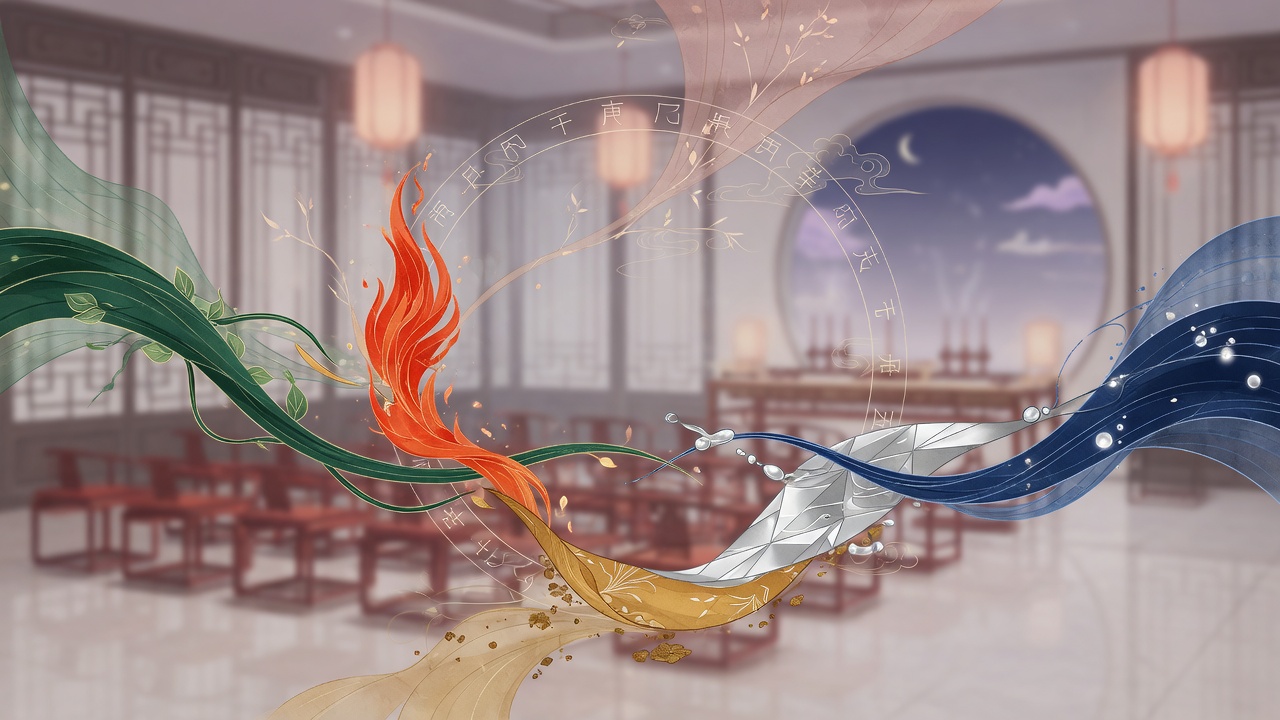
Basic Clarification: What Bazi Actually Talks About
Common Misunderstandings
Many people mistakenly think Bazi is a fatalistic tool for rigid predictions, even to forecast specific events. In reality, Bazi is more like a manual of innate constitution and personality tendencies.
- Misunderstanding 1: Bazi determines everything. Bazi shows the innate energy configuration, like factory settings, but environment, education, and personal cultivation can greatly rewrite the life trajectory.
- Misunderstanding 2: Bazi can predict specific conflicts. Bazi analysis looks at personality trends and timing fluctuations, not pinpointing a quarrel on a specific date. Frictions in a union can be understood through the generating and overcoming of the Five Elements, but not ironclad predicted.
- Misunderstanding 3: Same Bazi, same destiny. Even with the same birth hour, differences in location, family, and choices lead to vastly different life scripts. Bazi provides probability tendencies, not the only answer.
Core Points: How Bazi Interprets Character, Timing, and Union Interactions
1. Character Foundation – Day Master and Ten Gods
In Bazi, the Heavenly Stem of the birth day is called the Day Master, representing the self. The Five Element nature of the Day Master (Wood, Fire, Earth, Metal, Water) gives basic temperament.
Around the Day Master, the other stems and branches form the Ten Gods through generating and overcoming relationships, mapping our behavior patterns and psychological motives when facing the outside world.
- Wood Day Master (Jia, Yi): Benevolent, progressive, like a tree growing upward, but can also be stubborn and uncompromising. In unions, Wood types are often idealistic drivers.
- Fire Day Master (Bing, Ding): Passionate, quick-tempered, strong in action but prone to impulse. Fire types are often the “spark” who ignite discussions in unions.
- Earth Day Master (Wu, Ji): Honest, steady, highly tolerant, but sometimes too conservative. Earth types suit roles of mediation and pressure-bearing in unions.
- Metal Day Master (Geng, Xin): Loyal, decisive, rule-oriented, but may appear cold and rigid. Metal types often voice principles in unions.
- Water Day Master (Ren, Gui): Intelligent, adaptable, strong in adjustment but prone to insecurity. Water types are good at reading the winds in union dynamics.
- Influence of Ten Gods: For example, Companion, Rob Wealth represent peers and competitiveness; Eating God, Hurting Officer represent talent expression and rebelliousness; Direct Officer, Seven Killings represent pressure from rules and stress resilience; Direct Resource, Indirect Resource represent thinking and protection. The combination of Ten Gods in a chart determines whether a person tends to cooperate or confront, to speak bluntly or endure silently in an organization.
2. Timing Drivers – Luck Cycles and Annual Cycles
The natal Bazi chart is static, while the Luck Cycles (ten-year periods) and Annual Cycles (yearly stems and branches) are dynamic timing forces. Like seasonal rotations, they trigger different aspects of our character.
When an annual cycle activates the Officer/Seven Killings in the chart, one may suddenly feel increased external pressure, becoming sensitive and defensive; if it activates the Hurting Officer, one tends to speak bluntly, even stirring verbal disputes.
- Luck Cycle Changes: Every ten years we enter a new energy field. For instance, when going through a Companion/Rob Wealth Luck Cycle, competitiveness heightens, and one may actively strive for a voice in a union; during a Resource Luck Cycle, one is inclined to learn and coordinate behind the scenes.
- Annual Cycle Triggers: 2026 is a Bing Wu year (hypothetically), with strong Fire. For those whose Bazi dislikes Fire, this year may bring impatience and conflict; for those who favor Fire, their drive erupts. Public quarrels in unions are sometimes not because people changed, but because the annual cycle activated latent combinations like Hurting Officer Meeting Direct Officer or Rob Wealth Seizing Wealth.
- Timing is irresistible, but we can choose how to respond: Understanding your Luck and Annual Cycles is not to resign to fate, but to foresee emotional fluctuations and give yourself a buffer of calm in critical moments.
3. Bazi Interactions in Unions – Group Five Element Dynamics
A union is a micro-society, where members form complex Five Element networks of generating and overcoming. Understanding these interaction patterns helps view organizational frictions and cooperation rationally.
From a Bazi perspective, relationships like combination, clash, punishment, harm exist between people. These are not superstition, but ancient symbolic descriptions of energetic resonance.
- Many Companions: Competition and Cooperation. When many members in a union have strong Companion or Rob Wealth, internal competitiveness is high, easily causing disputes over resource distribution or differing stances. But if well-combined, it can also spark powerful teamwork.
- Officer Pressure: Rules and Conflict. If union leaders have strong Direct Officer, while members often have Hurting Officer, a “Hurting Officer Meets Direct Officer” tension forms – one side values order, the other challenges, conflicts unavoidable. This is not about right or wrong, but innate tendencies.
- Resource Resolution: Wisdom and Tolerance. Direct Resource and Indirect Resource represent thinking, yielding, and transformation. When members with strong Resource energy exist in an organization, they often act as lubricants, turning conflicts into constructive discussions.
- Five Element Complementation: The passion of Fire types can mobilize Water types; the principles of Metal types can balance the casualness of Wood types. If unions recognize the diversity of member personalities, they can better divide work and cooperate, rather than draining each other.
Tips: Applying Bazi Wisdom Rationally
Points to Note
- Do not use Bazi to assert good or bad fortune for others. Especially in public events, deducing someone’s Bazi from news reports is disrespectful of privacy and easily leads to subjective speculation. Bazi analysis must be based on accurate birth time and combined with real-world context for comprehensive judgment.
- Personality analysis shows tendencies, not labels. The characteristics of Day Master or Ten Gods are only high-probability reaction patterns; upbringing, education, and experience can greatly modify them. Saying “a certain Day Master definitely behaves in a certain way” is stereotyping and deviates from the true meaning of Bazi.
- Avoid negative labeling of terms like “Hurting Officer Meets Direct Officer”. These are neutral symbols of certain energy combinations, which can be great strengths in fields like art and innovation. Outspokenness in a union, from another angle, can be a sign of responsibility.
- Fluctuations of timing are not excuses. Even if an annual cycle triggers conflict energy, people still have free will. The purpose of Bazi education is to enhance self-awareness, not to blame “bad luck” for impulsive actions.
- Respect diverse Bazi traits in organizations. If you learn that a colleague may be naturally blunt or conservative, you can offer more understanding, but never use that as a reason to ostracize or label. Bazi is a communication aid, not a weapon.
Summary
Union storms will eventually subside, but people’s thinking about personality and destiny never ceases. The modern significance of Bazi culture lies in providing a rational framework for understanding ourselves and others.
When we understand that character has a Five Element foundation, timing comprises Luck Cycles and Annual Cycles, and groups exhibit generating and overcoming interactions, we can face conflicts with less emotional blame and more awareness and tolerance. True wisdom is making conscious choices even after recognizing our tendencies.