Zhou Yi Qian Gua: The Way of Modesty and Success Wisdom in Modern Life
Among the 64 hexagrams of the Zhou Yi, the Qian Gua (Modesty Hexagram) is the only one where all six lines are auspicious, praised as “one modesty yields four benefits.” It reveals a timeless principle: modesty is not weakness, but the suprem
Opening Introduction
The Zhou Yi is not a divination tool, but a philosophy of change. The 64 hexagrams correspond to 64 life situations, each hexagram serving as a decision-making map.
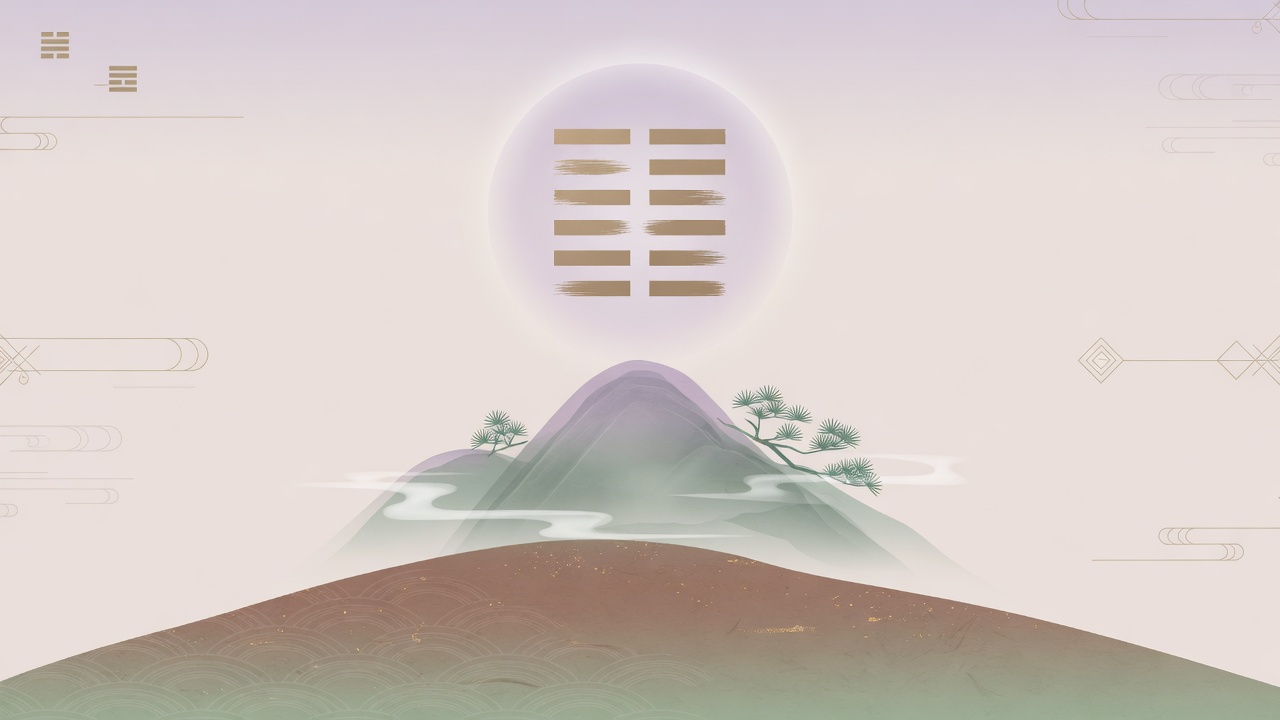
Among them, the Qian Gua (Earth over Mountain, Modesty) is especially unique—the entire hexagram contains no misfortune, blame, regret, or distress, reflecting the timeless wisdom that “humility brings benefit, pride brings loss.”
This feature will deeply analyze the lines and meanings of the Qian hexagram and provide practical modern insights to help you overcome hardness with softness in a competitive society.
Basic Clarification: Avoid Three Major Misconceptions
Common Misconceptions
Many equate the Zhou Yi with fortune-telling, or interpret the Qian hexagram as unconditional yielding, which completely deviates from the spirit of the original text.
- Misconception 1: The Zhou Yi is merely a book of divination — In fact, the hexagram and line statements are filled with life philosophy and strategic wisdom, making it a classic of decision-making thought.
- Misconception 2: Modesty means showing weakness — The Qian hexagram’s inner trigram is Gen (Mountain), representing a solid core; the outer trigram is Kun (Earth), representing gentle expression. It is outwardly gentle and inwardly strong, not weak.
- Misconception 3: The Qian hexagram only talks about giving way — The “modesty” of Qian is having but not claiming, the premise being “having.” Modesty without true capability is false; having capability yet not flaunting it is true modesty.
Core Essentials: The Deep Wisdom and Modern Applications of the Qian Hexagram
Hexagram Image and Judgment: The Metaphor of Mountain within the Earth
The Qian hexagram has Kun (Earth) above and Gen (Mountain) below. The mountain, though tall, hides beneath the earth, symbolizing loftiness not displayed. The judgment says: “Modesty creates success. The superior person carries things through to completion.” Meaning modesty leads to smooth progress, and the noble person will surely have a good end.
The Tuan Zhuan (Commentary on the Judgment) explains: The way of Heaven decreases the full and augments the modest; the way of Earth changes the full and flows to the modest; spiritual beings harm the full and bless the modest; the way of humans despises the full and favors the modest. Heaven, Earth, humans, and spirits all assist the modest, hence they can achieve success.
- Core Image: Mountain beneath the earth—having real strength yet actively lowering one’s posture to avoid becoming a target.
- Modern Projection: True masters often appear low-key; they deeply cultivate their abilities without rushing to show off, and amaze everyone at the critical moment.
Six Line Revelations: Modesty Strategies at Different Stages
The six lines of the Qian hexagram, from the first to the sixth, demonstrate the application of modesty in different situations, all without misfortune—this is its subtlety.
- First Six: A modest and humble person can cross the great river; good fortune. When entering a workplace or new environment, maintain a humble posture; even if your ability is lacking, you can gain help through modesty and overcome difficulties.
- Second Six: Modesty that is proclaimed; perseverance brings good fortune. When your modesty is widely praised (reputation abroad), still adhere to the right path, and do not be burdened by empty fame.
- Third Nine: Industrious modesty; the superior person carries things through to completion; good fortune. This is the only yang line in the hexagram, emphasizing having merit but not contending for merit. In modern management, a leader who attributes achievements to the team gains even higher authority.
- Fourth Six: Nothing is unfavorable; cultivate modesty. Exert the spirit of modesty, making every gesture naturally humble and gentle, and nothing will be disadvantageous. This reminds us that modesty must be internalized as a habit, not a performance.
- Fifth Six: Not enriched through one’s neighbors; it is favorable to use punitive expeditions; nothing is unfavorable. When in a high position, do not rely on wealth to buy people’s hearts, but only on modesty to inspire; when necessary, you can still take decisive action (punitive expeditions), gaining support because of pure motives.
- Top Six: Modesty that is proclaimed; it is favorable to use armies, to subdue one’s own territories. When modesty is known far and wide, you can undertake great endeavors and correct what is unjust. Remaining modest at the height can unite the greatest strength.
Modern Application Scenarios: Workplace, Interpersonal, and Leadership
The wisdom of the Qian hexagram can transcend time, becoming a mindset for survival and development for modern people.
- Workplace: When just joining a company, like the First Six, be modest to gain guidance; when you have achievements, like the Third Nine, attribute credit to the team to avoid jealousy; when promoted to senior management, like the Fifth Six, use modesty to unite people while maintaining decisiveness.
- Interpersonal relationships: In disputes, first yield (outer Kun), yet hold your bottom line (inner Gen), often turning hostility into amity. Proclaimed modesty is not deliberate low-key behavior, but sincerely giving way to benefit others, thus winning long-term trust.
- Leadership: Outstanding leaders often manifest as “industrious modesty”—diligent and meritorious yet not claiming credit. Research shows that humble CEOs can stimulate organizational innovation because employees feel respected.
Avoidance Guide: Four Taboos in Practicing the Qian Hexagram
Precautions
- Avoid mere appearance without substance: Modesty without real talent and learning is hypocrisy, and will eventually be exposed. First build the solid strength of the “inner trigram Gen Mountain,” then talk about being modest and gentle.
- Avoid self-deprecation: Modesty does not mean making yourself lowly. The Third Nine’s “industrious modesty” is to yield after having merit; if you have no achievements at all but pretend to be modest, it will instead cause resentment.
- Avoid ignoring the context: The Fifth Six’s “punitive expeditions” shows that on matters of principle, you must be firm; continuous yielding invites bullying.
- Avoid modesty that seeks returns: “Proclaimed modesty” means naturally receiving praise due to modesty, not a deliberate performance for fame. Impure motives will eventually backfire.
- Avoid giving up halfway: The Qian hexagram emphasizes “carrying through to completion”; modesty must be sustained. Becoming low-key for a while and then becoming arrogant is even more harmful.
Summary and Review
With the image of mountain beneath the earth, the Qian hexagram tells us that true strength lies in restraint, not ostentation.
Its six lines, from cultivating oneself to interacting with others to governing the world, all use modesty as the underlying tone, achieving success and completion.
Key takeaway in three phrases: inwardly, have the bone of a mountain; outwardly, be covered with the earth of Kun; work hard but do not boast. In modern society, this is precisely the highest form of competitive social intelligence.