88-Year-Old Kim Young-ok Fears Being Forgotten? The 'Yin Star' in Ba Zi Reveals the Deep Code of Longevity and Cultural Inheritance
Veteran South Korean actress Kim Young-ok recently told her juniors, "Keep working until I die, I'm afraid of being forgotten." This remark has touched countless people and resonates with the Yin Star imagery in Ba Zi (Eight Characters) desti
Introduction
Veteran South Korean actress Kim Young-ok recently told her juniors, "Keep working until I die, I'm afraid of being forgotten." This remark has touched countless people and resonates with the Yin Star imagery in Ba Zi.
Starting from this statement, this article explains how the Yin Star symbolizes longevity, memory, and cultural inheritance—without involving any specific personal birth data, only a rational discussion on a traditional cultural level.
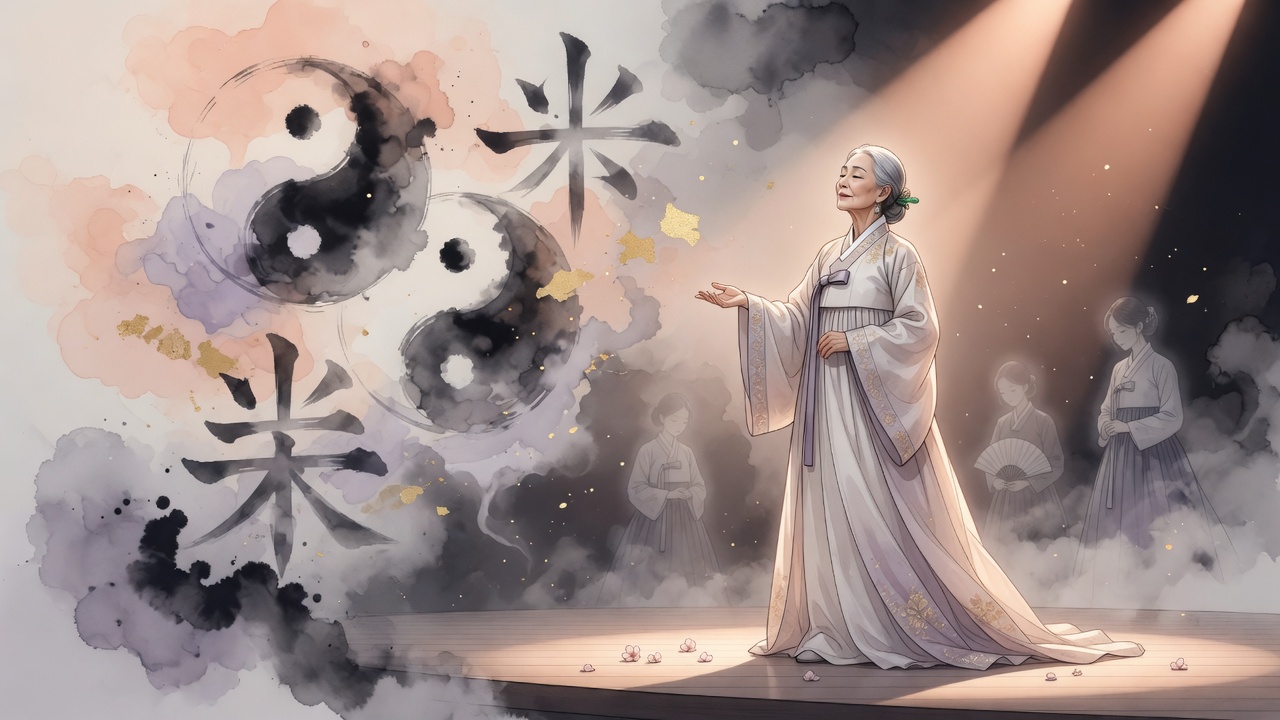
Basic Clarifications
Common Misunderstandings
- Myth 1: Treating Ba Zi as a precise science. In reality, it is an ancient symbolic system for observing life rhythms, emphasizing trends and symbolism rather than absolute conclusions.
- Myth 2: Assuming a strong Yin Star guarantees longevity. The Yin Star is only one symbol; it must be assessed alongside the Day Master's strength, the flow of the Five Elements, and the overall chart structure.
- Myth 3: Using a celebrity's remarks to deduce their Ba Zi chart. We do not know Kim Young-ok's specific birth details; the following discussion is limited to cultural codes and makes no individual predictions.
- Myth 4: Equating "fear of being forgotten" simply with fear of death. It is more a concern about the interruption of one's cultural life, belonging to the spiritual dimension of the Yin Star.
- Myth 5: Completely equating the Yin Star with the "mother." The Yin Star can also represent teachers, knowledge, property, beliefs, and everything that provides shelter and passes things on.
Core Insights
The Essence of the Yin Star and Its Symbolism of Longevity
In the Ba Zi system, the Day Master represents oneself, while the Yin Star is the Five Element that gives birth to the Day Master. Like a continuous supply of nourishment, it symbolizes protection, learning, elders, and inner stability.
Traditional destiny analysis divides the Yin Star into Direct Yin and Indirect Yin. Direct Yin is gentle and inclusive; Indirect Yin is sharp and unique, but both point to life energy of "continuation" and "accumulation."
The Yin Star does not directly determine lifespan length; it acts more like a "protective layer" for the life foundation, representing the nourishment of primal energy and freedom from excessive depletion.
In the Four Pillars, a Yin Star in the Year Pillar represents ancestral blessings; in the Month Pillar, parental upbringing; in the Day Pillar, self-cultivation; in the Hour Pillar, fortune in old age.
An overly strong Yin Star manifests as over-dependence and lack of initiative; an overly weak Yin Star manifests as a lack of security and low motivation to learn. Balance is key.
- Core function: Giving birth to me, protecting me, nourishing me. A person with a well-placed Yin Star often values accumulation, rules, and a sense of history.
- Symbolic objects: Mother, teacher, literature, faith, real estate, etc.—anything that provides shelter and carries on tradition is related to the Yin Star.
- Longevity logic: When the Yin Star in a Ba Zi chart acts to mediate conflicts, transform negative forces, or support the Day Master, the person tends to develop stronger resilience and stress resistance.
- Spiritual anchor: The Yin Star also represents faith and life purpose. People with clear goals often have more vitality, a point now corroborated by modern psychology.
- Direct Yin vs. Indirect Yin: Direct Yin is like a mother's unconditional nourishment; Indirect Yin is like a mentor's intellectual inspiration. Both form the spiritual foundation of longevity.
- Position of the Yin Star: A Yin Star in the Year Pillar symbolizes family inheritance; in the Hour Pillar, it directly relates to a peaceful old age.
- Health significance: Traditionally, the Yin Star is thought to protect the body, reducing accidents and sudden illnesses, though this is not absolute.
- Balance with the Expression Star: The Expression Star governs output and consumption; the Yin Star governs conservation and nourishment. A balance between the two supports lasting vitality.
- Longevity involves more than the Yin Star: It also requires the smooth flow of the Five Elements and favorable Luck Cycles. One must never judge lifespan based on a single Ten God.
Seeing the Yin Star's Cultural Inheritance Function Through the 'Fear of Being Forgotten'
Kim Young-ok's words, "I'm afraid of being forgotten," are, in traditional culture, a direct reflection of the Yin Star's longing: people want not just to live, but to be remembered and needed.
The Yin Star governs culture, records, and continuity. It drives people to create, teach, and leave a legacy. Remaining active in the public eye at an advanced age is an external manifestation of the Yin Star spirit.
"Fear of being forgotten" is not negative; it is a cherishing of cultural vitality, consistent with the Yin Star's association with historiography and traditional values.
Chinese culture has always valued "establishing one's words, merits, and virtue"—the three ways the Yin Star pursues immortality. An actor leaving behind classic roles is a contemporary form of "establishing one's words."
Kim Young-ok's remark evokes the opposite of Confucius's saying, "To be old and not die is to be a thief"—she refuses to be a burden and wants to continue creating value.
- Inheritance drive: People with a strong Yin Star naturally have an impulse to "pass things on," like a teacher mentoring students or an elder supporting juniors.
- Social memory: Being remembered through one's works is a modern expression of the "cultural continuity" represented by the Yin Star.
- Intergenerational connection: By telling her juniors to "keep working until I die," Kim Young-ok essentially hopes her experience and spirit can continue through them.
- The Yin Star's slow-burning nature: Unlike the explosive power of the Expression Star in youth, the Yin Star in old age is more like a slow, steady simmer—not chasing speed, but excelling in persistence and stability.
- Complete life narrative: The Yin Star enables a person to review their life and distill its meaning; this integrative ability is key to psychological well-being in later years.
- Establishing words and the Yin Star: Writing books, passing on oral teachings—all are forms of Yin Star inheritance.
- Cultural symbols: The memory of an era is often co-constructed by artists, teachers, artisans, and other "Yin Star people."
- Ways to fight forgetting: Not only through works, but also through emotional bonds with the next generation—this is the cycle of the Yin Star's "giving birth to me" reversing into "my giving birth."
- Traditional wisdom: Destiny analysis holds that those entering a Yin Star luck cycle in old age often have a strong urge to organize and teach—a natural heavenly mandate.
Vitality in Later Years Among Elderly Public Figures: Wisdom from the Yin Star
We cannot and should not try to deduce Kim Young-ok's Ba Zi chart, but her remark offers a window for observing how to face aging and forgetting with the wisdom of the Yin Star.
The value of destiny study lies in providing a symbolic language to help us understand common human psychological needs, not in passing judgment on specific individuals.
Traditional destiny analysis does not view old age as a period of decline, but as a stage when the Yin Star returns to its proper place. Youth emphasizes the Expression Star, middle age the Wealth and Officer Stars, and old age the Yin Star—this is an analogy for life's rhythm.
Modern psychology finds that older adults who maintain a sense of purpose and learning ability experience slower cognitive decline and higher life satisfaction. This aligns with the Yin Star's domain of "continuous absorption and output."
When analyzing old-age fortune in Ba Zi, the focus is on whether the Hour Pillar and late-life Luck Cycles have a well-placed Yin Star, but human agency cannot be ignored.
- Symbol, not fact: The Yin Star represents a cultural archetype. Anyone fitting this archetype can be discussed, independent of their actual birth chart.
- Universal inspiration: Regardless of one's Yin Star strength, anyone can strengthen their "spiritual Yin Star" through learning, teaching, and creating, thereby enhancing well-being in later years.
- Going with the flow: Do not force a competition of speed with the young; instead, develop the Yin Star's qualities of inclusiveness and depth.
- Intergenerational connection: Achieve a spiritual "immortality" through teaching, sharing, and mentoring—this is the most touching part of Kim Young-ok's statement.
- Beware of over-interpretation: One should not directly equate an individual's remarks with destiny traits, nor use them to reverse-engineer a Ba Zi chart. Maintain rational boundaries.
- Sense of purpose: The Yin Star gives a person a feeling of "unfinished business" in old age, which is a source of vitality.
- Learning ability: The Yin Star governs absorbing new knowledge. Elderly people who can still embrace new things often remain mentally sharp.
- Social participation: By guiding juniors or engaging in public welfare, one fulfills the Yin Star's "protective" function and gains social recognition.
- Rational boundaries: We should not overly mysticize Kim Young-ok's remark with destiny theories. Her personal charm stems more from her professionalism and character.
Pitfall Avoidance Guide
Important Notes
- Do not judge a chart by a single Ten God: Looking only at the Yin Star easily leads to misjudgment; the entire chart and Luck Cycles must be considered.
- Do not equate longevity with a strong Yin Star: In some cases, an overly strong Yin Star leads to stubbornness and closed-mindedness, requiring the Wealth Star to provide balance.
- Do not use a celebrity's remarks to deduce their birth data: Kim Young-ok's statement is a cultural phenomenon and should not be used to extrapolate a specific Ba Zi prediction.
- Beware the trap of fatalism: Destiny symbolism offers a perspective, but human choice and environment are just as important. Vitality in old age comes more from mindset and action.
- Avoid cross-cultural misreading: Ba Zi originated in China. When discussing a Korean artist, respect cultural differences and do not forcibly align with Korean-style destiny systems.
- Do not neglect health management: Regardless of destiny, scientific routines and medical care are the material foundation for vitality in old age.
- Do not use the Yin Star to explain everything: Ba Zi is a system. Focusing only on the Yin Star can lead to tunnel vision, ignoring the interactions of the Expression Star, Wealth Star, Officer Star, etc.
- Do not apply age-based stereotypes to destiny: Every life has a different rhythm. Whether someone is active at an advanced age is more related to personal choice and health conditions.
- Do not treat Ba Zi as medical advice: For any health issues, consult a doctor. Destiny analysis cannot replace science.
Summary and Recap
Kim Young-ok's "fear of being forgotten" voices the innate human longing for cultural continuity, and the Yin Star in Ba Zi is precisely the symbolic expression of this longing.
Key conclusion: The Yin Star symbolizes nourishment, protection, learning, and inheritance. It does not directly determine lifespan length, but reveals the inner logic of vitality in old age and spiritual longevity.