Extreme Heat Returns: How Hongkongers Can View Character and Choice Through the Lens of Bazi and Seasonal Timing
As extreme weather dominates headlines, Hong Kong’s pulse fluctuates with the climate. Bazi does not forecast storms, yet it harbors the wisdom of regulating the climate, revealing the hidden connection between character foundations and **sea
Opening Introduction
When returning heat and possible severe weather occupy the news, cities worldwide are searching for an inner anchor to cope with climate variability. As a high-density metropolis, Hong Kong feels every extreme weather alert acutely. Bazi never predicts the weather, but it offers a complete framework of celestial timing—character—choice, helping individuals recognize their dispositional coordinates and adaptation strategies during change.
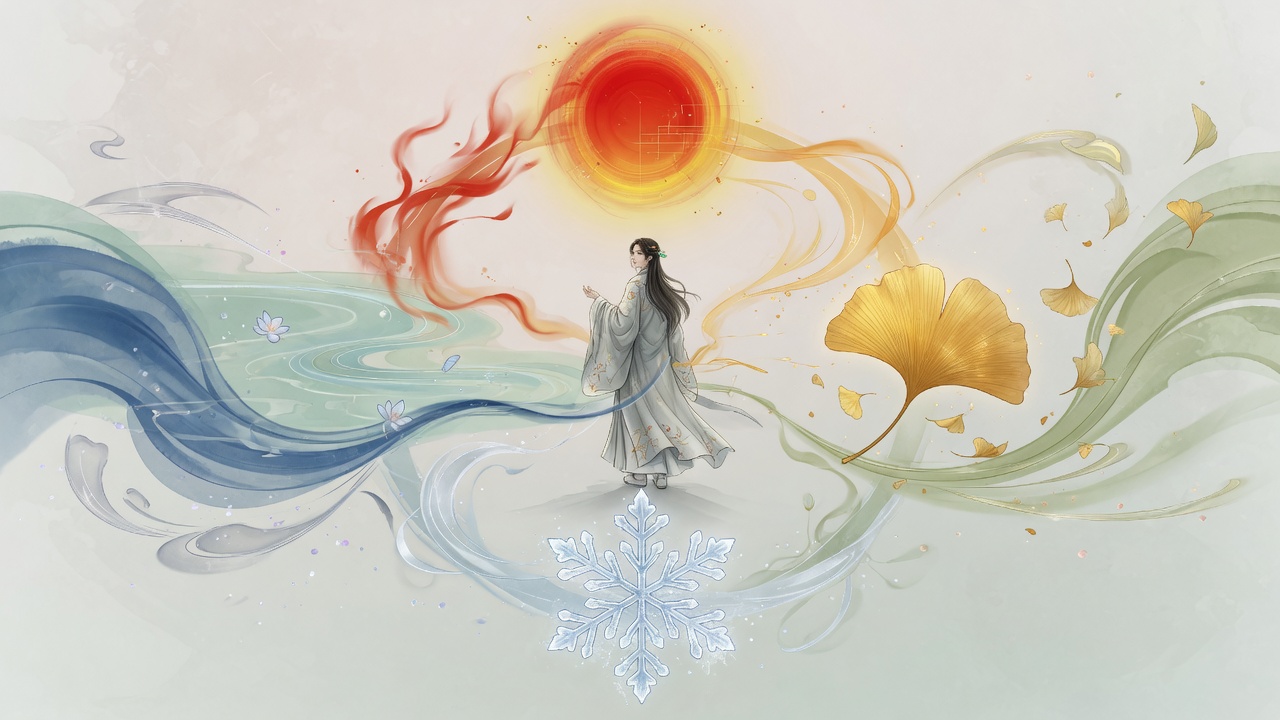
Basic Clarification: How Bazi Views “Weather”
Common Misconceptions
- Misconception 1: Bazi can accurately predict weather disasters. Bazi is a temporal energy model that depicts the Five Element interactions between an individual and the annual cycles, not a direct forecast of meteorological events. It cares about “what kind of challenges a person’s energy field may face under such climatic features” and is never a weather forecasting tool.
- Misconception 2: Climate regulation in destiny analysis equals real-world climate. Although terms like cold, warm, dry, and damp are borrowed from climate vocabulary, they actually represent symbolic energy balancing principles. Being born in summer and “favoring water” does not mean you need to stand in the rain; it means you need a mental state of calm, fluidity, and flexibility.
- Misconception 3: The season of birth determines everything. The month branch is only one pillar of the Bazi chart. The whole chart must consider the Day Master, the flow of the Five Elements, and the interaction with annual cycles. Reducing Bazi to seasonal personality labels is a gross oversimplification that loses the holistic wisdom of destiny study.
Core Points: The Triad of Character, Choice, and Seasonal Timing
1. Climate Regulation First: The “Climate Regulator” in Bazi
In the classical Bazi text *Qiong Tong Bao Jian*, climate regulation is the foremost principle of destiny analysis. It means that when a chart is overall cold or warm due to the birth month, specific Five Elements must be used to “adjust the climate” and restore balance.
For example, if someone is born in the fifth lunar month (Wu month), fire is strong and earth is dry. If the chart lacks water, it is like a sweltering city missing cool moisture, and the person tends to be irritable and have racing thoughts. Here, water becomes the regulating useful god, representing wisdom, calmness, and fluidity.
- The essence of climate regulation: It is not about physically changing the environment, but revealing the psychological resources and behavioral patterns a person needs most. If fire is strong and water is needed, it reminds the person to consciously incorporate reflection, solitude, and gentle expression, avoiding burning relationships with excessive fervor.
- The main themes of cold, warm, dry, and damp: People with cold metal and water charts, born in winter months, often need fire to warm them, which corresponds to a sense of purpose, drive, and passion. Without fire for climate regulation, they may deliberate deeply but struggle to initiate. This explains why some people need an extra “inner ignition” during gloomy seasons.
- Modern inspiration: When Hong Kong experiences persistent heatwaves, those whose Bazi dislikes fire and dry earth will more easily feel physical and mental dissipation. At such times, following the climate regulation principle is not about hiding in an air-conditioned room, but deliberately adding “water” energy into life—learning new skills, engaging with art, adjusting breathing, and avoiding unnecessary arguments.
2. The Month Branch Sets the Character Foundation: The Season You Were Born
The month branch (the earthly branch of the birth month) controls nearly forty percent of the chart’s energy and is the pillar that most directly reflects the climatic characteristics of Earth at the time of birth. It shapes a person’s innate dispositional foundation.
Hong Kong is subtropical with long summers and virtually no winter. Locally born individuals often have Si, Wu, Wei (fire and earth month branches) or Shen, You (strong metal but still with residual dryness) in their charts. This makes “damp heat” and “dryness” the background tone of many Hongkongers’ charts.
- Yin and Mao months (spring birth): Wood energy expands, symbolizing growth and exploration. These people are mentally active and novelty-seeking, but easily anxious due to too many options. When facing sudden climate changes, they are often the first to spot opportunities, yet also the most prone to scattered attention.
- Si, Wu, and Wei months (summer birth): Fire and earth dominate, making the character outgoing and highly action-oriented, like the midday sun. But blazing fire and dry earth lead to rigid tempers and weak endurance. When heatwaves arrive, they must guard against “adding fuel to the fire” emotional spirals and proactively create psychological cooling.
- Shen, You, and Xu months (autumn birth): Metal energy is severe, making the character tend toward rigor and rule-following. Such charts are relatively better at maintaining order in heat, but easily become tense and need to appropriately release the desire for control.
- Hai, Zi, and Chou months (winter birth): Water is strong, damp and cold, making the character introverted and strategic. They usually tolerate heat better than summer-born individuals, but in high temperatures their internal stillness may be disrupted by external dryness, leading to insomnia or overthinking.
3. Luck Cycles Are Like Solar Terms: When Annual Climate Meets the Natal Chart
Major cycles and annual cycles are like broader climate changes. Everyone has their own favorable and unfavorable elements. When the Five Element composition of a particular year precisely triggers the climate regulation conflict in the chart, one easily feels “out of luck” or “in one’s element.”
Take 2026, a Bing Wu year (Heavenly Stem Bing fire, Earthly Branch Wu fire), as an example—it is a year of extremely strong fire energy. If the natal chart is already hot and dry, encountering Bing Wu is like adding heat on top of heat, requiring an outlet of “water” to achieve balance.
- Those who favor fire meeting a fire year: People whose original chart is cold and needs fire for climate regulation will display extraordinary vitality and creativity in a strong fire year. The heat ignites fighting spirit, as if celestial timing is assisting. However, they must still pay attention to real-world safety, as excessive fire can also trigger rash decisions.
- Those who dislike fire meeting a fire year: If the original chart is already hot and dry, encountering a fire year is like adding fuel to the flames. Such individuals, during scorching summers and the following periods, are highly prone to physical and mental exhaustion and emotionally flammable. At such times, the regulating useful god water becomes extremely precious—not praying for rain, but actively arranging rest, increasing calming activities, and reducing high-intensity conflicts.
- The rhythm of monthly cycles: Within a year there are also “small solar terms,” such as Wu month (June) being the hottest and Zi month (December) the coldest. Those whose Bazi dislikes fire will feel pressure in advance during Wu month, and can plan the window for important decisions accordingly. This dynamic matching embodies the traditional wisdom of going with the flow.
Avoidance Guide: Rationally Applying the Bazi View of Celestial Timing
Points to Note
- Do not judge personal fortune by the weather: The temperature or a rainstorm on a given day cannot directly determine personal luck. Bazi focuses on phased Five Element trends, not instantaneous meteorology. Projecting personal anxiety onto the weather easily creates a negative cycle of self-suggestion.
- Do not treat climate regulation as a panacea: Climate regulation is only one of many principles in destiny analysis. A truly professional Bazi analysis must synthesize structure, strength, clashes, combinations, and punishments. Guiding major life decisions based solely on “winter birth needs fire, summer birth needs water” is a dangerous oversimplification.
- Prioritize real-world disaster prevention: No matter what destiny study says, in the face of severe weather warnings, the highest priority is always scientific protection. Destiny study provides a psychological coordinate system and cannot replace safety measures. What Bazi tells us is “how to settle body and mind amid climatic changes,” not to sit in the eye of the storm testing fate.
- Avoid geographical determinism: Hong Kong’s heat does not mean all Hongkongers’ charts are dry. Individual birth year, month, day, and hour differ, and combined with factors like direction and name, the chart already contains a dynamic balance. Do not permanently label yourself with the city’s climate.
- Use Bazi as a mirror for self-understanding: Rather than obsessing over “will I have bad luck because of the weather this year,” use climate regulation thinking to examine what kind of energy you have long lacked. A person who frequently becomes irritable due to heat may precisely need to cultivate the containment of water—patience, listening, and art.
Summary and Reflection
The Bazi view of celestial timing is essentially a dialogue between character and seasonal trends. Climate regulation tells us that environmental changes are not signals of an enemy, but echoes reminding us of our inner balance needs. In an era of frequent extreme heat, there is no need to panic, but we can ask ourselves: Have I already acquired that bit of “water” wisdom? Decoding the climate code of your chart is decoding the way to coexist with yourself and the world.