32 Teams Set for the Women's Volleyball World Championship: Exploring Character, Choices, and Competitive Timing Through BaZi
The 2027 Women's Volleyball World Championship is about to begin, with all 32 teams confirmed and the Thai volleyball community closely watching. Every spike, block, and dig on the court is not only a test of skill but also a collision of character a
Opening Introduction
In October 2026, the FIVB officially announced that all 32 teams for the 2027 Women's Volleyball World Championship have been confirmed. As one of the host nations, Thailand is full of anticipation for this top-tier event.
While countless eyes focus on the net battles, another perspective quietly emerges: How can BaZi interpret an athlete's fundamental character, their decision-making tendencies at critical moments, and the ups and downs of life timing? This article makes no assertions about wins or losses, only uses the light of traditional culture to illuminate the human logic behind competition.
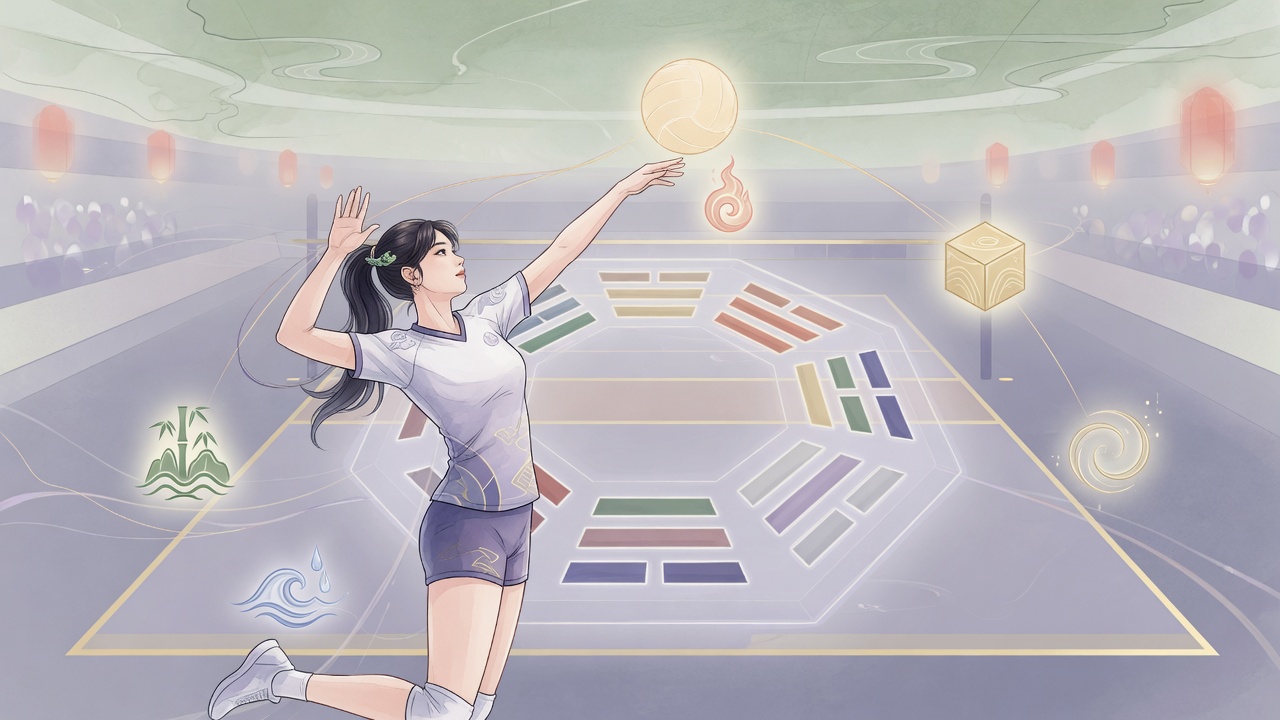
Basic Clarification: BaZi Is Not a Match Predictor
Common Misconceptions
- Misconception 1: BaZi can calculate which team will win the championship. In reality, BaZi analyzes an individual's innate energy configuration and cannot directly deduce multi-variable, highly random match outcomes.
- Misconception 2: An athlete's birth chart determines their success or failure. Destiny analysis only reveals personality tendencies and timing sensitivity; training, tactical deployment, and team chemistry are the key variables.
- Misconception 3: An unfavorable annual cycle means inevitable poor form. The luck cycles (Da Yun) and annual stars (Liu Nian) in BaZi are more like weather forecasts—they suggest which environments are more conducive to performance, but human agency can adjust coping strategies.
Core Insights: BaZi Ten Gods and Competitive Personality
Peer and Rival Stars: Teammates or Opponents?
In BaZi, those with the same element as the Day Master are called Peer (Bi Jian) (same yin/yang) and Rival (Jie Cai) (opposite yin/yang). These two stars directly reflect how a person interacts with peers, teammates, and competitors.
A strong Peer star indicates a strong sense of self, often serving as a stable cornerstone in the team, not easily shaken. A strong Rival star is more pioneering, daring to take risky spikes, but may also compete for resources with companions.
- Peer as favorable: Suitable for the role of main attacker or captain, calm and composed, able to handle crucial points, but must be careful not to be too stubborn.
- Rival as favorable: Explosive power, often pulling off unexpected plays in chaotic situations, but needs coaching guidance to integrate personal sharpness into the team rhythm.
- Excessive Peer/Rival as unfavorable: May show a tendency to play solo, with self-centered passing choices; here the channeling of Output (Shi Shang) or the restraint of Authority (Guan Sha) becomes particularly important.
Output Stars: Creativity and On-Court Brilliance
Eating God (Shi Shen) and Hurting Officer (Shang Guan) are produced by the Day Master, representing talent, expression, and technical finesse. On the volleyball court, these Ten Gods directly relate to micro-skills like second touches, tipping timing, and serve variations.
Eating God is gentle, Hurting Officer is sharp. A strong Eating God player often has smooth movements and good rhythm, like a 'court artist'; a strong Hurting Officer often produces unexpected tactics, but emotional fluctuations may be amplified.
- Eating God as favorable: Well-rounded skills, good at spotting gaps in the opponent, precise passing, and able to maintain a relaxed mindset, rarely underperforming in big matches.
- Hurting Officer as favorable: Highly creative, able to execute unconventional plays, but needs the support of Resource Stars (Yin) to stabilize temperament, avoiding over-showing at critical moments.
- Excessive Output with a weak self: Too many ideas but the body can't keep up, leading to hesitation or mistakes; here, Peer/Rival to strengthen the self or Resource Stars to rein in are needed.
Authority Stars: Pressure, Discipline, and Resilience
Direct Officer (Zheng Guan) and Seven Killings (Qi Sha) are elements that control the Day Master, symbolizing rules, responsibility, opponents, and pressure. How an athlete faces match points, referee decisions, and external expectations is all in the configuration of these Authority stars.
When Direct Officer is favorable, the person has strong self-discipline, executes tactics meticulously, and is the coach's most trusted 'tactical chess piece.' When Seven Killings is favorable, they can burst with astonishing power in desperate situations, becoming the key player in adverse conditions.
- Direct Officer as favorable: Clear positioning, stable first passes, accurate defensive positioning, but may lack improvisation.
- Seven Killings as favorable: Gets stronger with setbacks, even more excited in the fifth set, but must control aggression to avoid unnecessary fouls.
- Mixed Authority as unfavorable: Prone to self-doubt, becoming tense after one mistake; here, Resource Stars transforming the killing energy to support the self, or Output stars controlling the killing, can all play a psychological regulatory role.
Resource Stars: Tactical Mind and Learning Ability
Direct Resource (Zheng Yin) and Indirect Resource (Pian Yin) are elements that give birth to the Day Master, representing absorption, thinking, and strategy. Modern volleyball relies heavily on data analysis and tactical changes; the energy of Resource stars directly relates to a player's 'volleyball IQ.'
Direct Resource governs traditional learning, good at absorbing coaching instructions; Indirect Resource governs unique insight, often possessing an original reading of the game. When the two work well together, they can create an on-court commander.
- Direct Resource as favorable: Thorough tactical understanding, able to quickly memorize opponent rotation weaknesses, an ideal configuration for a setter.
- Indirect Resource as favorable: Good at adapting, even able to anticipate the opponent's anticipation, but must guard against overthinking leading to hesitation in execution.
- Excessive Resource with a strong self: May have more theory than practice, needing Output stars to express the talent and transform tactics into actual movements.
The Power of Timing: How Luck Cycles and Annual Stars Affect Competitive Form
The natal BaZi chart is the innate foundation, while Da Yun (10-year luck cycles) change every decade and Liu Nian (annual stars) rotate yearly, together forming the ups and downs of a person's life. For athletes, entering a favorable luck cycle often brings physical and mental coordination, fewer injuries, and better handling of crucial points.
For example, a player with a weak Day Master, if the luck cycle enters a period of Resource and Peer support, may experience improved recovery speed and training absorption efficiency. This is not mysticism, but a resonance between energy configuration and physiological cycles.
When the annual stars clash with or harm the Day Pillar, traditional destiny analysis sees a tendency for change or pressure; the athlete may face external events like transfers, coaching changes, or sudden injuries. But this is only a reminder, not predestination.
- Running a favorable luck cycle: Easier to enter a 'flow' state, training yields twice the result with half the effort; a high-probability window for achieving results.
- Running an unfavorable luck cycle: May feel unable to give full effort, but excellent athletes can often transition by strengthening mental training and adjusting technical details.
- Annual star clashing with the Month Branch: Such as Yin-Shen clash or Mao-You clash, often indicates sudden environmental changes, interpretable as format changes or opponent style counters; pre-planning can resolve it.
Guide to Avoiding Pitfalls: Viewing BaZi and Competition Rationally
Important Notes
- Do not use BaZi to bet on matches: BaZi analyzes personal traits and cannot cover complex variables like team chemistry, in-match injuries, refereeing factors; never use it for gambling or result prediction.
- Avoid single-star destiny reading: Saying someone is rebellious just because they have Hurting Officer, or fierce because of Seven Killings—this labeling completely deviates from the systematic thinking of destiny analysis. Must combine self-strength/weakness, favorability, and combinations for comprehensive judgment.
- There is no perfect BaZi chart: Every top athlete has a 'short board' in their destiny; it is through hard work and teamwork that these weaknesses become characteristics. BaZi is a manual, not a verdict.
- Respect privacy boundaries: Never publicly calculate the birth charts of active athletes, and do not spread so-called 'unfavorable annual luck for a certain player' remarks; this is both unprofessional and disrespectful.
- Timing can be used but not relied upon: Luck cycles and annual stars provide an energy backdrop, like tailwind or headwind, but the power of the strike always comes from the athlete's own muscles and will.
- Cultural popularization, not mystification: Understand BaZi as a model for analyzing personality and timing rhythms, similar to MBTI or the Enneagram in psychology; it is just a tool, not fate.
Summary and Review
The gathering of 32 teams for the 2027 Women's Volleyball World Championship is a feast of sports and a showcase of humanity and choice. BaZi provides us with an ancient language for observing personality, talent, and timing: Peer/Rival for team roles, Output for creativity, Authority for stress resistance, Resource for tactical wisdom, and luck cycles and annual stars for rhythm fluctuations.
But remember, no destiny analysis can replace sweat, trust, and on-court effort. Character determines choices, choices shape destiny, and timing only favors the prepared. This is the most rational footnote of BaZi culture in competitive sports.