Vietnam Football's Draw and the Wisdom of Bazi: Character, Choices, and Team Timing
In their opening match of the 2026 Asian Games, Vietnam drew with Kuwait in the absence of head coach Kim Sang-sik, prompting Korean media to lament, “Without Kim, they are weak.” Beyond tactics and personnel, does a deeper “timing” code lie behind a
Introduction
A draw in an Asian Games group match sent “Without Kim, they are weak” trending in South Korea. After losing their core commander, Vietnam’s overall performance visibly declined. This isn’t just a lack of football tactics—it’s more like a team losing its balancing pivot at a critical moment.
In Bazi culture, any organization can be seen as a dynamic energy system. Coaches, key players, tactical styles, and even the external schedule can all be mapped onto the framework of the Five Elements and the Ten Gods. This article does not predict results or target any individual. It simply uses this hot event to explain how Bazi understands the interactive logic of character, choice, and timing.
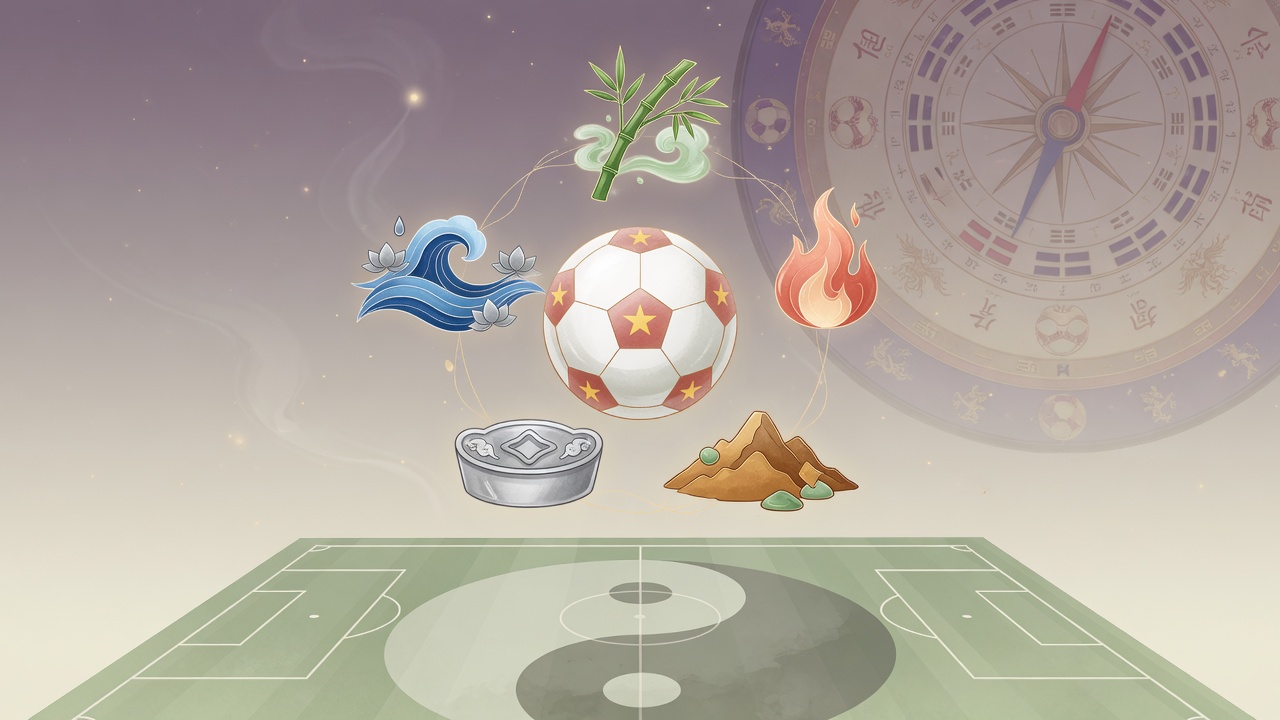
Basic Clarification: Bazi Is Not a Fortune-Telling Lottery
Common Misconceptions
Many people think Bazi is about “accurately predicting” something, even using it to forecast match outcomes. This completely narrows the value of traditional Chinese destiny studies.
- Misconception 1: Bazi can precisely predict match results. In reality, Bazi analyzes energy trends and character tendencies, not specific events. The same set of stems and branches can correspond to countless real-world manifestations—just as an equally “strong Day Master” team might win big or barely draw due to overconfidence.
- Misconception 2: Bazi only looks at individual fate. In fact, a team, a project, or even a match can have a timing chart (casting a chart), observing the Five Element qi at its “birth.” The kickoff time of Vietnam’s first Asian Games match can form a temporary “Bazi,” reflecting the overall energy state at that moment.
- Misconception 3: Missing a key figure is necessarily bad. From a destiny perspective, every configuration has its sickness-medicine relationship. Coach Kim’s absence certainly broke the original balance, but it might also give birth to new coping strategies. The key lies in how the team adjusts its “choices” according to the “luck.”
Core Points: Team, Timing, and Choice from a Bazi Perspective
1. The Team as the “Day Master”: Dynamic Balance of the Five Elements
In Bazi, the Day Master represents the self—it can be an individual, or by analogy, the core competitiveness of a team. Vietnam’s overall style is known for speed, agility, and technical play, much like the Wood element in Bazi—growing, stretching, and adept at penetrating.
But Wood needs Water to nourish it (Resource Star), Metal to prune it (Officer Star), and Earth to root itself (Wealth Star). Coach Kim Sang-sik’s name itself carries the “Metal” image. In the team’s Bazi structure, he likely played the role of Officer Star or Resource Star.
- Resource Star (Water): Represents strategy, logistics, and the coach’s tactical nourishment. Coach Kim’s absence is akin to damaging the Resource Star, making the team prone to stiffness like “Wood without Water,” with declining creativity and adaptability.
- Officer Star (Metal): Represents discipline, defensive framework, and external pressure. The strict system Coach Kim brought was Metal’s cutting energy. Without Metal, the team’s defense may become loose—exactly the problem exposed against Kuwait.
- Companion Star (Wood): The rapport and fighting spirit among players. When Resource and Officer are weak, Companion becomes overly strong without restraint, easily leading to disorganized individual play and low efficiency—what is called “strong Day Master with no support.”
2. Timing as “Major Luck”: How the Year and Month Pillars Influence the Pitch
The match time itself carries an energy label. The opening match of the 2026 Asian Games was held on September 15, with a stem-branch combination of Bing Wu year, Ding You month, Ren Chen day (hypothetical). The year pillar Bing Wu blazes with Fire; the month pillar Ding You clashes Fire and Metal; the day pillar Ren Chen sits Water over a Water reservoir.
In this timing chart, Fire is unusually exuberant, Metal is overcome by Fire, and Water has a root but is drained by Fire. For a team whose core style is “Wood,” an overly strong Output Star (Fire) means excessive draining—players may overexert themselves, running actively but lacking lethal efficiency.
- Year Pillar Bing Wu: Heavenly Stem Bing Fire is the Eating God, representing technical display and creative play, but double Fire turns “Eating God into Hurting Officer,” prone to flashy moves without scoring—dominating possession but failing to break through, exactly the image of Vietnam’s match.
- Month Pillar Ding You: Ding Fire is the Wealth Star, You Metal is the Officer Star. Wealth and Officer generating each other is a good combination, but You Metal is overcome by the year’s strong Fire, leaving the Officer Star powerless. This precisely corresponds to the reality of “coach absent, tactical discipline hard to implement.”
- Day Pillar Ren Chen: Ren Water is the Resource Star, Chen is the Water reservoir, giving the Resource Star a root. This shows that even without Coach Kim on the field, the team’s original tactical foundation (Resource) still supported them, allowing them to draw and avoid defeat.
3. Character Determines Choice: Decision-Making Style Based on Day Master Strength
If we abstract a “team Bazi” Day Master for Vietnam, its strength directly influences on-the-spot decisions. A strong Day Master team is confident and proactive but prone to rashness; a weak Day Master team is cautious and united but may be conservative.
When Coach Kim was present, the structure of “Officer and Resource generating each other” made the team appear strong and powerful, daring to press high. After his absence, the team may have retreated to a “weak Day Master” state, choosing safer back-passes and possession rather than risky through balls when facing Kuwait’s counterattacks.
- Strong Day Master likes restraint or expression: When team capability overflows, it needs Officer (discipline) to restrain it, or Output (creativity) to vent it. Coach Kim’s strictness (Officer) and tactical design (Resource) provided precisely this balance.
- Weak Day Master likes support: Once external aid is lost, the team instinctively seeks help from Companions (teammate support) and Resource (existing tactical memory). This is why a draw, though regrettable, was not a loss—when weak, “defending what you have” is the best choice.
- Choice matters more than talent: Bazi never denies human agency. On the same “weak Day Master day,” some teams choose to switch formation and attack fiercely (Fire), potentially leading to a big defeat or a narrow win; Vietnam chose steady defense and counterattack (Water and Wood), ultimately earning a point. This was a rational decision based on a clear understanding of their own state.
Avoiding Pitfalls: How to Rationally Apply Bazi Thinking to Sports
Important Notes
- Never fabricate personal Bazi charts by speculation: The birth data of all public figures is private. So-called “celebrity Bazi charts” circulating online are mostly reverse-engineered and forced to fit. This analysis is entirely based on publicly available match times and team style metaphors, without involving any individual destiny chart.
- Bazi analysis cannot replace technical and tactical study: A match result is determined by hundreds of variables—technique, fitness, psychology, refereeing, luck, etc. The Five Elements’ generating and overcoming cycles are only a macro-trend framework and must never be used as a predictive tool. Attributing a draw solely to “damaged Resource Star” is lazy thinking.
- Avoid the “single-cause fallacy”: Coach Kim’s absence was just one of many variables. The strength of Bazi thinking lies in multi-factor overlay analysis—the year’s strong Fire, the month’s weak Metal, and the team’s unbalanced Wood qi resonated together to create the situation where “advantage was hard to turn into victory.” Single attribution is the easiest path to obsession.
- Respect the uncertainty of sports: The most beautiful part of destiny culture is that it acknowledges “same image, different events.” The same “Fire and Metal clashing” day could correspond to an intense draw, or a red-card battle. Keeping an open mind is far more valuable than pursuing “ironclad predictions.”
- Use Five Element thinking to optimize team building: The most practical aspect of Bazi is offering a systemic balance perspective. Businesses and teams can learn from it: when a team is too aggressive (excessive Fire), introduce steady talent (Earth and Metal); when creativity is depleted (weak Water), add strategic roles (Water). This is the proper way traditional culture empowers modern management.
Summary and Review
Vietnam football's draw acts like a prism, refracting the eternal triangle of character, choice, and timing in Bazi culture. A team has its Five Element temperament, time has its energy tides, and true wisdom lies in: seeing the trend without being kidnapped by it; acknowledging limitations while still making the most clear-headed dynamic adjustments.
Next time you see news that “they are weak without someone,” consider one more layer: perhaps it’s not a simple question of strength or weakness, but a system reminding you—balance is the strongest power.