Bazi Wedding Date Selection: Personality, Choice, and Timing — A Rational Exploration of a Vietnamese Wedding Incident
The tragic wedding venue fire in Vietnam has drawn global attention, yet this article neither assesses fortune nor invades privacy. It simply uses Bazi culture concepts of personality, choice, and timing to rationally explore traditio
Opening Introduction
Recently, a wedding venue fire in Vietnam caused global concern, tragically claiming the lives of 22 guests. Amidst the mourning, we can conduct a rational exploration from the perspective of Bazi culture's concepts of personality, choice, and timing.
Bazi is not a mystical prophecy but a traditional framework for analyzing the relationship between people and time. It does not replace real-world safety measures, but it can remind us to focus on blind spots in decision-making.
Using wedding organization as a backdrop, this article analyzes how traditional fate analysis views personality tendencies, timing choices, and the macro environment as collectively influencing the success or failure of an event.
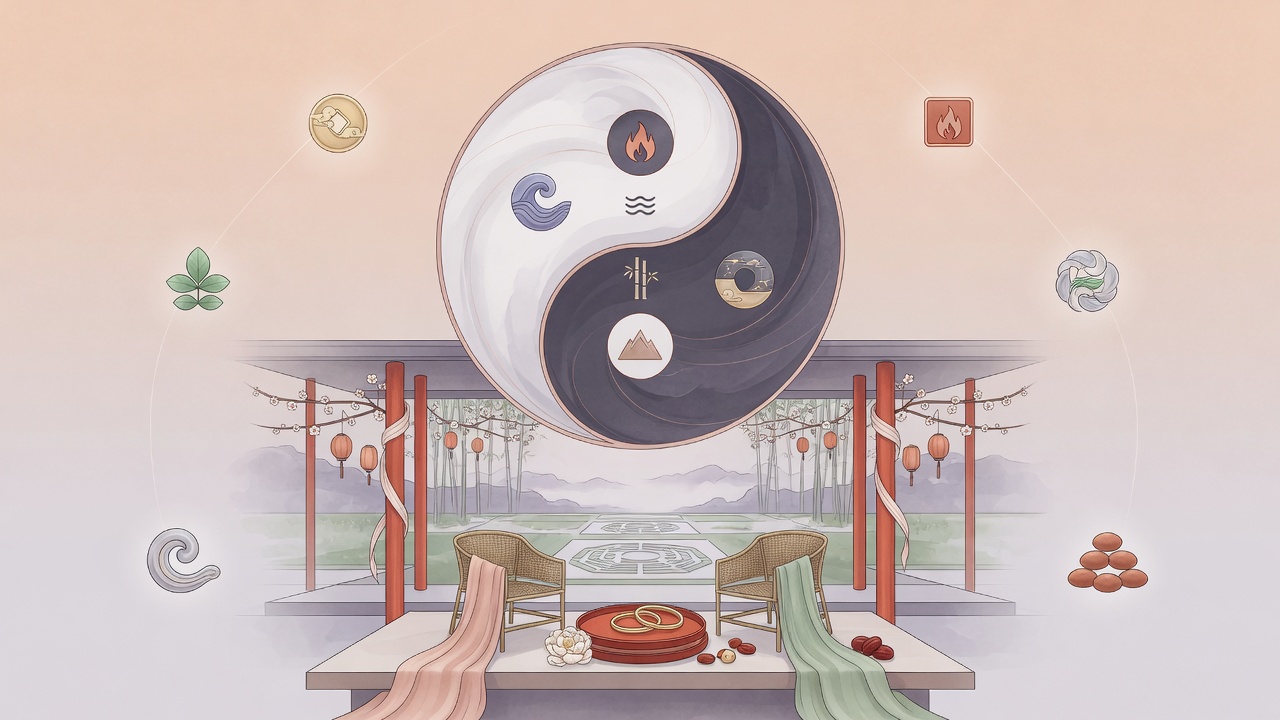
Basic Clarifications
Common Misconceptions
When discussing weddings and Bazi, the public often holds some misconceptions. Clarifying these concepts is necessary before rationally applying traditional culture.
- Misconception 1: Bazi can predict whether a specific wedding will have a fire. In reality, Bazi analyzes trends and inclinations, not concrete events.
- Misconception 2: Choosing an auspicious date can completely avoid all risks. Date selection is only a traditional decision-making reference and cannot replace real measures like fire safety and venue inspection.
- Misconception 3: Bazi only discusses personal destiny and is unrelated to current events. In fact, timing (the macro environment) is equally important; personal fate must be viewed against the backdrop of the era.
- Misconception 4: The better the Bazi, the smoother the wedding. In reality, even the best natal chart requires human effort and objective conditions; otherwise, it's merely psychological comfort.
- Misconception 5: Only the newlyweds' Bazi needs to be considered. The personality of the wedding organizer and key executives also affects event safety and process.
- Misconception 6: Date selection is just picking an 'auspicious day on the yellow calendar.' Modern wedding planning must also comprehensively integrate fire safety, weather, and venue capacity assessments.
Core Points
Bazi Personality and Wedding Decision-Making Styles
The Day Master in Bazi represents the self, and its Five Elements attribute influences decision-making style. Different personalities among wedding organizers lead to different choices of venues, processes, and teams.
The following is purely an analysis of personality tendencies, not targeting any specific event or individual, nor making fortune judgments.
Decision-making tendencies of different Five Elements Day Masters:
Fire Day Master: High enthusiasm, quick action, suitable for creative weddings, but prone to overlooking details due to impatience.
Water Day Master: Flexible and adaptable, capable of handling unexpected situations, but may miss opportunities due to overthinking.
Metal Day Master: Emphasizes rules and efficiency, tends to choose mature and standardized venues, but may be stubborn.
Earth Day Master: Stable and pragmatic, focuses on safety and cost-effectiveness, but may be too conservative and lack novelty.
Wood Day Master: Planning-oriented, growth-focused, excels at coordinating wedding processes, but must guard against over-idealization.
Beyond the Day Master, the Ten Gods in Bazi also reflect interpersonal and work styles:
More Peer and Rob Wealth stars indicate strong teamwork, but too many opinions can create blind spots; a strong Officer or Killing star in the organizer makes them more rule- and safety-conscious, but potentially over-controlling.
Eating God and Hurting Officer represent creativity and expression, helpful for wedding design, but an overly strong Hurting Officer may lead to neglect of safety details.
Wedding organization often involves multi-person collaboration. Understanding each other's personality tendencies allows for optimized division of labor: for example, having a person with a strong Officer star oversee safety audits, and a strong Eating God star handle creative design.
However, it's crucial to note that personality tendencies are not destiny; through self-awareness and process management, innate biases can be fully compensated for.
- Key Point: The Day Master's Five Elements only provide a tendency reference and cannot be used to label people.
- Key Point: Complementary Five Elements within a wedding team can reduce decision-making blind spots.
- Key Point: Safety-related roles are better suited for individuals with strong Officer or Seal stars, who tend to be more cautious.
- Key Point: Creative roles are better suited for those with strong Output stars, but should be paired with Seal star constraints to prevent impractical ideas.
- Extension: If the organizer has overly strong Peer/Rob Wealth, they may easily overlook others' opinions; a designated 'Safety Officer' role for independent supervision should be actively established.
- Extension: People with a strong Indirect Seal in their Bazi are good with details and suitable for process verification; those with a strong Direct Wealth are good at budgeting and resource allocation.
- Extension: A wedding involves hundreds of decision points. Leveraging complementary personalities can form a closed loop, reducing oversights.
The 'Timing' Code in Date Selection
Traditional wedding date selection involves consulting the Chinese Almanac, Tong Shu, and matching it with the couple's Bazi to find an 'auspicious day.' But timing (such as season, social activities, economic environment) is equally critical.
If a 忌神 (Unfavorable God) in a fate chart is activated during a specific period, it may suggest that extra caution is needed in certain areas, but it is absolutely not a prediction of disaster.
The basic framework of date selection includes:
Year Pillar: Check if the annual flow and the couple's year pillar suffer from Heavenly Stem Clash/Earthly Branch Clash; if the clash is severe, avoidance is advised.
Month Pillar: Integrate the seasonal Five Elements. For example, strong Fire in summer means wedding venues need extra attention to electricity and open flame safety.
Day Pillar: Choose a day that combines harmoniously or supports the couple's Day Pillar, avoiding Punishments, Clashes, Harms, Destructions.
Hour Pillar: Consider the specific start time of the ceremony, avoiding severe clashes with the main organizer's Day Master.
'Timing' in modern wedding planning also includes: peak/off season, weather conditions, venue crowding, traffic controls, local festivals, etc.
For instance, if the newlyweds' Bazi is Five Elements Dry (strong Fire/Earth), holding a wedding in midsummer traditionally suggests choosing a Water-strong hour or adding water element decorations.
But in reality, ensuring air conditioning, ventilation, and fire-fighting water supply is far more important to prevent discomfort or accidents from high temperatures.
If the 用神 (Useful God) in the fate chart is Water, a wedding held in a Fire-strong season traditionally recommends adding water element arrangements, but in reality, ensuring fire water supply and extinguisher availability is paramount.
Date selection must never be divorced from real-world safety inspections. The two can run parallel: traditional date selection provides psychological support, while safety inspections provide physical security.
- Key Point: Date selection must integrate Heavenly Timing (annual/monthly flow), Earthly Advantage (venue Five Elements), and Human Harmony (charts of the couple and organizers).
- Key Point: Avoid scheduling high-risk activities, like large open flames or fireworks, in months when an Unfavorable God is dominant.
- Key Point: Modern wedding planning should integrate weather forecasts and adjust processes during extreme weather; this is also part of 'timing.'
- Key Point: The traditional Tong Shu's 'dos and don'ts' can be a reference but cannot substitute for fire codes and emergency plans.
- Extension: If choosing a wedding in a Fire-strong summer, minimize electronic device overload and increase fire extinguisher placement.
- Extension: If the venue's orientation severely clashes with the organizer's Bazi, tradition suggests adjusting seating or the entrance, but in reality, checking the accessibility of escape routes in that direction is more critical.
- Extension: A so-called 'auspicious day' doesn't mean everything is perfect; it's a reminder to complete preparations and inspections more calmly within a favorable time window.
The Dual Dimensions of 'Choice' Viewed from an Incident
Choosing a wedding venue, date, and process is the intersection of an organizer's personality and current timing. No cultural tool should replace safety inspections or emergency plans.
Therefore, while pursuing 'good omens,' wedding organizers must even more mind the bottom-line thinking of real safety management.
Bazi emphasizes balance: If the venue's orientation, date's Five Elements, and the organizer's chart have severe Punishments, Clashes, Harms, Destructions, tradition suggests adjustments; but modern people can understand this as 'avoiding' risk.
Personality determines the type of venue we prefer (e.g., old-fashioned buildings, modern banquet halls), while timing determines whether uncontrollable factors (like high temperatures, electrical load) exist at the moment.
For example, a Fire-type organizer may prefer lively, brightly lit venues, but if that venue has aging electrical wiring, the risk increases.
At this point, a rational choice should prioritize safety rectification over merely believing the 'Fire strength' in fate is suitable.
If the Useful God is Water, tradition suggests adding water elements for a wedding in a Fire-strong season, but reality demands ensuring fire water supply and extinguishers are in place.
A wedding's success depends not only on an 'auspicious day' but more on whether the organizer can understand fate without resigning to fate, proactively eliminating hidden dangers.
From the Vietnamese wedding incident, we see that real-world factors like venue fire escapes, emergency lighting, and crowd evacuation are far more critical than any 'fortune/misfortune' assessment.
The insight Bazi culture offers us is this: Timing is ever-changing, personality has biases, but the power of choice always remains in our own hands. Only rational decisions can protect life.
- Key Point: Venue selection should prioritize assessing building safety and fire qualifications, then integrate fate-based directional preferences.
- Key Point: Large events must have emergency plans; this is a basic duty unrelated to fate-based date selection.
- Key Point: If traditional date selection conflicts with safety requirements, safety requirements take unconditional precedence.
- Key Point: View Bazi rationally; treat it as a tool for self-reflection and risk awareness, not determinism.
- Extension: Fire-element decorations like candles, fireworks, and lights at weddings require dedicated custodians and must be kept away from flammable materials.
- Extension: Traditional wedding customs like 'stepping over a fire basin' should have their risks strictly assessed in modern buildings, or be replaced with symbolic safe alternatives.
- Extension: The fate concept of Water-Fire Balance reminds us that passion and calmness must coexist: a joyous atmosphere needs calm, meticulous hazard inspection.
Pitfall Avoidance Guide
Points of Attention
- Don't deify Bazi: It is merely a decision-making aid and cannot replace fire safety acceptance, electrical checks, and evacuation drills.
- Don't just pick a 'good day': Also consider venue conditions, crowd density, weather changes, and escape routes.
- Don't ignore team Bazi synergy: Wedding organization involves many people; understanding each other's personality tendencies helps reduce communication blind spots.
- Don't change the process last minute: Traditional date selection emphasizes 'certainty averts change'; frequent changes easily lead to oversights and increased risk.
- Don't forget the macro environment: Pay attention to local weather forecasts, customs, and policy requirements; these are all part of 'timing.'
- Don't use fate analysis as a disclaimer: Even on an 'extremely auspicious' day, lax on-site management can still lead to accidents.
- Don't blindly pursue 'luxury': Excessive venue decoration can obscure fire safety signage and hinder evacuation. Tradition advocates 'moderation,' which is the way of Balance.
- Don't ignore the couple's feelings: Bazi marriage matching can be a reference, but marital happiness relies more on daily effort; ceremony safety is a fundamental prerequisite.
- Don't blindly trust 'masters': Learn destiny knowledge through proper channels to avoid being misled by superstitious rhetoric that delays safety rectifications.
- Don't forget to review: Summarize process loopholes after the wedding for continuous improvement; this is also an embodiment of Eating God wisdom.
- Don't ignore electrical load: Modern weddings use large amounts of lighting and sound equipment; circuit capacity must be calculated in advance to prevent overload.
- Don't use escape routes as storage: Strictly prohibit occupying fire escapes during venue setup; keep exits clear.
- Don't ignore emergency lighting: Ensure backup power and emergency lights are functional; they can save lives in critical moments.
- Don't skip fire drills: Before the wedding, organize the core team to familiarize themselves with evacuation routes and fire extinguisher locations.
- Don't underestimate small hazards: Aging sockets, damaged wires, and flammable decorations can all spark major disasters. The Sickness Charm in Bazi reminds us to address small problems promptly.
Summary and Review
The concepts of personality, choice, and timing within Bazi culture essentially remind us: major events require a balance of heavenly timing, earthly advantage, and human harmony. Facing the grief of the Vietnamese wedding fire, we should place more emphasis on real-world safety management, allowing traditional wisdom to return to its role as a rational aid.
Fate analysis is not for predicting calamities, but for helping us understand ourselves, respect the environment, and make prudent decisions. May every wedding be successfully completed amidst both safety and celebration.