From Toritani Kei’s Baseball Analysis to BaZi Culture: Personality, Choice, and the Unseen Currents of Timing
When Toritani Kei broke down the “7-win, 3-loss but arguably strongest” pitcher on DAZN, the “sinking fastball” instantly became a hot topic. BaZi fate analysis doesn’t predict scores, but it opens a window for understanding the bedrock of person
Opening Introduction
In autumn 2026, former professional baseball star Toritani Kei discussed a pitcher with a 7–3 record alongside Shida Hiroya on DAZN, spotlighting a “sinking fastball”—a pitch combining velocity with uncanny movement that leaves batters helpless.
What seems like pure pitch analysis in fact resonates with an ancient Eastern wisdom: personality shapes choices, and timing molds trajectories. We won’t make win-loss predictions; instead, through a BaZi lens, we decode the invisible energy on the diamond.
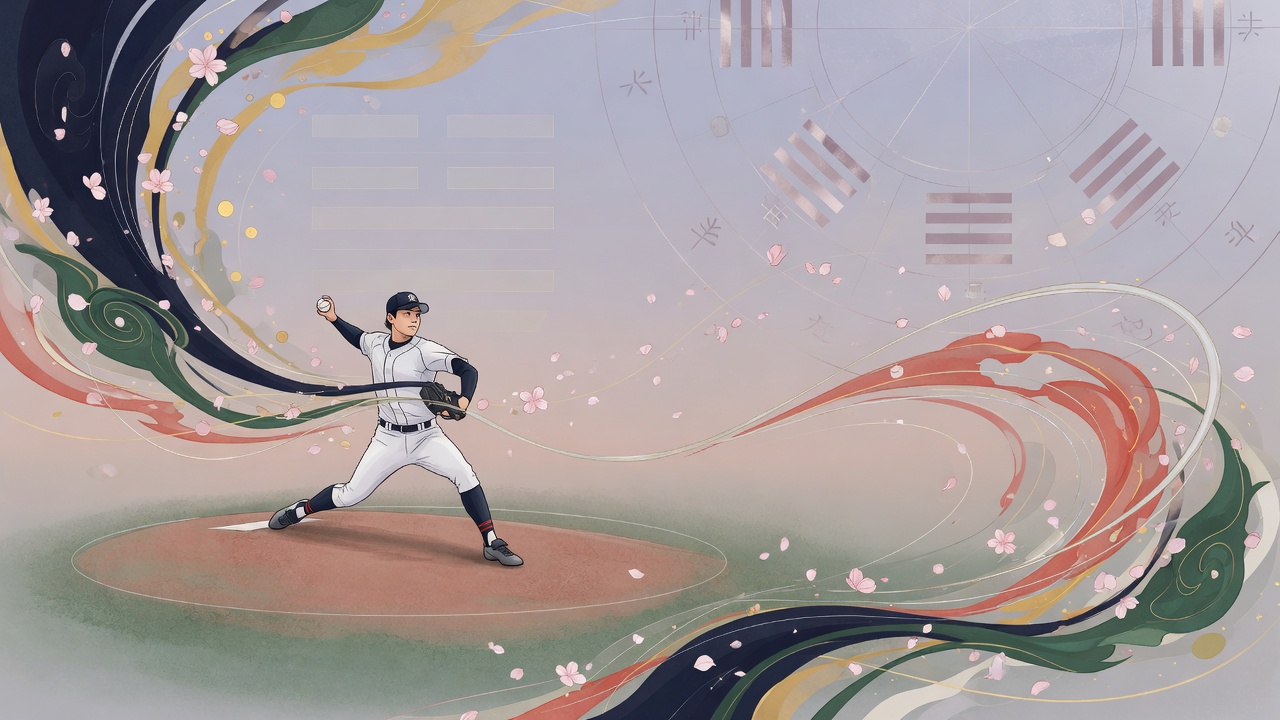
Clarifying the Basics: BaZi Is Not a Score Calculator
Common Misconceptions
- Myth 1: BaZi can predict game results. BaZi reveals innate energy curves and personality tendencies; it cannot lock in specific scores or events, let alone declare the winner of a particular match.
- Myth 2: People born on the same day and time share the same destiny. A BaZi chart is just the “factory settings.” Acquired environments, training, choices, and the rotation of Luck Pillars lead to drastically different paths.
- Myth 3: BaZi equals fatalism. It’s more like a user manual for life, emphasizing that once you understand your strengths, weaknesses, and timing, you can make the most favorable adjustments—just as a pitcher selects a pitch based on a batter’s weakness.
Core Points: Personality, Timing, and Choice in BaZi
1. Day Master Five Elements: Archetypes on the Mound
In BaZi, the Heavenly Stem of the birth day is the Day Master, representing the self. Different Day Master elements often correspond to distinct competitive styles.
A Jia Wood Day Master is like a towering tree: colliding head-on with straight pitches is their nature. A Bing Fire Day Master is passionate and flamboyant, excelling at using emotion to drive the game’s tempo.
- Geng Metal Day Master: Sharp and resolute, pursuing perfect pitch quality. The precise cutting feel required by that “sinking fastball” often matches the tenacity of the Metal type.
- Ren Water Day Master: Fluid and adaptable, adept at disrupting a batter’s rhythm with sequenced pitches—like water that flows around obstacles, their trajectories are full of calculation.
- Wu Earth Day Master: Thick and stable, with outstanding endurance, suited for long-inning suppression. They don’t chase strikeouts but force hitters into weak grounders.
2. Luck Pillars and Annual Cycles: The “Seasonal Climate” of Athletic Form
In BaZi, Luck Pillars change every ten years, while Annual Cycles shift year by year. Like the four seasons in nature, they profoundly influence an athlete’s physical and mental peak periods.
A pitcher described as the “strongest” despite a 7–3 record may well be traveling through a favorable Luck Pillar. Even with occasional lost points, their clutch pitch power is unstoppable, and overall dominance is on an upward trajectory.
- Luck Pillar encountering Wealth: Desire to win and to perform skyrockets, potentially spurring a more aggressive pitching strategy, but it can also lead to off-days from over-pursuing stats.
- Luck Pillar encountering Officer/Direct Officer: Discipline and pressure resistance increase, making it ideal for throwing the sinking fastball to defuse crises in high-leverage spots. Officer stars also represent fame, easily drawing high praise from commentators.
- Annual Cycle clashing the Day Master: Subtle physical disorder may appear, causing fluctuations in velocity or command—this is the hidden energy trough behind those “three losses.”
3. The Choice of Useful God: Life’s Trade-offs Seen from Pitch Sequencing
BaZi emphasizes the Useful God — the key Five Element that balances the chart. A great pitcher, much like a skilled BaZi consultant, is always searching for the most suitable “Useful God pitch” for the moment.
The sinking fastball analyzed by Toritani Kei is analogous to a climate-adjusting Useful God in BaZi—at critical moments, it regulates the whole situation and turns danger into safety.
- Strong Day Master needs restraining or releasing: If the Day Master is too strong, it requires Officer (pressure) or Output (release) to find balance. On the mound, this translates to daring to use high-risk, high-reward sharp pitches.
- Weak Day Master needs Resource or Companion: Needing backing and support, the pitcher relies on the catcher’s guidance and trusts the defense, manufacturing outs with a low pitch count—just like the sense of security and strategy brought by the Resource star.
- Climate adjustment as urgency: A cold chart needs Fire; a dry chart needs Water. On the field, when hitters are sitting on fastballs, a sudden breaking ball that dives is exactly that “bucket of climate-adjusting water,” instantly altering the temperature of offense and defense.
Avoiding Pitfalls: A Rational View of Fate Analysis and Athletic Performance
Points to Note
- Don’t use BaZi to determine the outcome of a single game. Fate analysis reveals long-term trends, not instantaneous results. A game’s win or loss involves too many variables that BaZi cannot cover.
- Don’t crudely apply Five Element labels. Not every Geng Metal pitches a sinking fastball, nor is every Ren Water crafty. Comprehensive judgment requires looking at the full chart including the Ten Gods and chart structure. Avoid stereotypes.
- Don’t overlook acquired effort and environment. Even if the Luck Pillar is unfavorable, top athletes can still rise against the trend through scientific training and mental adjustment. This is where human agency transcends the frame of fate analysis.
- Don’t publicly deduce the birth charts of active players. Respecting privacy is the bottom line of BaZi education. This article merely uses a hot topic for cultural illustration and does not analyze any individual’s fate chart.
- Don’t equate “timing” with passive waiting. The Luck Pillar is merely the background music; how you dance is still up to you. Actively choosing a pitch and adjusting strategy—that is the very essence of the “Useful God” approach.
Summary and Reflection
The “strongest pitcher” praised by Toritani Kei and that uncanny sinking fastball act as a mirror, reflecting BaZi culture’s growth philosophy: personality as the root, timing as the soil, and choice as the seed.
True strength lies not in a flawless chart, but in keenly sensing one’s own Luck Pillar rhythms, picking the most fitting “Useful God pitch” in each moment, and transforming invisible fate energy into visible brilliance on the field.