From Mamiko Tanaka to the BaZi Spouse Palace: How Chinese Astrology Interprets Marital Harmony and Personality Complementarity
Mamiko Tanaka, as the wife of Shohei Ohtani, has sparked public curiosity about the couple's personality complementarity and marital harmony. This article uses that interest to explain the traditional concepts of the Spouse Palace and **m
Opening Introduction
Mamiko Tanaka entered public view through her marriage to Shohei Ohtani, and she is often described as having a complementary personality and being low-key and steady. This naturally raises curiosity: how does traditional Chinese astrology understand compatibility between partners? The concepts of the Spouse Palace and marriage matching in BaZi offer a framework for observation.
Basic Clarification: BaZi Is Not Fatalistic Prediction
Common Misconceptions
- Misconception 1: BaZi marriage matching can directly determine a 'perfect match' or 'mutual clash.' In reality, Chinese astrology only reveals innate tendencies and interaction patterns; marital quality depends more on later management.
- Misconception 2: The Spouse Palace determines a spouse's appearance and wealth. The Spouse Palace mainly reflects relationship qualities with a partner and emotional needs, not a specific portrait of a person.
- Misconception 3: Only looking at whether zodiac signs match. The zodiac animal is only the year branch in BaZi; marriage matching requires comprehensive analysis of the day pillar, Spouse Palace, Five Element flow, and other dimensions.
Core Points: The Essence of the Spouse Palace and Marriage Matching
What Is the Spouse Palace?
In BaZi astrology, the earthly branch of the day pillar is called the Spouse Palace (also known as the partner palace). The day stem represents the individual, while the day branch is like the 'room' where the partner resides, directly reflecting the underlying tone of married life.
The Five Element nature of the Spouse Palace, its Ten God positioning, and whether it is subject to clashes, combinations, punishments, or harms all affect the stability and interaction style of the emotional relationship.
- Day branch is Zi, Wu, Mao, or You: often indicates a spouse with an attractive appearance and rich emotions, but also prone to emotional ups and downs.
- Day branch is Yin, Shen, Si, or Hai: the spouse is highly independent, both sides need some space, and the relationship is dynamic and active.
- Day branch is Chen, Xu, Chou, or Wei: the spouse is steady and pragmatic, with a strong sense of family responsibility, though sometimes a bit stubborn.
- Spouse Palace facing a clash (such as a Zi-Wu clash): suggests the relationship may involve fundamental differences or long-distance separation, requiring more adjustment and tolerance.
The Core of Marriage Matching: Day Pillar and Five Element Flow
Traditional marriage matching is not simply about matching zodiac animals; it favors heavenly stem and earthly branch combinations of the day pillars, while also observing whether the two people's Five Element likes and dislikes complement each other.
Heavenly combination and earthly combination means the day stems of the two people combine and the day branches combine, symbolizing deep attraction and tacit understanding. If one person's day master is overly strong and the other's chart happens to balance their Five Elements, that is energetic complementarity.
- Five combinations of heavenly stems: such as the Jia-Ji combination and the Yi-Geng combination, represent outward mutual appreciation and smooth communication.
- Six combinations of earthly branches: such as the Zi-Chou combination and the Wu-Wei combination, reflect alignment in inner living habits and values.
- Five Element complementarity: if one side has strong Fire and the other strong Water, the interaction of Water and Fire can create dynamic balance, avoiding excessive dryness or coldness.
- Ten God matching: for example, in a male chart Direct Wealth represents the wife, and in a female chart Direct Officer represents the husband; if the spouse star is clear and unbroken in both charts, the relationship is more likely to be stable.
Destiny Interpretation of Personality Complementarity
The public often describes Mamiko Tanaka as calm and reserved, forming a complement to Shohei Ohtani's focus and drive. In BaZi, such differences often manifest as echoes between Ten God configurations and Five Element characteristics.
For example, if one side has strong Eating God and Hurting Officer (outward talent and strong expressiveness) and the other has strong Seal Star (introverted, tolerant, and good at listening), they can form a harmonious cycle of 'one speaks, one listens.'
- Strong Friends and Robbers have strong action and competitive awareness, and need a partner with moderate Officer and Seven Killings to provide direction and restraint.
- Strong Wealth Star people are pragmatic and good at managing money; if paired with strong Seal Star people, they nourish each other on spiritual and material levels.
- Balance between stillness and movement: people with the Spouse Palace in Chen, Xu, Chou, or Wei prefer quiet; if the partner's day branch is Yin, Shen, Si, or Hai, it can bring vitality, but rhythm adjustment is needed.
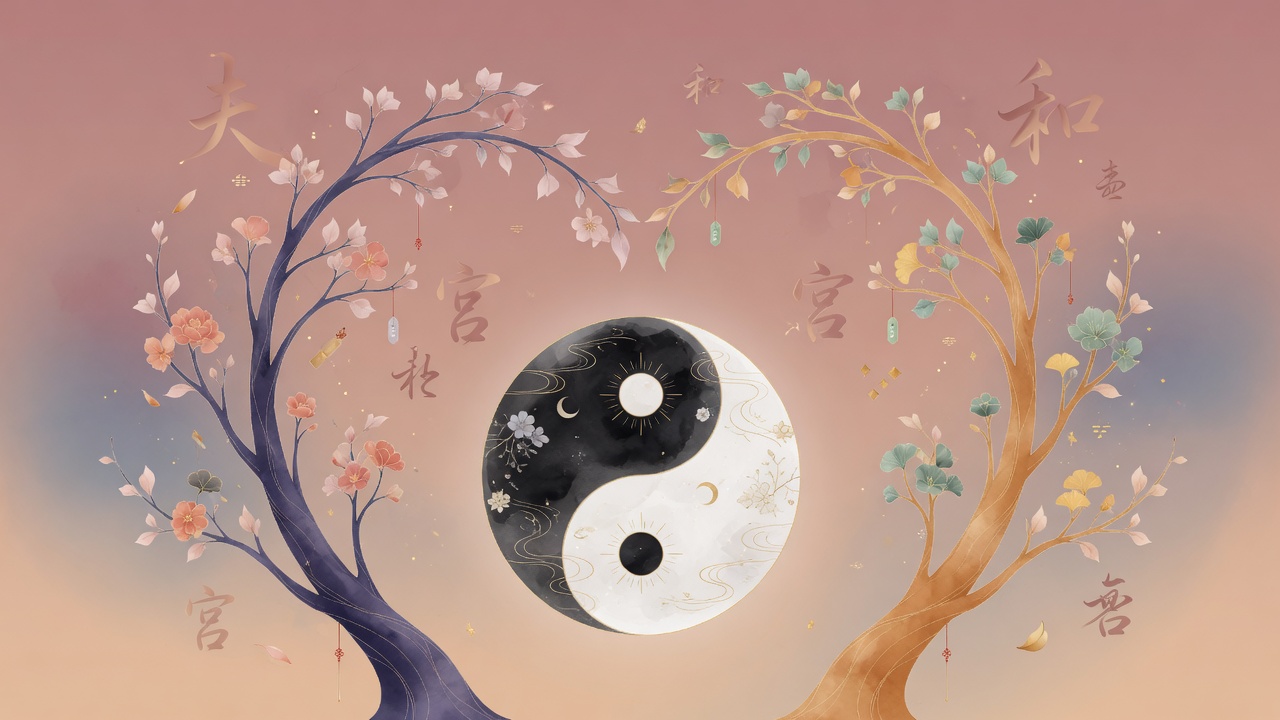
- Yin-yang harmony: a person with an all-yang chart tends to be impatient; pairing with an all-yin or mostly yin chart can soften the aura and achieve a balance of firmness and gentleness.
Destiny Conditions for Marital Harmony
In Chinese astrology, harmonious marriages often show three features: a stable Spouse Palace, harmonious Five Element flow, and a strong spouse star. But astrology is only a starting point; true longevity depends on mutual growth.
A Spouse Palace free from punishments, clashes, restraints, and harms means a stable emotional foundation; if the two people's major luck cycles can support each other, they can overcome difficulties at key life junctures.
- Spouse Palace sits on a favorable god: marriage actively supports personal growth, and the partners help each other succeed.
- Spouse star is favorable: the partner's personality or conditions are exactly what one needs, making the relationship pleasant.
- Synchronized major luck cycles: both partners' luck directions align, reducing friction caused by luck gaps.
- Harmonious children palace: the hour pillar represents the future; if both partners' hour pillars combine, family visions are easier to align.
Pitfall Avoidance Guide: Viewing BaZi and Marriage Rationally
Precautions
- Do not self-identify: the BaZi information of any public figure is private; this article only uses the topic to explain concepts, so do not cast charts or speculate on your own.
- Avoid single-palace conclusions: the Spouse Palace must be judged together with the overall BaZi structure and major luck and annual cycles; do not draw conclusions based solely on the day branch.
- Avoid fatalism: BaZi shows potential tendencies; subjective effort, communication style, and shared values are the decisive forces in marriage.
- Beware of 'miraculous judgment' traps: claims that marriage fortune can be judged solely by zodiac sign or day pillar are mostly one-sided interpretations; seek a full analysis from a professional BaZi practitioner.
- Note cultural differences: although Japan has similar systems such as Nine Star Ki and Four Pillars astrology, they differ from Chinese BaZi in chart casting and symbolic stars, and cannot be directly applied.
- Marriage matching is a reference, not a verdict: ancient marriage matching aimed to seek good fortune and avoid harm and understand mutual interaction patterns, not to create anxiety or break up good relationships.
Summary and Review
The marriage of Mamiko Tanaka and Shohei Ohtani happens to serve as a window for understanding the BaZi Spouse Palace and marriage matching culture. The core of Chinese astrology is not prediction but revealing the possibility of personality complementarity and the direction of relationship management. A stable Spouse Palace, harmonious Five Element flow, and matching Ten Gods—these traditional wisdoms remind us that true harmony comes from understanding differences and then supporting each other.