Soy Sauce Art AI Controversy: Understanding the Creative Soul in the Age of AI through Bazi's Talent Star and Peer Star
A Japanese soy sauce-themed children's painting competition was recently forced to cancel its public exhibition after works were suspected of being AI-generated, sparking vicious online attacks. The incident reflects a deep-seated anxiety about artis
Opening Guide
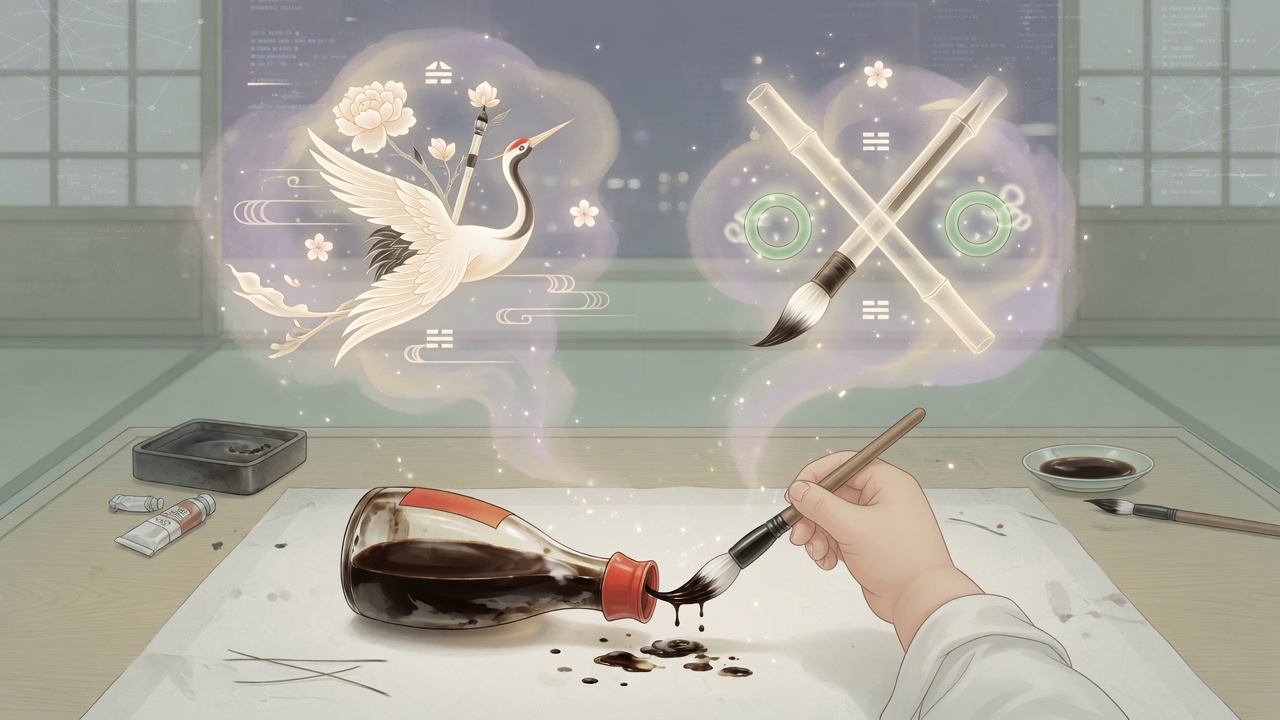
A recent Japanese soy sauce-themed children's painting competition saw its public display suspended after works were suspected of being AI-generated, triggering fierce online attacks. At first glance a clash of technology and ethics, the incident actually touches a more fundamental question: In creation, what truly belongs to 'me'?
In Bazi, the Talent Star and Peer Star answer precisely this question. The Talent Star is the outlet for innate gifts, while the Peer Star is the bedrock of self-awareness. When AI can generate stunning images in an instant, the balance between the Talent Star and Peer Star becomes the key to safeguarding our creative soul.
Basic Clarification: Bazi Is Not a Fatalistic Label
Common Misconceptions
Many mistakenly believe that Bazi determines a person's artistic achievement, or simply equate the Talent Star with 'artistic genius' and the Peer Star with 'stubbornness.' These oversimplifications obscure the real guiding value of destiny analysis.
- Misconception 1: A strong Talent Star guarantees high artistic talent. The Talent Star is only a channel of expression; without the transforming power of the Resource Star or the support of the Peer Star, it can easily drift into fantasy and lack grounding.
- Misconception 2: Multiple Peer Stars mean strong originality. An overly strong and uncontrolled Peer Star may turn into blind self-assertion, rejecting all external tools—including helpful AI assistance.
- Misconception 3: Bazi can determine whether a painting was AI-generated. Bazi analyzes personality tendencies and energy traits; it cannot directly verify a work's source. It reveals the creator's inner inclinations.
Core Insights: The Creative Code of the Talent Star and Peer Star
Talent Star: The Outlet for Artistic Expression
The Talent Star is what the Day Master produces; it represents the natural outflow of talent, aesthetic perception, and creativity. Like an inner spring, it bubbles forth to form a unique artistic language.
People with a strong Talent Star usually have a keen intuition for color, composition, and emotional expression. However, the Talent Star fears being 'muddied.' Once overly reliant on templates or mass AI generation, its aura is drowned out by a sense of mechanical replication.
In the soy sauce painting controversy, if the creator's Talent Star was robust, the work would carry a strong personal imprint that is hard for AI to fully imitate. Conversely, a chart where the Talent Star is suppressed may be more easily seduced by the convenience of AI, blurring creative boundaries.
- Talent Star appears in the stems and is undamaged: Artistic expression flows naturally; even when using AI tools, personal style is easily retained.
- Talent Star is restrained by the Resource Star: Many ideas but hesitant execution; may use AI to compensate for a lack of follow-through, so beware of over-dependence.
- Talent Star produces Wealth: Able to turn art into value; open to AI collaboration, but must maintain clear personal boundaries.
Peer Star: The Self-Foundation of Originality
The Peer Star shares the same element as the Day Master, representing self-awareness, independent spirit, and competitiveness. In the creative realm, the Peer Star is that stubborn voice saying, 'I must paint something that is mine.'
Those with a favorable Peer Star are naturally unwilling to ride on others' coattails and instinctively reject plagiarism or excessive referencing. As AI tools become popular, creators with a strong Peer Star will keep a deliberate distance or use AI only as an aid, never handing over their core ideas.
But an overly strong Peer Star brings its own problems: it can lead to working in isolation and rejecting all new technology. In the soy sauce painting incident, some attackers may have been expressions of an unbalanced Peer Star energy—defending a perceived 'purity' by attacking others.
- Peer Star is controlled: Confident but not stubborn; able to rationally assess the auxiliary value of AI tools, neither fearing nor blindly following.
- Peer Star is uncontrolled: Extreme emphasis on originality, but may evolve into exclusivity, even subjectively judging others' works.
- Weak Peer Star but strong Talent Star: Strong creative desire but blurred self-boundaries; easily led astray by AI-generated content; needs to consciously strengthen the Peer Star's power.
Interplay of Talent Star and Peer Star: Creative Balance in the AI Era
When the Talent Star and Peer Star interact harmoniously in a chart, the creator can openly absorb inspiration while staying true to their original core. This is precisely the state most needed in the AI era.
If the Talent Star is too strong and the Peer Star too weak, as may have been the case in the soy sauce painting controversy, the work may appear exquisite yet lack human warmth, making it easily suspect as AI-generated.
Conversely, if the Peer Star is too strong and the Talent Star is constrained, the technique may be stiff; there is strong personal assertion but insufficient artistic appeal. True creative freedom comes from the dynamic balance between the two.
We cannot directly deduce from a Bazi chart whether a painting used AI, but we can understand this: when a person's Talent Star and Peer Star are in harmony, their work naturally carries an irreplaceable 'heart-seal'—a part that AI struggles to replicate.
- Talent Star as the body, Peer Star as the function: With talent as the foundation and self-awareness as the boundary, AI can only be a brush, never the painter.
- Peer Star as the body, Talent Star as the function: Driven by an independent spirit, such creators leave a strong personal mark even when using AI.
- Conflict pattern: When Talent Star and Peer Star clash, the creator often internally struggles with 'to use or not to use AI,' draining creative energy; harmonization through the Resource Star and learning is needed.
Avoiding Pitfalls: Protecting Your Creative Talent Star and Peer Star
Practical Suggestions for Different Tendencies
Whether you are an art lover, a parent, or a creator, you can adjust your relationship with AI tools from the perspective of the Talent Star and Peer Star. The following suggestions are not Bazi diagnoses, but references for personality tendencies.
- For those with a strong Talent Star but weak Peer Star: Set an 'AI-free time slot' each week to draw entirely by hand, strengthening self-boundaries. Sign your work or add a personal symbol—rituals can enhance Peer Star energy.
- For those with a strong Peer Star but weak Talent Star: Deliberately practice 'reference then breakthrough.' After generating a draft with AI, make at least three manual revisions, giving the Talent Star a chance to intervene and avoid rigidity.
- For those with both weak Talent Star and Peer Star: Don't rush to judge whether you're suited for creation. Start by copying classics to gradually develop a feel, while studying Bazi or psychology to understand your energy rhythm.
- For parents regarding children's creations: A child's Talent Star is naturally lively. Do not prematurely judge whether it 'looks like AI' using adult Peer Star standards. Protecting the desire to express is more important than technical correctness.
- For critics and viewers: Before questioning someone else's work, first observe whether your own Peer Star is projecting anxiety. In the soy sauce painting incident, the online attacks often stemmed from a collective imbalance of the Peer Star.
- For those with an overly strong Resource Star in the chart: Prone to relying on rules and tools, so before using AI, clearly define 'which parts must be done by me,' limiting AI to data collection or sketching stages.
- For the Talent-Star-producing-Wealth pattern: When using AI as a productivity tool, maintain separate archives for personal portfolios and AI-assisted works to avoid trust crises in commercial collaborations.
Summary and Recap
The soy sauce painting AI controversy is a mirror reflecting our collective anxiety about originality amid the technological tide. In Bazi, the Talent Star and Peer Star are like the two wings of creation: the Talent Star gives us the inspiration to soar, while the Peer Star ensures we do not lose our direction.
AI will not make true creators disappear; instead, it will highlight those souls whose Talent Star has roots and whose Peer Star has guardrails. The key is not rejecting tools, but always remembering, as we use them: the pen may be borrowed, but the hand holding it must be your own.