The "Uncrowned King" in Bazi Culture: Kim Si-woo's Breakthrough and Reflections on Character, Choice, and Timing
AP reported that Korean golf star Kim Si-woo, despite not winning a title in 2026, achieved his personal best season through significant improvement in putting, hailed as "the best year without a title." This phenomenon provides a perfect entry point
Introduction
In 2026, Kim Si-woo did not win on the PGA Tour, yet he posted the most consistent performance of his career, with a marked improvement in putting seen as the key factor.
This prompts us to consider: In Bazi astrology, must a breakthrough or success be equated with a 'championship'? This article takes you into Bazi culture to rationally interpret the deep relationship between character, choice, and timing.
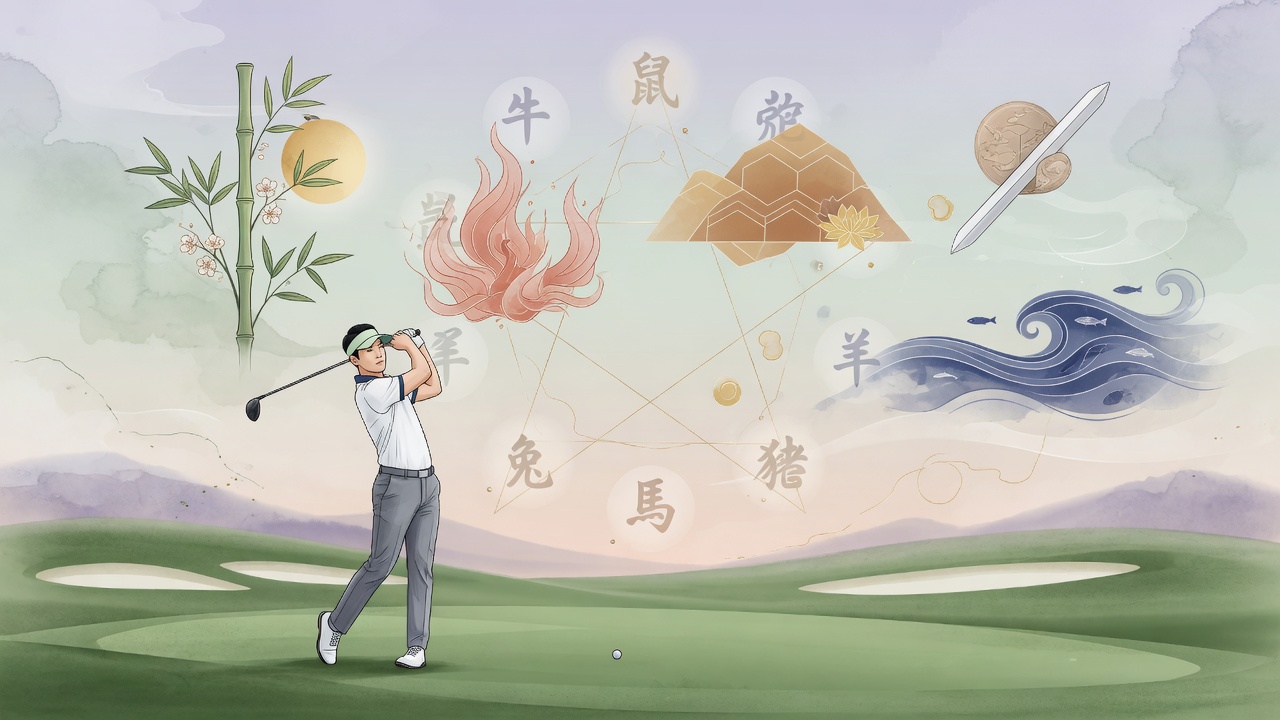
Clarification: Bazi Is Not a Fatalistic Manual
Common Misconceptions
- Misconception 1: Bazi determines success or failure. Bazi is a reference framework for innate tendencies, but effort and environmental influence are equally important—just as Kim Si-woo actively changed his on-course performance by adjusting his putting technique.
- Misconception 2: A good annual luck must bring a championship. Annual luck may bring stability, learning, or mental growth rather than explosive victory; a year of comprehensive improvement without a title is perfectly reasonable in Bazi.
- Misconception 3: Bazi only looks at birth time. Bazi analysis integrates dynamic changes of Luck Pillars (ten-year cycles) and Annual Luck, and a shift in one's ten-year Luck Pillar often brings changes in style and opportunity.
- Misconception 4: Same Bazi means same destiny. Even with identical Four Pillars, differences in environment, personal choices, and geography lead to different lives; Bazi reveals a spectrum of tendencies, not a single script.
How Bazi Views an Athletic Career
Bazi views a person as a Five Elements energy system; the strength of the Day Master and the configuration of Ten Gods determine innate talents and weaknesses.
The ups and downs of an athletic career are the dynamic unfolding of the natal chart under annual and decadal influences; a key technical improvement is like finding the 'medicine' for the chart's imbalance.
Equating an athlete's yearly performance simply with 'auspicious or inauspicious' is one-sided; one should observe whether the Useful God is strengthened and whether weaknesses are remedied, not just focus on trophies.
Core Insights: Bazi Wisdom on Character, Timing, and Improvement
1. Bazi Character: Day Master and Ten Gods Determine Your Competitive DNA
Golf is an extreme test of mental temperament. In Bazi, the Day Master (the Heavenly Stem of the birth day) represents the core traits of the person, and its Five Element nature directly affects competitive style.
The Ten Gods further refine character dimensions—such as stress tolerance, creativity, and discipline—all of which are closely linked to putting, driving, and strategic choices.
- Jia Wood Day Master: Like a towering tree, has leadership and drive; suited to a strategic player role with strong long-game planning, but sometimes overly confident and prone to risk-taking.
- Yi Wood Day Master: Flexible and deft, skilled at leveraging force; delicate touch on short game and putting, able to find clever lines on complex greens.
- Bing Fire Day Master: Passionate and explosive, strong driving distance, but stability needs post-natal adjustment; emotional fluctuations can affect putting rhythm.
- Ding Fire Day Master: Reserved and focused, like a steady candle flame; can stay calm at critical moments with good putting under pressure, but needs to ignite passion.
- Wu Earth Day Master: Thick and stable, like the earth; strong mental fortitude, suited for long putts and slow greens, but may lack explosiveness.
- Ji Earth Day Master: Meticulous and tolerant, good at observation and adjustment; excellent green reading, low margin for error in putting, suited for finesse play.
- Geng Metal Day Master: Resolute and decisive, crisp ball striking, good under pressure; dares to commit on key putts, but sometimes too rigid and needs to soften touch.
- Xin Metal Day Master: Refined and sharp, pursuing perfection; extremely particular about putting details, standardized technique, but excessive perfectionism can cause tension.
- Ren Water Day Master: Intelligent and agile, adept at handling complex greens, reads putting lines with ease, but prone to drifting and needs enhanced focus.
- Gui Water Day Master: Sensitive and intuitive, has natural feel for green speed and slope, but mentally susceptible to external interference; needs mental strengthening.
- Output Star Chart (Food God and Hurting Officer): Those with strong Output Stars are highly creative, with delicate touch in short game and putting, can play imaginative shots, but mood swings are large; need psychological training.
- Officer and Seal Chart (Direct Officer and Direct Seal): Combination of discipline and order, standardized technique, strong stability, but sometimes lacks risk-taking; needs to stimulate Output Star flexibility.
- Companion Star Chart (Friend and Robber): Those with strong Companion Stars are highly competitive, with good stamina and endurance, suited for continuous play, but may lack coordination; need teamwork.
- Wealth Star Chart (Direct Wealth and Indirect Wealth): Goal-oriented, good at strategic layout, effectively manages the game process, but under pressure may be too conservative.
2. The Flow of Timing: Why a Year Without a Title Can Be the Best Year?
In Bazi, Luck Pillars change every ten years, and Annual Luck cycles yearly, constituting 'timing.' A championship is not the only Bazi indicator of success.
Kim Si-woo's 2026 might have been an Resource Star year, bringing energy for learning, absorption, and consolidation, enabling systematic improvement in putting.
Luck Pillars are like seasonal shifts, and Annual Luck like daily weather; key breakthroughs often occur in a Useful God year—even without a trophy, one can achieve qualitative skill transformation.
- Fortune aids skill breakthrough: If the annual stem-branch is the person's Useful God and fills a chart deficiency, even without a title, one can achieve a qualitative leap in technique, such as refined putting.
- Stability outweighs everything: Some years bring Companion Star (Friend/Robber) energy, enhancing endurance and consistency, manifesting as balanced results with many top-10 finishes, leading to a career-high total points.
- Mental maturity is also a big gain: If annual luck activates the Officer Star, it may bring stronger self-discipline and stress resistance—more precious for a golfer's long-term development; calm putting is a manifestation.
- Transition between Luck Pillars: If in a period of changing Luck Pillars, performance may fluctuate, but seizing a good annual window to repair weaknesses is building for the next peak—no title but better than a title.
- Resource Star year benefits learning: The Resource Star represents learning and absorption; when annual luck meets Direct or Indirect Resource, technical theory updates and putting stroke adjustments are easier to absorb—a golden window for improvement.
- Output Star year benefits innovation: The Output Star represents creativity; when it appears, one can boldly try new plays and new putting postures, possibly breaking bottlenecks—even without winning, finding a new direction.
- Wealth Star year benefits practical play: The Wealth Star represents goals and execution; when strong, competition goals are clear, tactics are efficiently executed, putting focus improves, and results naturally stabilize.
- Officer/Killing Star year benefits stress resistance: Officer/Killing brings pressure and motivation; if favorable, one can explode under high pressure and not falter on key putts—even without winning, mental fortitude is exercised.
- Companion Star year benefits competition: Companion Star strengthens the self, suited for multi-event play with abundant stamina; putting consistency is maintained during dense schedules, and overall ranking naturally rises.
- Avoid single-year interpretations: Annual luck must be combined with the natal chart and Luck Pillars; refrain from taking things out of context. Bazi emphasizes holistic interaction: a year's gain needs years of groundwork.
3. Choice and Improvement: How Putting Became the 'Adjustment Useful God' of the Destiny Chart?
Classic Bazi theory emphasizes the 'disease and medicine' principle: deficiencies in the chart are the 'disease,' and remedial actions are the 'medicine.'
Kim Si-woo's putting improvement is exactly finding the 'disease' of his skill set and, under favorable timing, decisively applying the 'medicine,' achieving a seasonal-adjustment-like balance.
Adjustment is an important Bazi concept, referring to regulating the chart's cold, heat, dampness, and dryness; improving putting is like introducing an adjustment element to balance overall competitive state.
- Identify the 'root disease': Through Bazi analysis, one can understand which dimension—power, precision, patience, or adaptability—needs strengthening; a putting weakness is a clearly identifiable improvement point.
- Make good use of timing windows: When annual luck runs Resource, it suits learning theory and adjusting technique; when Output, it suits innovating play and boldly trying new putters.
- Self-improvement is the power of Human Element: Bazi speaks of Heaven, Earth, and Human elements; human effort and choice are variable factors. When fortune provides an opportunity, subjective initiative can amplify the effect.
- Adjustment Useful God: If the chart is overly cold-damp or hot-dry, putting improvement is like introducing a adjustment element, making the whole balanced and performance improved—the positive side of Bazi.
- Mediating Useful God: If the chart contains clashing Five Elements (e.g., Metal-Wood conflict), putting improvement can be seen as 'mediation,' like using Water to harmonize, making the technical chain smooth.
- Continuous iteration: Improvement in Bazi is not achieved overnight; Luck Pillars span ten years, and yearly tweaks—like updating putting feel each year—dance with fortune.
- Choice trumps effort: Doing the right thing in the right year—adjusting technique in a learning year, competing more in a practical year—yields twice the result with half the effort.
- Psychological adjustment is also 'medicine': Bazi can reveal emotional sticking points; targeted mental training to reduce putting tension is like prescribing medicine at the 'disease' to achieve breakthrough.
- Teamwork fills gaps: Caddies and coaches are like Useful Gods in Bazi; choosing the right support team can compensate for chart deficiencies and enhance overall performance.
- Avoid going against the trend: If annual luck is unfavorable, forcing major technical adjustments may backfire; one should follow the flow, iterate in small steps, and wait for the right moment.
Avoiding Pitfalls: Applying Bazi Wisdom Rationally
Reminders for Sports Enthusiasts
- Avoid over-identification: Do not simply attribute an athlete's achievements to a single Bazi type; a complete chart requires professional analysis. This article is only general education.
- Do not superstitiously rely on annual luck: Even with favorable luck, without sweat, the putter will not improve on its own. Behind Kim Si-woo's improvement are countless hours of practice.
- Avoid using Bazi to predict matches: Bazi is a tool for analyzing trends and character; it must not be used for gambling or predicting specific wins or losses—this goes against traditional cultural wisdom.
- Focus on character growth, not championships: From Bazi, we should learn self-awareness—like Kim Si-woo, find weaknesses and bravely improve to become a better self.
- Seek professional consultation: If interested in Bazi, consult a legitimate practitioner with your complete birth data; avoid one-sided interpretations from online auto-charting.
- Keep an open mind: Bazi is a traditional cultural heritage; understand it scientifically, treat it as entertainment reference, and never replace real-life decisions with it.
- Do not neglect modern training: Bazi cannot replace physical, technical, or psychological scientific training; it is only an auxiliary perspective for self-knowledge.
- Beware of commercial hype: There are 'champion Bazi' marketing gimmicks; do not believe them—success results from multiple factors.
- Respect personal privacy: Never publicly discuss or guess the actual birth times of active athletes; this is both impolite and potentially legally problematic.
- Cultural confidence, not superstition: Treat Bazi as systematic thinking in Eastern philosophy to understand the interaction between self and environment, not fatalistic superstition.
Summary and Review
Bazi culture is not a prison of fate but a dynamic wisdom emphasizing the triadic interaction of character, timing, and choice.
Kim Si-woo's 'best season without a title' inspires us: true success lies in seizing the window of fortune and, through post-natal effort like putting improvement, remedying chart weaknesses to achieve the 'adjustment' balance of life.