Lee Sang-min's Post-Marriage Transformation Sparks Discussion: Marriage, Personality, and Life Turning Points Through the Lens of Bazi
Recently, Korean entertainer Lee Sang-min revealed in an interview that he has become a completely new person after one year of marriage, calling his wife "the only person who changed me." This heartfelt confession quickly trended, raising the qu
Opening Introduction
The news of Lee Sang-min's post-marriage transformation has made "marriage changes personality" a hot topic. People often attribute such change to a partner's magic, but from the Bazi perspective, this is actually a deep resonance between one's personal destiny chart and external affinities.
Using this trending topic as a starting point, we step away from entertainment gossip and guide you into the cultural world of Four Pillars Bazi, to understand the ancient wisdom interlinking marriage, personality, and life choices.
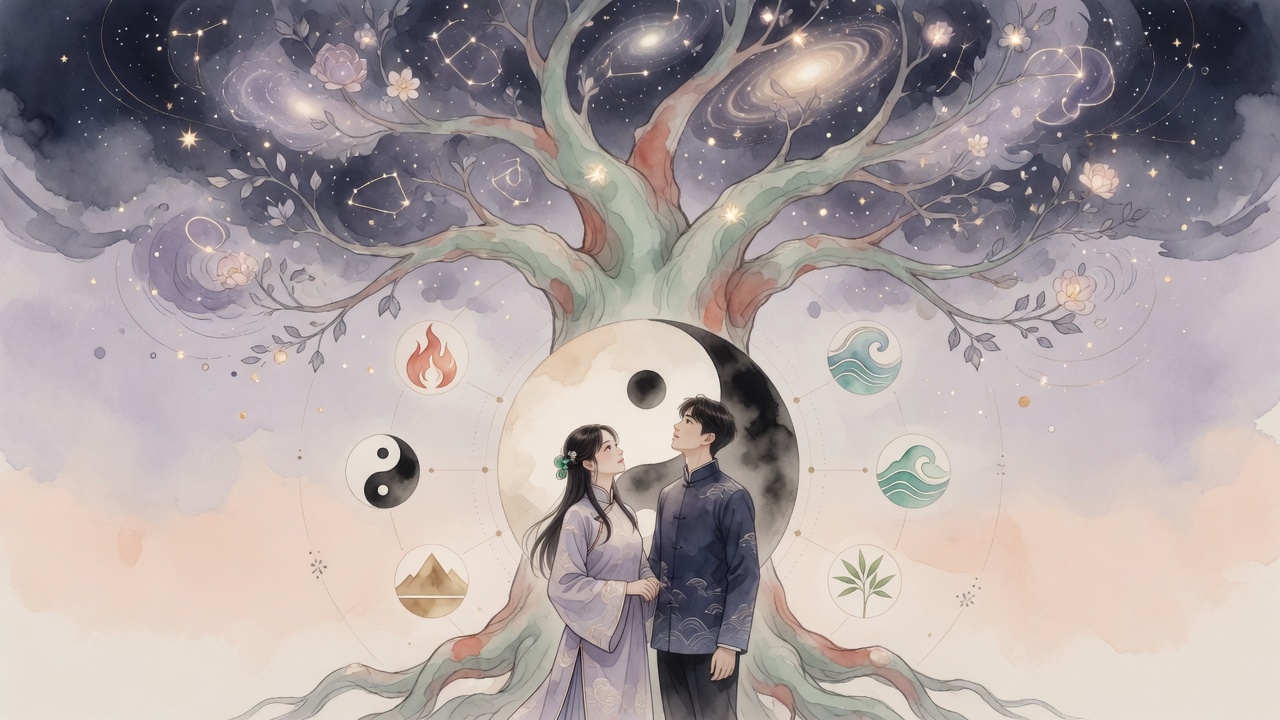
Basic Clarification: Bazi Is Not a Script of Fatalism
Common Misconceptions
Many people assume Bazi is an ironclad "life verdict," and interpretations of marital change can easily slide into fatalism. Yet the true destiny-analysis tradition emphasizes precisely trends and personal agency.
- Misconception 1: A good marriage is solely guaranteed by Bazi matching. Bazi compatibility looks at energetic interactions, but real marriage requires effort; destiny analysis only provides a reference framework.
- Misconception 2: A drastic post-marriage personality change means someone has become a different person. From a destiny perspective, this occurs when the Spouse Palace is activated, and the Day Master's favorable or unfavorable annual energies are triggered, bringing latent traits to the surface—not creating them out of thin air.
- Misconception 3: When good luck arrives, change happens automatically without personal effort. In Bazi, major luck cycles and annual luck are merely windows of timing; the final choice always rests with the individual.
Core Insights: How Marriage Becomes a Bazi Switch for Personality Turning Points
I. The Spouse Palace: Secrets of the Day Branch and Hidden Personality Facets
In Bazi, the Earthly Branch of the Day Pillar is the Spouse Palace, representing the most direct positioning of spouse and marital life. It is also the "inner room" where the Day Master sits, reflecting one's instinctive emotional response patterns.
When marriage is established, especially during the first year, if the annual luck or major luck cycle activates the Spouse Palace, the door to this "room" is pushed open, and normally hidden personality traits are awakened.
For example, if the natal chart's Spouse Palace falls on Peach Blossom positions such as Zi, Wu, Mao, or You, the person may suddenly become more appearance-conscious and socially active after marriage; if it is a Hua Gai or Indirect Resource star, they may lean toward introspection and building a spiritual world behind closed doors.
- Spouse Palace combination (He): If the annual Heavenly Stem and Earthly Branch combine with the Day Branch—such as Jia combining with Ji, or Zi combining with Chou—the energy of the Spouse Palace is strengthened, bringing out a softer, more cooperative side of the personality.
- Spouse Palace clash (Chong): A clash like Zi-Wu or Mao-You may bring emotional fluctuations and dramatic behavioral adjustments. What looks like "becoming a different person" on the surface is actually inner conflicts being brought to the forefront.
- Ten Gods configuration: When the hidden stems within the Spouse Palace are activated, the emergence of Direct Officer increases a sense of responsibility, Eating God enhances expressiveness, and Indirect Wealth may spark a sudden intense interest in making or generously spending money.
II. Resonance of Timing: The "Emerging Adulthood" of Major Luck Transitions and Annual Triggers
Life transformations are rarely caused by a single factor; the shift of major luck cycles is often the deeper driving force. Major luck changes every ten years and governs the themes of different life stages.
Lee Sang-min's interview did not disclose his specific birth details, but we can view it as a typical Bazi specimen: many people experience noticeable change one year after marriage, precisely at the borderline of a luck cycle shift.
There is a saying, "changing luck is like changing the person." The three years before and after a major luck transition are inherently a period of personality adjustment and value reconstruction. If marriage is added on top of that, it's like injecting a double dose of new energy.
- Major luck acting on the Day Master: If the new major luck's Heavenly Stem is a Resource star, the person becomes more studious, introverted, and family-oriented; if it is a Wealth star, they become more pragmatic and pursue material stability, and these changes project onto marital behavior.
- Annual luck activating the Spouse Palace: If the annual luck in the first year of marriage coincidentally brings Red Luan, Heavenly Happiness, or Peach Blossom stars into the chart, it greatly amplifies marital sweetness and the drive to change, making one willing to adjust for the partner.
- Timing and choice: Given the same Bazi annual luck, some choose to leverage it for career development, while others choose to return to the family. Timing provides the "possibilities," and the spouse, as the closest "external affinity," influences the direction of the choice.
III. Personality Flexibility: The Interaction Between Bazi Blueprint and Acquired Choices
Bazi never views personality as an unchangeable iron plate. The natal chart is like a person's factory settings, while major luck, annual luck, environment, and significant others provide ongoing system updates.
Marriage can trigger deep change because it builds a long-term, high-intensity emotional interaction field. In this field, the chart's favorable gods may be nourished by the partner, and unfavorable gods may be restrained or provoked.
For instance, a person with a strong Sibling star in the natal chart and a stubborn disposition, if the spouse's Bazi five elements happen to be Officer/ Killer, creating the balance of "Sibling using Officer," will appear more disciplined, gentle, and restrained after marriage.
- Favorable gods receive support: If the spouse happens to be the favorable element your Bazi needs—for example, you favor Fire and your partner has strong Fire—you will naturally feel empowered in the relationship, and your personality develops in a more positive direction.
- Unfavorable gods are controlled: If the partner can combine and neutralize your unfavorable gods—for instance, you are averse to Wood and the partner has strong Metal to control it—the original anxiety and impulsiveness are soothed, making you appear "like a changed person."
- Acquired self-cultivation: Even without perfect destiny matching, one can proactively adjust through self-awareness, communication, and learning. Bazi offers reminders, not limitations.
Avoiding Pitfalls: Viewing Bazi and Marital Change Rationally
Important Notes
- Don't rely solely on the Spouse Palace: A person's transformation requires a comprehensive assessment of the natal chart's five-element strength and weakness, Ten Gods combinations, and major and annual luck cycles. Looking only at the Day Branch can lead to overgeneralization.
- Avoid mystifying "spouse-enhancing" concepts: Bazi compatibility is a two-way energetic match; there is no such thing as one-sided absolute enhancement. Mutual nourishment defines a healthy relationship.
- Beware of luck-transition anxiety: Personality changes during major luck transitions are normal. Don't casually reject the marriage because of them; allow an adaptation period for yourself and your partner.
- Do not use Bazi as an excuse: If you become irritable or negative after marriage, don't say "my Spouse Palace is clashed, there's no way." Combine real-life communication and psychological support; Bazi is only an auxiliary tool for awareness.
- Respect privacy, do not extrapolate charts: The birth data of public figures should not be casually derived, let alone publicly discussed. The principles in this article are for educational purposes only and do not involve any destiny derivation for real individuals.
- Korean Four Pillars and Chinese Bazi share core origins with minor differences: Korea's traditional Saju (Four Pillars) theory shares roots with Chinese Bazi, but details in chart calculation (such as seasonal markers and time zones) differ slightly. If calculating a chart in Korea, readers should use local standards.
Summary and Reflection
Lee Sang-min's marital transformation is less a miracle and more a vivid microcosm of how the Spouse Palace activation and the timing of major luck cycles interact in Bazi. Personality can unfold new dimensions through love, and choices are gently nudged through windows of timing.
What Bazi culture offers us is not fear or superstition about change, but an ancient framework for understanding ourselves and accepting transformation. Key conclusion: Marriage is a significant "external affinity" in life, touching the destiny chart, but the one who ultimately decides who you become is always yourself.