How Bazi 'Shishang' and 'Yinxing' Explain Yuki Joseph Nakajima's Innovative Path — Traditional Destiny Analysis on Athletic Talent and Coaching Wisdom
Japanese track star Yuki Joseph Nakajima amazed the world by breaking national records while insisting, 'I never run 400 meters in practice,' and embracing barefoot training. Beyond sports science, the traditional Bazi perspective reveals how
Introduction
When Yuki Joseph Nakajima reveals that he 'never runs a full 400 meters in practice' yet continues to break records, many are struck by his alternative philosophy.
From a Bazi perspective, such boundary-pushing creativity corresponds to the energy of the Shishang stars. Meanwhile, the trust and guidance of his coach work like the nurturing power of the Yinxing star.
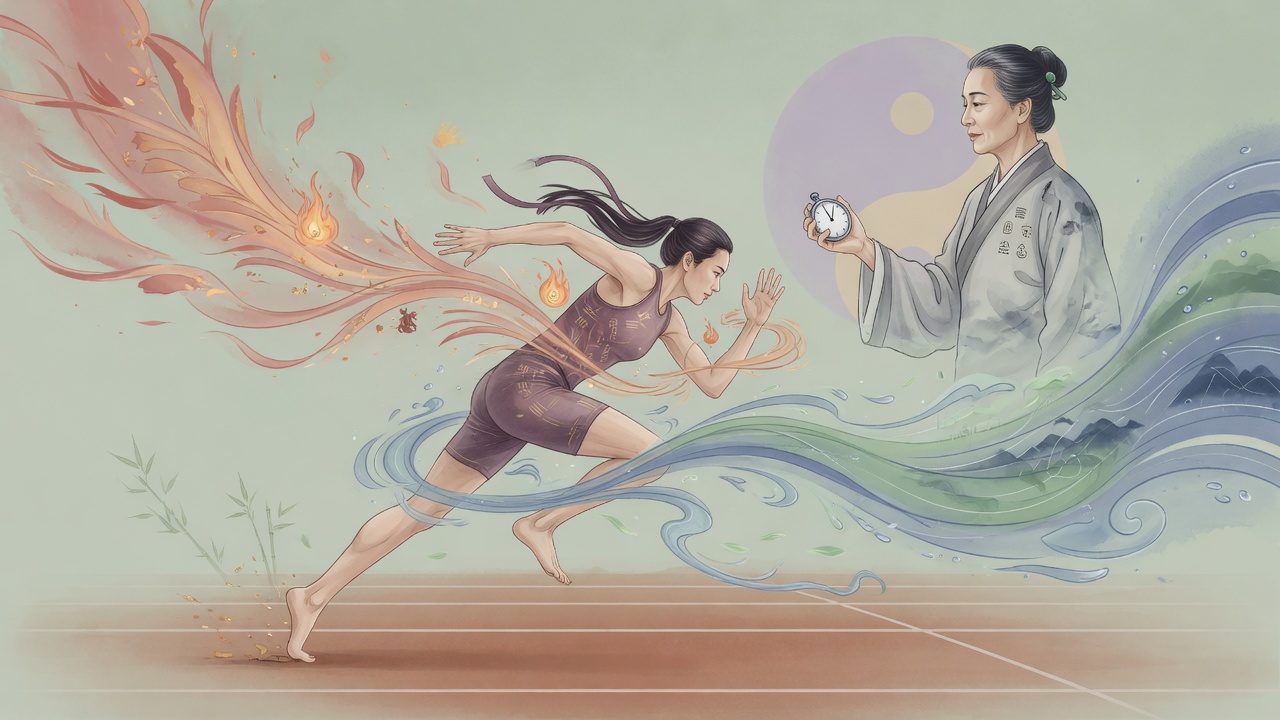
Basic Clarification: What Are 'Shishang' and 'Yinxing' in Bazi?
Common Misconceptions
Many people mistakenly think Bazi is only about fortune or marriage, but it actually reveals deep insights into personality traits and behavioral patterns.
- Misconception 1: Destiny analysis is superstition and unrelated to modern sports. In reality, Bazi analyzes talent tendencies and interaction patterns through the Ten Gods relationships, without supernatural prediction.
- Misconception 2: Shishang only represents artistic talent, and Yinxing only represents education. In the athletic sphere, Shishang maps to innovation, intuition, and physical expression; Yinxing symbolizes coaches, accumulated experience, and protective training.
Role Positioning in the Ten Gods Context
In the Bazi system, centered on the Day Master (the Heavenly Stem of the birth day), those that produce the Day Master are Yinxing; those the Day Master produces are Shishang.
Shishang represents what the Day Master generates — output, creation, expression, and breakthroughs; Yinxing represents the force that nurtures the Day Master — absorption, discipline, guidance, and protection.
- Shishen (Eating God): Gentle, refined talent, sensitive to feeling and rhythm.
- Shang Guan (Hurting Officer): Bold, unconventional talent, inherently disruptive and adventurous.
- Zheng Yin (Direct Resource): Traditional, systematic teaching, emphasizing a solid foundation.
- Pian Yin (Indirect Resource): Unique, unorthodox guidance, adept at teaching according to individual aptitude.
Core Points: How the Interaction of Shishang and Yinxing Shapes an Athlete's Unique Path
1. Flourishing Shishang: Where the 'Blazing of a New Trail' Comes From
Yuki Joseph Nakajima's specialized training of 'no 400-meter runs' and barefoot training clearly carries the traits of Shang Guan.
Shang Guan dislikes following the beaten path, keenly detects blind spots in traditional methods, and boldly tries new solutions. Barefoot training can be seen as a form of body wisdom — returning to instinct and enhancing foot feedback — a perfect display of Shang Guan's ability to perceive and break through physically.
- Shang Guan driven: Rejects mechanical repetition, pursues efficiency and unique solutions, often bypassing traditional bottlenecks.
- Shishen creativity: If Shishen is strong, the focus is more on rhythm, flow, and long-term refinement; barefoot work may aim to build a more natural running cadence.
- Destiny deduction: An athlete with a strong and favorable Shishang tends to be a 'competition performer,' unleashing extraordinary creativity at critical moments.
- Real-world parallel: Nakajima doesn't simulate the full 400 meters in training yet still controls the race — a classic case of Shishang drawing energy from 'alternative experience.'
2. Yinxing as a Useful Force: How the Coach Becomes the Foundation for 'Blazing a New Trail'
The three-legged race bond between Nakajima and his coach corresponds to the supportive role of Yinxing in Bazi.
Yinxing does not suppress talent; it provides a safety boundary and energy replenishment. A coach who teaches according to aptitude often has a strong Yinxing in their chart that can channel Shishang energy.
- Zheng Yin-type coach: Emphasizes philosophy and psychological building, telling the athlete 'why not running 400 meters is actually more effective,' offering cognitive support.
- Pian Yin-type coach: Good at spotting unique talent, proactively designs unconventional training — such as introducing barefoot exercises — a perfect example of Pian Yin's 'alternative teaching.'
- Key role of Yinxing: When Shishang energy becomes too scattered, Yinxing can condense that innovative energy into an executable system, preventing it from going off the rails.
- Teaching according to aptitude: In Bazi, if an athlete has excessive Shishang but a weak Day Master, Yinxing can replenish the inner drain, allowing talent to be sustained.
3. The Balance of Shishang and Yinxing: Ancient Wisdom on 'Teaching According to Aptitude' and 'Blazing a New Trail'
Bazi emphasizes balance and flow. Shishang and Yinxing are not opposites but mutually reinforcing.
As the classic text *Di Tian Sui* says: 'The child can nurture the mother, revealing the mystery of heavenly mechanism.' Shishang releases the Day Master's energy, yet generates wealth and power; Yinxing controls excessive Shishang and also nourishes the body.
- Shishang paired with Yinxing: This is the most ideal combination — talent with wise guidance, fully actualizing originality without straying off course.
- Heavy Yinxing, shallow Shishang: Training may be too conservative, and the athlete could become a 'practice player' lacking on-the-spot adaptability.
- Strong Shishang without Yinxing: Risk of overconfidence, ignoring bodily signals, increasing injury risk. Barefoot training without scientific evaluation could backfire.
- Ancient perspective: Confucius advocated 'teaching according to aptitude'; in Bazi, this means choosing whether to amplify Shishang or supplement Yinxing based on the Day Master's strength and the Ten Gods configuration.
- The risk of blazing a new trail: Not all innovations succeed. Destiny analysis reminds us that Shishang needs Yinxing's 'pruning' so the tree of talent can grow toward the sun.
Cautions: Key Points When Using a Bazi Perspective to Understand Athletes
Be Rational and Avoid Fatalism
- Don't take it literally: Bazi analysis is based on personality and energy tendencies, not absolute labels. Nakajima's success is due to his personal effort and the era; destiny analysis merely offers a framework for interpretation.
- Do not fabricate birth times: The exact birth time of public figures is unknown. All analysis is inferred from behaviors reported in public media and should not be taken literally.
- Avoid stereotyping: Strong Shishang does not mean inevitable rebellion; strong Yinxing does not mean rigidity. The whole chart must be considered.
- Training decisions must be scientific: Barefoot training or specialized methods must be grounded in sports medicine and professional coaching evaluation; destiny analysis cannot replace practice.
- Respect personal privacy: This article is purely a cultural science popularization of Bazi, does not involve speculation about Nakajima's personal chart, and should not be used for personal judgment.
Summary and Recap
Yuki Joseph Nakajima's 'blazing a new trail' and the 'three-legged race' with his coach are a vivid embodiment of Shishang and Yinxing in Bazi.
Traditional destiny analysis is not mysterious prediction; it is ancient wisdom revealing how talent and teaching work in synergy. Only by finding balance between innovation and inheritance can an athlete's unique brilliance fully shine.