MLB Transfer Spotlight Through the Lens of Ba Zi: The Wisdom of Character, Timing, and Choice
In the 2026 MLB season, the marquee matchup between the D-backs and the Dodgers has captured attention, with player transfer moves becoming a hot topic. Looking at this through traditional culture reveals that **Ba Zi (Eight Characters) f
Opening Introduction
In the 2026 MLB season, the clash between the D-backs and the Dodgers is in the spotlight.
One player's transfer decision prompts a deeper question: why do people choose to make changes at certain moments?
Ba Zi fate analysis just happens to provide a systematic perspective on the relationship between character, timing, and choice.
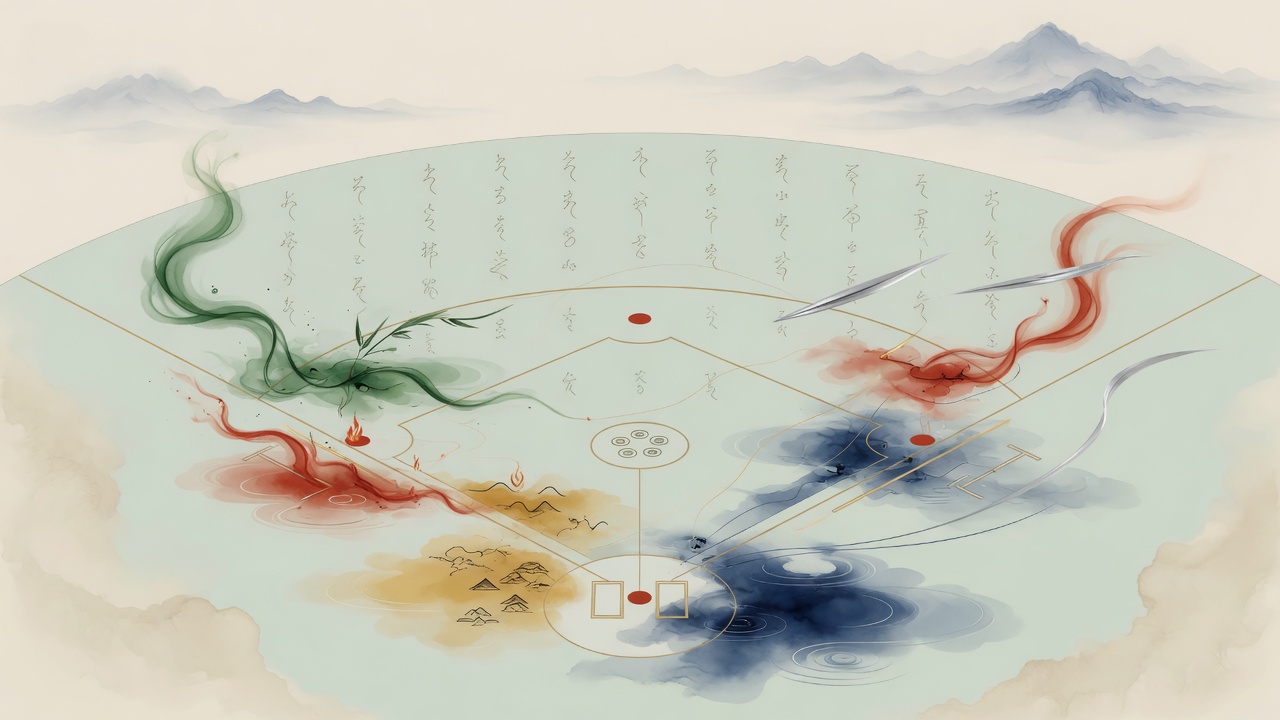
Basic Clarifications
Common Misconceptions
When linking traditional fate analysis with modern sports topics, we must first dispel several common misunderstandings to establish a rational understanding.
- Misconception 1: Ba Zi can predict match results. In reality, fate analysis does not provide absolute answers to specific events; it reveals energy trends and individual characteristics.
- Misconception 2: The timing of a transfer determines everything. Luck Pillars and Annual Cycles in Ba Zi represent windows of possibility, not an enforced fate.
- Misconception 3: A good birth chart alone guarantees success. Fate analysis emphasizes the dynamic balance between Useful God and Annoying God; even with an ordinary original chart, one can optimize life through acquired choices.
Core Interpretation
Day Master Personality: Your Inner Engine
In a Ba Zi chart, the character representing the person is called the Day Master (or Day Stem). It acts like a core chip, determining the most fundamental temperament.
The Day Master's Five Element attribute and Yin-Yang quality shape a rich variety of personality outlines, directly influencing behavioral tendencies and decision-making styles in a career.
- Day Master Jia Wood: Yang Wood, like a towering tree, upright and benevolent, bold in pioneering, naturally suited for leadership roles—often the spiritual pillar of a team on the field.
- Day Master Yi Wood: Yin Wood, like vines and flowers, flexible and delicate, good at leveraging support and coordination, able to find survival space in complex situations, suitable for tactically demanding positions.
- Day Master Bing Fire: Yang Fire, passionate and unrestrained, swift in action, explosive power, but prone to impatience, fitting for critical hitting scenarios that require instant decision.
- Day Master Ding Fire: Yin Fire, like candlelight or starlight, introverted and enduring, keenly perceptive, adept at calm observation in crucial moments, often a strategic player hiding lethal intent.
- Day Master Wu Earth: Yang Earth, thick, sincere, and steady as a mountain, extremely resilient under pressure, the most reliable defensive wall on a team, not easily shaken.
- Day Master Ji Earth: Yin Earth, like garden soil, inclusive and nurturing, good at coordinating team relationships, quietly creating opportunities for teammates, a high-quality support role.
- Day Master Geng Metal: Yang Metal, resolute and decisive, with a strong sense of rules, top-notch execution, staying calm under high pressure, often playing a sharp spearhead role in intense confrontations.
- Day Master Xin Metal: Yin Metal, exquisite and sharp, pursuing perfection, almost demanding in detail control, suitable for high-precision skill positions like precise catching and throwing.
- Day Master Ren Water: Yang Water, flowing endlessly, alert and adaptable, outstanding adaptability, able to adjust quickly to on-field situations, an unpredictable surprise weapon.
- Day Master Gui Water: Yin Water, delicate and deep, with exceptional insight, calm on the surface but strategizing within, often steering the situation from the shadows.
Strength and Weakness: The Hidden Scale of Talent
Day Masters not only differ by Five Element but also by strength and weakness. The basis for judging strength is whether they are seasonally supported (monthly branch gives birth or support), rooted in earthly branches, or nurtured by the Resource star.
A strong Day Master tends to be energetic and risk-taking; a weak Day Master is flexible, alert, and cautious. Neither quality is inherently superior—they simply suit different competitive ecosystems.
- Strong Day Master: For example, Jia Wood born in the Tiger month has deep roots and outstanding stress resistance, able to maintain steady output over long attritional battles, suitable for starting or high-appearance positions.
- Weak Day Master: Ding Fire born in the Pig month, though limited in energy, reacts quickly and excels at using skill to overcome force, often creating highlight moments from limited opportunities.
- Seasonally supported but not rooted: Like someone with natural physical talent but unstable on-field performance, needing Luck Pillars and Annual Cycles to supplement earthly branch roots for sustained output.
- Rooted but not seasonally supported: Solid acquired training, but needs to wait for the right moment; once encountering a favorable Luck Pillar, may leap from the bench to a starting role, demonstrating the power of accumulated strength bursting forth.
- Balanced chart: Day Master neither too strong nor too weak, the most malleable, able to adapt to high confrontation while maintaining nuanced thinking—the most versatile all-rounder template.
- Modern sports science emphasizes individualized training; fate analysis provides a innate energy map to help us understand whether we are better suited for direct assault or indirect maneuvers.
Luck Pillars and Annual Cycles: Life's Metronome
The Ba Zi natal chart is like factory settings, while Luck Pillars are ten-year fortune cycles and Annual Cycles are each year's specific energy. Their interaction with the natal chart determines the rhythm of life's ups and downs.
The arrangement of Luck Pillars follows the rule of forward for Yang male/Yin female and reverse for Yin male/Yang female, starting from the Month Pillar and calculating the starting age based on the birth solar term, precisely mapping long-term curves.
- The Traveling Horse Star governs movement and change; the earthly branches Yin, Shen, Si, and Hai are the four Horse lands. When Luck Pillars or Annual Cycles activate them, one tends to feel an inner urge to change environments.
- If the natal chart carries the Yin branch and the Annual Cycle meets Shen Metal, Yin-Shen clash is exactly Traveling Horse meets clash, often corresponding to events like relocation, transfer, or job change, with a strong sense of timing.
- The years when transfer windows open often coincide with nodes of fortune transition. The turbulence of the handover period is like a pitching change in a game—if timed right, it can refresh one's form entirely.
- Concurrent Luck Pillar and Annual Cycle (Luck Pillar and Annual Cycle share the same stems and branches) or Heavenly Clash and Earthly Clash (violent clash between Luck Pillar/Annual Cycle and Day Pillar) are often signals of major life turning points, requiring careful evaluation.
- The Heavenly Stem of an Annual Cycle represents surface phenomena, the Earthly Branch represents substance. For example, an Jia Shen year: the Jia Wood Heavenly Stem is an apparent opportunity, while the Shen Metal Earthly Branch may bring the core driving force of Traveling Horse impulse.
- Acting in harmony with the cycle yields twice the result with half the effort. When Ba Zi favors Fire and one enters a Fire-prosperous Luck Pillar, choosing to move south or join a team with Fire attributes shortens the adaptation period and accelerates integration.
- These temporal patterns are not fated shackles but reminders that timing and directional positioning are equally important; stepping forward when energies resonate meets the least resistance.
Useful God Selection: The Five Element Code of Environment
The key Five Element that brings the entire chart toward balance is called the Useful God. It represents the energy supplement one most needs, the core element to remedy one's own shortcomings.
Career choices or team affiliations, from a fate analysis perspective, are essentially entering a new energy field that can supplement one's Useful God and suppress the Annoying God, thereby achieving dynamic balance.
- Basic rule for selecting Useful God: a strong Day Master favors restraining, draining, and consuming (Officer, Killing, Output, Wealth stars); a weak Day Master favors nurturing and supporting (Resource, Companion stars). Use this as the benchmark to find favorable environments.
- Geographical directions correspond to Five Elements: East is Wood, South is Fire, West is Metal, North is Water, Center is Earth. A player moving from a Water-dominant location to a Fire-dominant one may subtly align with Useful God needs.
- Arizona (home of the D-backs) has a hot, dry climate with vast deserts, rich in Fire and Earth energy; Los Angeles (Dodgers) is coastal and humid, carrying notable Water attributes.
- A player whose Ba Zi favors Fire and Earth, if transferring from a Water-heavy team to the desert-based D-backs, has subconsciously completed an ecological migration of Five Element auspiciousness.
- Team color schemes are also extensions of environmental Five Elements: red emphasizes Fire, blue emphasizes Water, black and gold combinations carry Water and Metal. Wearing the corresponding jersey means being in that Five Element field daily.
- The Five Element composition of the coaching staff and core teammates also forms a micro-energy field. If the team is overly Metal and one's chart exactly avoids Metal, one may feel out of place and unable to perform freely.
- This is not a rigid formula but emphasizes the match between individual needs and environmental resources, much like modern career planning concepts of 'person-job fit' and 'cultural fit'.
- Of course, real-world effort, injury management, tactical and technical integration always dominate; fate analysis merely offers an auxiliary mirror to examine timing, terrain, and human harmony.
Pitfall Guide
Points to Note
- Reminder 1: Strictly avoid using Ba Zi to predict specific match results or player performances. This not only deviates from the original intent of fate analysis but also easily slips into superstition and disrespect.
- Reminder 2: Personal Ba Zi charts are private. When discussing publicly, absolutely avoid fabricating any specific birth times; respect others' destinies and boundaries.
- Reminder 3: Traveling Horse, Useful God, and similar symbols are only abstract; they must be combined with multiple real-world information for comprehensive judgment. Never make major decisions based on a single fate analysis conclusion.
- Reminder 4: Fortune transition is not instantaneous. There is often a turbulent period around the shift of Luck Pillars; the friction of adapting after a transfer also requires patience. Do not blame fate for short-term setbacks.
- Reminder 5: Do not mythologize the Five Element attributes of certain teams or cities. Individual differences are enormous; the same location acts entirely differently on different charts—there is no universally 'auspicious land.'
- Reminder 6: Acquired effort, team coordination, tactical adaptation, and injury management are always the core variables determining a career; fate analysis is merely a tool to aid self-awareness.
- Reminder 7: If a 'fate determinism' dependency develops, it will actually weaken autonomous decision-making. View Ba Zi as a self-awareness map, not a life script.
Summary and Review
Ba Zi fate analysis weaves character, timing, and choice into a dynamic life tapestry. From the hot topic of MLB transfers, we see that: the Day Master shapes the foundation, strength and weakness define the talent range, Luck Pillars and Annual Cycles provide windows for change, and the Useful God guides us toward more harmonious environments.
This is not fatalism but an alternative wisdom interpretation of timing, terrain, and human harmony, reminding us at every crossroads to listen to our inner energy while courageously making rational decisions aligned with the larger trends.