Ba Zi Insights from KOSPI Turbulence: Character, Timing, and Life Choices
In late July 2026, South Korea's KOSPI index rebounded sharply after a severe rout, while oil prices held gains amid Middle East tensions, amplifying global market uncertainty. When the external environment fluctuates wildly, an individual's pers
Opening Introduction
On July 30, 2026, South Korea's KOSPI index first experienced a sharp decline, then rebounded strongly, while crude oil prices continued to be supported by tensions in the Middle East. The violent pulse of global finance reminds us once again: the market climate changes in an instant, yet the people within it react in dramatically different ways—some panic sell, while others buy the dip.
Beyond information and capital, the deeper factors behind these differences are everyone's unique personality traits and decision-making patterns. Traditional Ba Zi analysis is precisely a symbolic system for examining inner disposition and observing life cycles. It does not predict rises and falls, but can help us see ourselves clearly, enabling more sober choices amidst shifting circumstances.
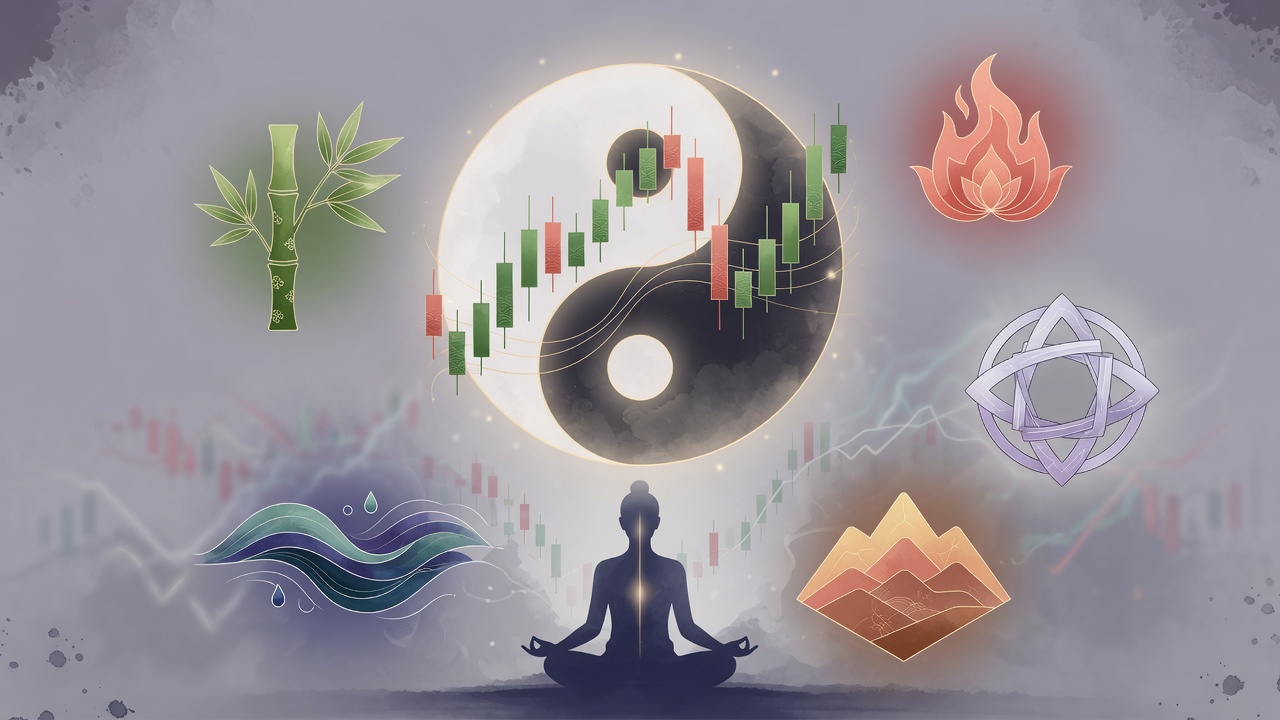
Basic Clarification: Ba Zi is Not Fatalistic Prophecy
Common Misconceptions
Many people mistakenly believe that Ba Zi can accurately predict stock market fluctuations or specific personal successes and failures. In reality, the essence of Ba Zi analysis is an energy model extrapolated from birth time. It reveals personality tendencies, potential strengths, and cyclical fluctuations, and is absolutely not a tool for rigid fatalism.
- Misconception 1: Ba Zi can tell you which stock to buy. Ba Zi analyzes the strength of the Day Master and the configuration of Ten Gods, symbols corresponding to mental traits (like impulsiveness or caution), not absolute signals for market timing.
- Misconception 2: A good chart guarantees a smooth life. Destiny study emphasizes the rotation of Major Luck cycles. Even with an excellent inherent chart, forcefully going against the trend during an adverse luck period can still lead to financial loss and mental drain.
- Misconception 3: Only looking at the animal sign of the year pillar can determine fortune. True Ba Zi interpretation must center on the Day Stem, integrating all four pillars, the Five Elements cycles, and symbolic stars. Single-indicator zodiac horoscopes are too one-dimensional.
- Misconception 4: Destiny analysis is just psychological comfort. While it is true that Ba Zi cannot replace fundamental analysis, it offers a unique framework for self-awareness and timing. Many decision-makers throughout history have drawn on its wisdom.
How Can Ba Zi Relate to Character and Choice?
The Ba Zi model converts birth time into Heavenly Stems and Earthly Branches. Each pillar carries attributes of the Five Elements (Wood, Fire, Earth, Metal, Water). The distribution and interaction cycles of these elements within the chart form the Ten Gods (Direct Officer, Indirect Wealth, Friend, etc.), each representing a category of psychological trait and behavioral tendency.
For example, someone with prominent Direct Wealth is usually sensitive to numbers and values accumulation. Conversely, a person with a strong Indirect Resource excels at non-linear, intuitive thinking. These tendencies do not determine fate, but they profoundly influence a person's first reaction when facing uncertainty—whether inclining towards systematic analysis or relying on intuition.
Meanwhile, Major Luck and Annual Luck are like climatic shifts against a cosmic backdrop. They interact with the natal chart, forming the perceived flow of 'the times' a person experiences. Essentially, the Ba Zi chart is a dynamic psychological and energy map.
- Ten Gods are symbolic expressions of inner character, suggesting innate thought and behavior preferences.
- Major Luck shifts every ten years, changing the overall energy theme, akin to a long economic cycle; Annual Luck triggers short-term events, similar to yearly volatility.
- When the natal chart, Major Luck, and Annual Luck overlap, they create resonance or conflict, thereby shaping an individual's behavioral style and experiences at different stages.
Core Points: The Relationship Between Natal Chart, Luck, and Choice
Ten Gods Character: Your Inner Decision-Making Inclination
The Ten Gods in Ba Zi are by no means superstitious labels. Substantively, they are ten personality archetypes derived from the Five Elements' generating and controlling relationships. Each archetype unconsciously drives our risk appetite and decision-making habits.
In the face of financial market volatility, these latent character traits are quickly activated. Understanding your Ten Gods configuration is like acquiring a personalized 'cognitive bias map,' allowing us to see why we consistently lean toward certain behavioral patterns.
It must be emphasized that the combination of Ten Gods is highly complex. Very few people belong purely to a single type. Every chart is a mix of multiple traits. The key is not to label yourself with one tag, but to identify your dominant tendencies and internal contradictions.
- Direct Officer: Values rules, responsibility, and order. Requires ample information and planning before deciding, leaning towards long-term stable allocations and disliking moral hazards.
- Seven Killings: Highly competitive, dares to challenge authority, possesses astonishing drive for action, but can easily overlook details due to impulsiveness, reacting intensely in extreme market conditions.
- Direct Wealth: Has a keen sense for material reality, is down-to-earth, tends to accumulate slowly. Suitable for value discovery, but can sometimes miss opportunities due to excessive conservatism.
- Indirect Wealth: A born opportunist, flexible and adaptable, keen to chase high risk and high return. Might thrive in a rebound like that of the KOSPI, but this also comes with significant ups and downs.
- Eating God: Relaxed mentality, knows how to enjoy the process, can maintain a certain observer's perspective, is not easily swayed by market sentiment, but may sometimes lack a sense of urgency.
- Hurting Officer: Full of creativity, thinks counter-intuitively, often sees details others neglect, but prone to arrogance due to talent, causing friction with others or decision-making flip-flops.
- Direct Resource: Compassionate, trusts traditional wisdom, prefers choices with a high safety margin; sometimes hesitates and overflows with too much deliberation.
- Indirect Resource: Sharp intuition, excels at non-linear associative learning, often has unique insights, but when excessive, can become over-analytical and detached from reality.
- Friend: Independent and self-reliant, strong self-esteem, not easily swayed by others, suitable for solo endeavors, but prone to missing opportunities due to stubbornness.
- Rob Wealth: Strong action-taking abilities, wide social network, can quickly mobilize resources, but easily influenced by peers. Particularly needs vigilance during bouts of group mania or panic.
Major and Annual Luck: Uncontrollable Cyclical Fluctuations
If the Ten Gods represent an individual's internal 'operating system,' then Major Luck and Annual Luck are the constantly changing external environmental parameters. A person's fortune curve is not a straight line, but fluctuates just like a market index.
Major Luck changes every ten years, derived by sequencing the month pillar forwards or backwards, representing the overall energy theme of that decade. For example, when someone enters a Direct Officer luck cycle, they naturally pay more attention to rules and reputation, becoming more self-disciplined; entering a Hurting Officer cycle brings a burst of creativity, but also a tendency to challenge authority and act rebelliously.
Annual Luck refers to the Heavenly Stem and Earthly Branch of the current year, acting more rapidly and intensely. 2026 is a Bing Wu year, with the Heavenly Stem Bing Fire seated over Wu Fire, making the fire energy peak. In destiny analysis, this is an extreme explosion of Fire energy. For Day Masters who favor Fire, it could be a year of opportunity; for those who detest Fire, external pressure may intensify, leading to inner restlessness.
However, Major Luck and Annual Luck have no absolute good or ill fortune in themselves. The key is their compatibility with the natal chart—are they the Favorable God? A weak Wood Day Master encountering a Fire cycle may feel drained, both physically and mentally exhausted. But a strong Metal Day Master meeting a Fire cycle is instead forged into a vessel, turning pressure into motivation. This dialectic relationship mirrors how crisis and opportunity coexist in market turmoil.
- Major Luck determines the decade's wind direction. Focus on whether it supplements what your chart lacks (e.g., meeting a Water cycle when you lack Water) or exacerbates existing imbalances.
- Annual Luck acts like a yearly catalyst, triggering the concrete manifestation of the Major Luck's energy. For instance, in a wealth luck decade meeting an Indirect Wealth year, opportunities for seeking wealth increase; but if the chart cannot sustain wealth, money may come and go.
- The Fire energy of the 2026 Bing Wu year is relatively friendly for charts with a dominance of Fire and Earth or cold charts that favor Fire. However, for configurations like Metal-Water Hurting Officer or charts already too dry from excess Fire and Earth, it's advisable to manage emotions and risk exposure carefully.
- Understanding your own Major Luck stage helps us differentiate between tailwinds provided by the environment and headwinds requiring patient endurance, thus avoiding forcing actions at inopportune times.
Matching Character and Timing: How to Adapt Amidst Change
What destiny analysis provides is not a certain future, but an 'energy checkup' report. This report reveals your Body Strength, Favorable and Detested Five Elements, and current cycle stage. What truly matters is how we use this report to make adaptive choices during real-world situations, such as the KOSPI rebound.
A Strong Body person usually has abundant energy and high-stress tolerance, allowing for more proactive opportunity seizing in volatile markets. For example, a strong-body Indirect Wealth structure encountering a wealth star year alongside a market sell-off and rebound might decisively enter and withstand the turbulence. However, even a strong-body person, if lacking wealth stars in the chart or having too many peers, can easily misjudge, mistaking recklessness for decisiveness.
A Weak Body person has limited energy and is more suited to defense-oriented strategies. Even if an opportunity is spotted, it's unwise to bet everything. Instead, they should enter in batches or choose sectors related to their Favorable God, borrowing the force of the Five Elements to consolidate their foundation. For example, a weak-body Direct Resource structure, if determining Fire as detested, should instead focus more on safety margins amidst the fiery 2026 atmosphere, watching more and acting less.
Moreover, the Favorable God can be seen as a personal 'energy replenishment station.' Those who favor Water might feel a stronger affinity for liquidity-sensitive sectors when considering the KOSPI. Those who favor Metal might resonate more with hard assets and sectors with clear patterns. This is not mystical prediction, but using Five Element symbolism to help find tracks that better align with one's inner cognitive rhythm.
The most crucial adaptation is the awareness of mindset: knowing what luck cycle you are currently traversing helps you understand the source of inexplicable emotions. Anxiety during adverse luck doesn't mean you aren't trying hard enough, nor does smooth sailing during favorable luck warrant arrogance. This 'seeing' itself provides tremendous stabilizing power.
- Strong Body + Indirect Wealth: Dares to catch a rebound after a rout, but must set stop-losses to prevent good luck from inflating into hubris.
- Strong Body + Seven Killings: Strong breakthrough ability under pressure. Can calmly find contrarian targets amidst market panic. Beware of gambler mentality.
- Weak Body + Direct Resource: Suited for long-term planning and defensive allocations. Use advantages in information analysis, waiting for a clear trend before entering.
- Weak Body + Eating God: Adopt a strategy of conserving energy and biding time. Maintain ample cash flow, only try light positions at the most comfortable moments, prioritizing quality of life.
- Universal Principle: During favorable luck, capture opportunities flexibly like Indirect Wealth; during adverse luck, uphold discipline resolutely like Direct Officer. Neither good nor bad luck negates the importance of acquired effort and judgment.
Pitfall Guide: Decision-Making Errors Under the Lens of Destiny Analysis
Precautions
Ba Zi can serve as an auxiliary tool for self-reflection, but when misused, it can become another form of constraint. Below are several fallacies to guard against when applying destiny-thinking to real life.
- Superstition in a Single Tool: Ba Zi is an aid for self-understanding, not a substitute for fundamental research, risk management, and emotional control. Never stake your entire fortune on a favorable annual omen.
- Blindly Following Annual Labels: An 'annual wealth star shining' does not equate to a sure profit. If the chart cannot sustain wealth, or if the Major Luck clashes, it could instead lead to trouble from wealth. Always judge the overall configuration.
- Using Destiny as an Excuse: Don't attribute all difficulties to 'bad annual luck,' as this weakens your subjective initiative. Ba Zi emphasizes acquired effort; reading, cultivating virtue can all modify fortune.
- Emotional Trading: When an Annual Luck activates Rob Wealth or Seven Killings, a person may become unusually impulsive or anxious. At such moments, it's crucial to pause trading actions, return to rational review, and not double down on bets.
- Pursuing Divine Predictions: The internet is full of simplified 'instant fortune-telling' content. These entertaining snippets lack rigor and easily mislead. Learning Ba Zi requires systematic study.
- Ignoring Real-World Cycles: Even if one's personal Major Luck is excellent, going against a systematic market crisis is still dangerous. Destiny study speaks of heavenly timing, but also earthly advantage and human harmony. Do not cling to one end.
- Using Ba Zi to Pick Stocks: Mechanically buying metal stocks because your favorable element is Metal, or shipping stocks because it's Water, is a typical misuse. Industry selection must be based on realistic analysis. The Five Elements only provide an affinity tendency for attention and character.
Summary and Review
The rebound of the KOSPI and the steadiness of oil prices are a snapshot of global market sentiment in the summer of 2026. Facing the same circumstances, the situations and feelings of different people vary dramatically.
Ba Zi analysis offers a dimension of inward observation: recognizing your decision-making preferences and blind spots through the Ten Gods, understanding the phased influences of the external environment via Major Luck and Annual Luck, and ultimately dynamically matching character with timing.
It does not teach us to foresee the future, but guides us to recognize ourselves amidst uncertainty, to maintain our composure in the alternation of favorability and adversity. If this ancient wisdom can be transformed into a piece of clear self-awareness, then regardless of how the market churns, we will have one extra measure of calm and one less measure of anxiety.