From a 1.25 Billion Won Sculpture to Bazi Wealth Warehouses: Why the Rich Dare to Sell Assets
On the Korean variety show Seo Jang-hoon's Neighborhood Millionaire, a wealthy couple sold a 1.25 billion won sculpture, sparking conversation. In Bazi culture, such high-value art transactions are often seen as metaphors for the flow of the **Weal
Introduction
On the Korean variety show *Seo Jang-hoon's Neighborhood Millionaire*, a wealthy couple sold a 1.25 billion won sculpture, sparking conversation.
In Bazi culture, such high-value art transactions are often seen as metaphors for the flow of the Wealth Star and the opening of the Storage Star.
This article rationally deconstructs the wealth personality, asset allocation, and timing instincts of the rich from a destiny analysis perspective.
It must be noted: Bazi does not predict specific transactions; it merely offers a cultural lens for observing wealth behavior.
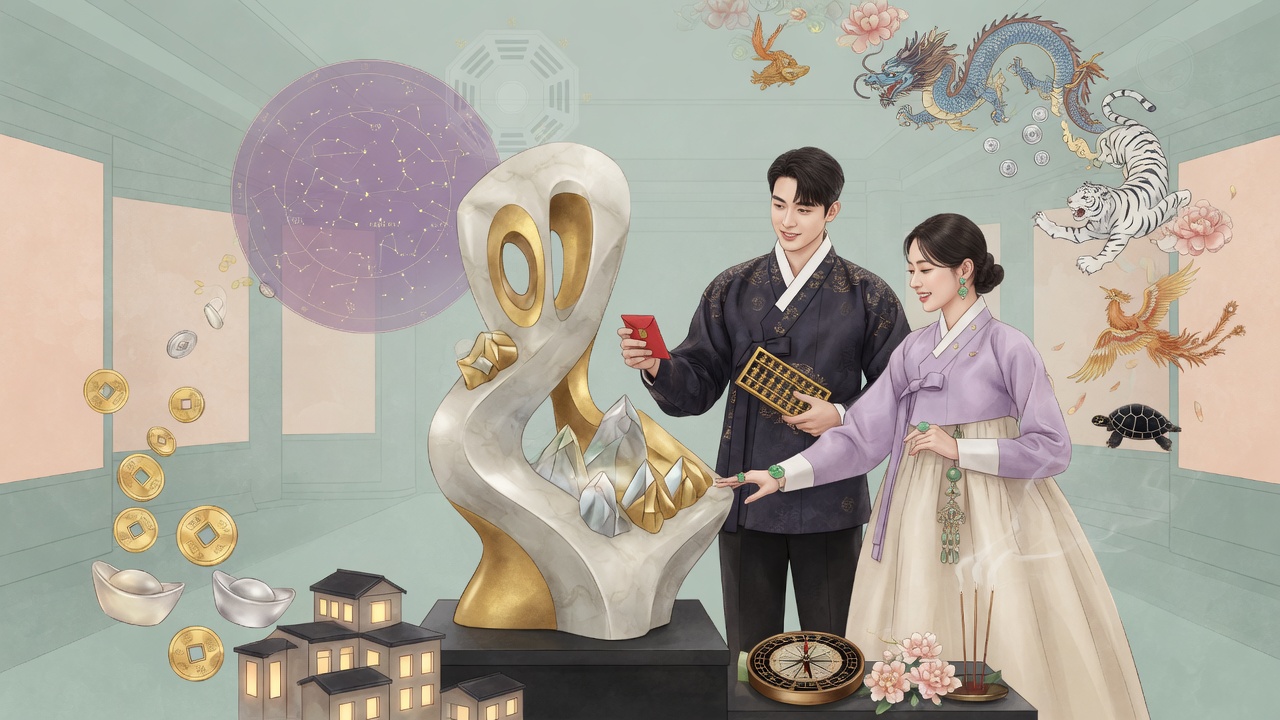
Basic Clarification
Common Misconceptions
Many people think Bazi only looks at bank deposit figures, but destiny analysis actually focuses more on the flow patterns and storage structures of wealth.
Another common misunderstanding is that simply having a Wealth Storage in the Bazi chart guarantees effortless riches. In reality, the Wealth Storage must be activated by the Luck Pillar or Annual Pillar to materialize.
The Storage in destiny analysis describes a rhythm of withdrawal and deposit, not a static safe box.
- Misconception 1: Believing a stronger Wealth Star means more money, ignoring that without a Storage Star, wealth easily comes and goes.
- Misconception 2: Equating asset sales with losing wealth; in fact, a proactive sale may correspond to the Storage Star opening its warehouse.
- Misconception 3: Thinking Bazi can precisely predict transaction amounts; in reality, destiny analysis only provides personality and trend references.
- Misconception 4: Treating destiny advice as investment commands, ignoring real-world constraints like markets, laws, and taxes.
- Misconception 5: Equating the Storage Star with unearned income, overlooking proactive management and real effort.
- Misconception 6: Believing art appreciation depends solely on destiny, whereas market supply, demand, and aesthetic trends are the true drivers.
Rational Perspective
Bazi is not financial advice but a cultural lens for observing personality and time preferences.
Sociologically, the wealthy couple selling the sculpture might be rebalancing assets; from a Bazi perspective, it corresponds to the Wealth Star emerging from the Storage.
The two are not contradictory; they are simply different languages describing the same phenomenon.
- Symbolic Meaning: The Wealth Star represents resource acquisition ability, while the Storage Star represents the rhythm of storage and release.
- Boundary of Application: Destiny analysis does not replace financial analysis; it only provides a reference framework for psychology and decision-making style.
- Modern Adaptation: Physical assets like art and real estate can be seen as extensions of the 'Storage,' but their value fluctuations still require real-world assessment.
- Psychological Dimension: The opening and closing of the Wealth Storage also reflect changes in an individual's risk tolerance.
- Social Dimension: High-net-worth individuals' transactions of physical assets often involve real-world considerations such as taxation and inheritance.
Core Points
Wealth Star and Storage Star: Two Sides of Wealth
Among the Ten Gods in Bazi, the Wealth Star represents a person's ability to acquire resources and manage cash flow.
It is divided into Direct Wealth and Indirect Wealth: Direct Wealth often indicates stable income, while Indirect Wealth corresponds to investments, side businesses, or large transactions.
The Storage Star refers to the four earthly branches Chen, Xu, Chou, Wei, which act like warehouses storing the Qi of the five elements.
When the five element associated with the Wealth Star enters a tomb-storage, it is called the Wealth Storage.
Selling the sculpture on the show can correspond to the imagery of Opening the Storage: converting stored physical objects into cash, then seeking new investment targets.
People with a strong Wealth Star but weak Storage Star tend to be good at earning but poor at saving, needing external tools like trusts or insurance to compensate.
Conversely, those with a strong Storage Star but weak Wealth Star may accumulate many physical items but face tight cash flow, and must open the Storage to exchange for liquidity at the right time.
In the language of destiny analysis, the Storage is not a sealed box but a dynamic system of opening and closing.
Thus, a wealthy person selling a sculpture does not necessarily indicate a cash shortage; it could be a proactive adjustment of the Storage's contents.
Behind this conversion lies the ebb and flow between the Wealth Star (cash) and the Storage Star (physical assets).
- Strong Wealth Star without Storage: Strong earning ability but money easily slips through fingers, making accumulation difficult.
- Wealth Storage Clash: For example, a clash between Chen and Xu is often interpreted as a time window for asset liquidation and large capital flows.
- Storage Star as Useful: Skilled at converting wealth into physical assets like real estate, art, and sculptures.
- Wealth Star Sitting on Storage: For instance, a Jia Wood Day Master seeing Chou Earth as the Wealth Storage symbolizes wealth that settles and is not easily lost.
- Many Storages but No Wealth: Multiple earthly branch storages in the chart but no Wealth Star may just be empty warehouses, requiring the Luck Pillar to activate real wealth.
- Art Collection Implication: High-priced sculptures belong to Indirect Wealth-type assets, and their value fluctuations correlate with the opening and closing of the Storage.
- Difference between Direct and Indirect Wealth: Direct Wealth corresponds to salary and business income; Indirect Wealth corresponds to capital gains, inheritance, and gifts.
- Storage Star Combinations: Chen is the Water Storage, Xu the Fire Storage, Chou the Metal Storage, Wei the Wood Storage, each corresponding to different five elements.
- Wealth Storage and Real Estate: Purchasing property and land is also a process of building a Storage, requiring attention to location and liquidity.
- Cultural Symbol: Artworks like sculptures and paintings are often seen in destiny analysis as a combination of Indirect Wealth and the Storage Star.
Personality Traits in the Bazi of the Wealthy
Traditional destiny analysis holds that people with a well-matched Wealth Star and Storage Star typically exhibit three traits.
First, daring to buy and sell: they have a clear valuation of assets and do not hesitate due to emotional attachment.
Second, diversified allocation: they know how to distribute wealth across different 'Storages' like cash, real estate, and art.
Third, sensitivity to timing: they are adept at waiting for the Annual Pillar to activate the Wealth Storage before adjusting assets.
Such wealthy individuals often have an instinctive alertness to liquidity and will not lock all their wealth into a single asset class.
They also utilize channels like auctions and private sales to achieve the conversion between the Storage Star and the Wealth Star.
Destiny analysis also observes the strength of the Day Master: those with a strong Day Master can shoulder great wealth, while those with a weak Day Master need to rely on teams or systems.
On the show, the wealthy couple appeared composed, possibly reflecting the personality trait of a strong Day Master capable of bearing wealth, rather than mere luck.
From the perspective of the Ten Gods, people with the Wealth Star as a favorable element are usually pragmatic, sensitive to numbers, and averse to frivolous spending.
But if the Wealth Star is overly strong without control, it can also turn someone into a miser or cause anxiety over money, losing life balance.
- Decisive Type: Direct and Indirect Wealth appearing on the Heavenly Stems; quick decision-making, not easily trapped by sunk costs.
- Collector Type: Strong Storage Star; enjoys hoarding scarce items but can also sell at the right time.
- Balanced Type: Wealth Star and Storage Star flow smoothly; capable of both offense and defense, with a relatively healthy asset portfolio.
- Risk Awareness: Those whose Wealth Star is controlled tend to be more sensitive to market fluctuations and will set stop-loss lines in advance.
- Long-term Orientation: Those with a useful Storage Star can often endure short-term volatility, holding assets to wait for cycles.
- Flexible Liquidation: Even after years of collecting, can decisively sell at key moments without being emotionally bound.
- Collaboration Ability: Those with Wealth Star matched well with Officer Star are adept at using rules and teams to amplify wealth.
- Frugality and Generosity Coexisting: Frugal with oneself but willing to invest heavily in key opportunities.
- Stress Resilience: Strong Day Masters remain calm during market crashes, while weak Day Masters tend to panic sell.
Asset Allocation and Timing
Bazi destiny analysis uses the Luck Pillar and Annual Pillar to deduce the activity of the Wealth Storage.
When the Annual Pillar's earthly branch clashes or combines with the Wealth Storage in the natal chart, tradition considers it a node for Opening the Storage or Closing the Storage.
For example, if a wealthy person's chart has Chen Earth as the Wealth Storage, encountering a Xu year creates a Chen-Xu clash, possibly prompting the proactive sale of assets for liquidity.
Or encountering a You year creates a Chen-You combination, indicating a Storage Locking tendency, where assets are likely to be locked in and unsuitable for major moves.
Destiny analysis also emphasizes that only a strong Day Master can shoulder wealth; otherwise, with much wealth but a weak body, money can bring calamity.
However, this is a personality metaphor: psychological endurance must match the scale of resources.
Traditional destiny analysis views Opening the Storage as an external correspondence, reminding people to pay attention to changes in capital liquidity.
But when it comes to specific capital allocation, one must still rely on modern tools like balance sheets and cash flow analysis.
The value of the cultural metaphor lies in providing a psychological cue for decision-making rhythm, making one more decisive or more cautious.
The wealthy couple selling the sculpture may well coincide with an Opening the Storage year in their personal destiny, but the real motivation still rests on actual financial considerations.
- Storage Opening Year: Suitable for selling non-core assets, recovering funds, and adjusting positions.
- Storage Closing Year: Suitable for buying and holding, avoiding losses from frequent trading.
- Storage Star Under Attack: Pay attention to details like physical asset maintenance, insurance, and storage costs.
- Rational Reminder: The Annual Pillar is only a cultural symbol; it cannot be used as a basis for buying or selling; real-world financial planning must be integrated.
- Dynamic Balance: There is no permanent opening or closing; wealth strategies should adjust across different life stages.
- Timing Awareness: In years when the Wealth Storage is clashed, consider adjusting the investment portfolio, but only after thorough research.
- Risk Segregation: After selling high-value assets, funds should be distributed across accounts, avoiding a one-time reinvestment into high-risk targets.
- Real-World Anchors: The sense of timing from destiny analysis should be transformed into concrete actions like setting reminders and conducting regular reviews.
- Review Habit: After each Storage opening or closing, record the decision logic to improve future timing judgment.
Pitfall Guide
Points of Caution
When using Bazi to view wealth management, the following common deviations must be avoided.
Destiny analysis is a cultural reference, not a trading system; any asset operation must return to real-world financial planning.
- Do not force personal identification: Destiny charts vary greatly; one Wealth Storage trait does not mean you are suited to buying and selling art.
- Do not blindly trust Storage Opening years: The Annual Pillar only reflects potential psychological tendencies and cannot replace market analysis or legal contracts.
- Do not ignore real costs: Physical assets like sculptures incur maintenance, insurance, and appraisal fees; the Storage Star is not free custody.
- Do not disclose private information: When discussing Bazi in public, hide specific birth details to prevent misuse.
- Do not over-interpret hot topics: Variety shows have editing effects; wealthy individuals selling sculptures may not be entirely driven by destiny considerations.
- Do not rely on a single indicator: Wealth Star and Storage Star must be judged together with the entire chart, Luck Pillar, and Annual Pillar.
- Do not overlook taxes: Large asset transactions may involve income tax or transaction tax; cultural metaphors cannot grant tax exemption.
- Do not impulsively imitate: Seeing a wealthy person sell a sculpture and following suit by selling your own collectibles requires first assessing your own asset structure and needs.
- Do not confuse cultural metaphors with investment strategy: The opening and closing of the Storage Star in Bazi cannot replace technical analysis or fundamental research.
Summary and Review
From the perspective of a variety show hot topic, the sale of a 1.25 billion won sculpture can be seen as a modern metaphor for the flow of the Wealth Star and the opening of the Storage Star.
Bazi culture reminds us: wealth is not just a number but a dynamic balance of personality, timing, and asset structure.
By rationally drawing on the wisdom of destiny analysis, we can find a balance point between cultural symbols and real-life decisions.
Ultimately, whether opening or closing the Storage, continuous learning and prudent planning are the true moats of wealth.