Japan’s Heavy Rain and Bazi “Circumstances”: How Character, Choice, and Environment Interact
Widespread heavy rainfall in Japan has once again caused flooding in underground roadways, drawing attention to the relationship between sudden environmental changes and individual response. This article offers a rational exploration through
Opening Guide
Heavy rain across Japan has led to repeated flooding hazards in underground roadways, compelling a reconsideration of the link between external timing and personal choice.
Within traditional Bazi culture, character, choice, and circumstances are never isolated; it functions more as a cognitive tool for observing human-environment interaction, not a means to pronounce judgment on disasters.
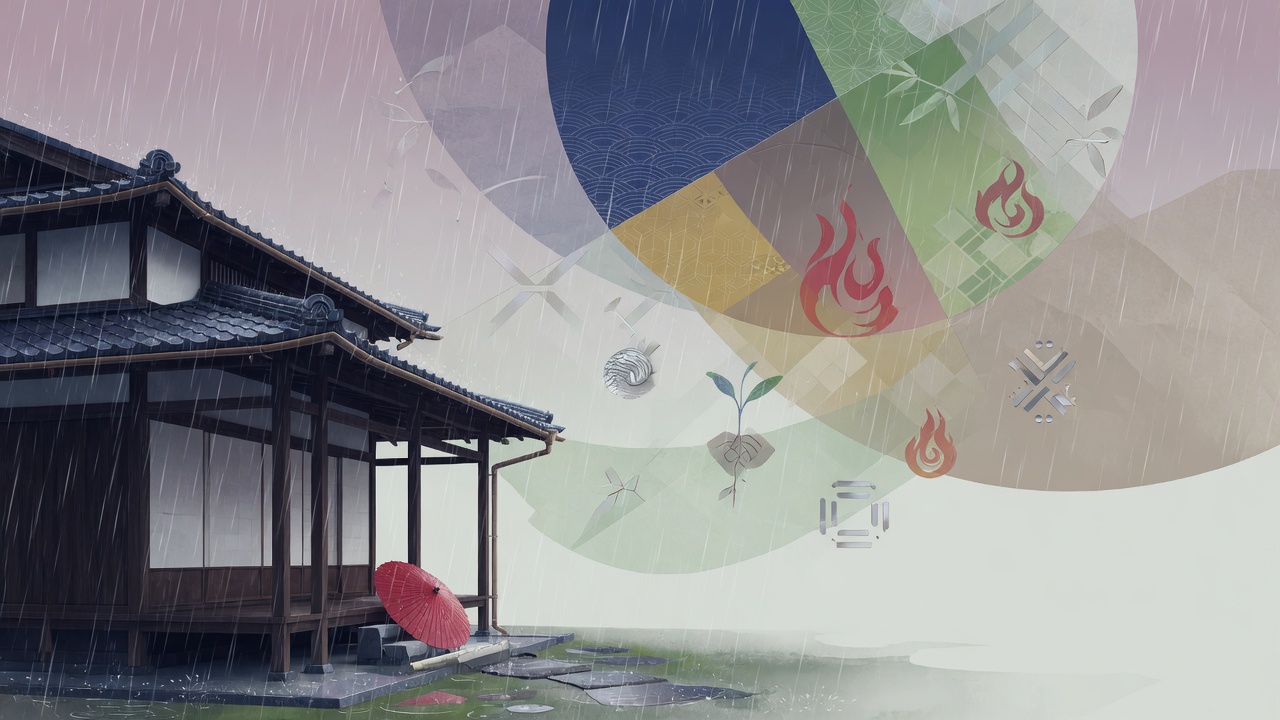
Basic Clarifications
Common Misconceptions
Let's start with the easiest points of confusion to avoid mistaking a cultural model for a tool of real-world prediction.
The language of destiny analysis deals with tendencies and symbolic imagery, not the verification or attribution of responsibility for real-world events.
- Misconception 1: Treating Bazi like a weather forecast, believing it can calculate whether it will rain in a specific place or if a particular underground roadway is dangerous.
- Misconception 2: Equating “circumstances” in Bazi with fatalism, assuming an individual can only passively accept external changes.
- Misconception 3: Directly equating character tendencies with fixed labels, ignoring the roles of education, experience, and self-adjustment.
- Misconception 4: Attributing real-world disasters to people born under certain times. This lacks basis and is unfair.
- Misconception 5: Assuming Bazi can replace scientific disaster prevention. In reality, disaster warnings, engineering safety, and evacuation routes must rely on meteorology and municipal services.
- Misconception 6: Using traditional concepts like climate adjustment or the Useful God as medical or psychological treatment advice, which is a misuse beyond the boundaries of destiny analysis.
Core Points
Character: Bazi Describes Tendencies, Not Labels
Bazi uses the Day Master to represent the “self” in terms of the Five Elements, such as Jia Wood, Yi Wood, Bing Fire, Ding Fire, and so on.
A person’s character tendencies must be viewed through the strength and weakness of the Five Elements and the Ten Gods combination, not just their birth year or Chinese zodiac sign.
In traditional society, this language served more as a classification method for self-observation, helping people understand different reaction patterns.
For example, two people with a Wood Day Master might lean towards extroverted growth or introverted planning; the key lies in the entire chart structure.
The Day Master is just the starting point. The Month Command determines seasonal energy, and the Earthly Branches’ hidden stems provide more complex character clues.
Therefore, referencing Bazi as a “character map” is closer to its traditional cultural intent than using it as a “decree of fate.”
Furthermore, Bazi also assesses whether the Day Master is strong or weak: a strong Day Master needs channeling, while a weak one needs support.
This is not a judgment of better or worse, but a difference in growth strategy under different energy configurations.
- Wood Day Master: Often described as having tendencies for growth, planning, and extension, but this isn't universally true.
- Fire Day Master: Traditional imagery leans towards enthusiasm, expression, and action; can also be prone to impatience.
- Earth Day Master: Values stability, bearing, and practicality. If Earth is overly strong, it may also appear conservative.
- Metal Day Master: Values rules, boundaries, and efficiency. When excessive, it can lead to rigidity or being overly demanding.
- Water Day Master: Values flow, adaptation, and perception. When Water floods without control, it may lead to indecision or emotionality.
- Dominant Officer or Killer: May place more importance on rules, responsibility, and external evaluation.
- Dominant Eating God or Hurting Officer: Tends towards expression, creativity, and questioning, which may also come with impulsiveness.
- Dominant Resource Star: Tends towards learning, protection, and dependence, and may appear slow to warm up.
- Extreme Element Imbalance: For instance, strong Wood without control easily leads to stubbornness; strong Metal without control easily leads to harsh demands.
- Chart Structure Coordination: Looking at the Day Master alone is insufficient; one must also see if it has command, ground, and support.
- Strong or Weak Day Master: This is just an energy state, not an indicator of ability.
- Ten Gods Combination: Direct Officer values order; Seven Killings values breakthroughs; Eating God values enjoyment; Hurting Officer values innovation.
Choice: Climate Adjustment and the Useful God Emphasize Dynamic Regulation
Facing external environments of damp cold or humid heat similar to Japan’s plum rain or typhoon seasons, traditional destiny theory offers the symbolic concept of “climate adjustment.”
It is not a weather prediction, but an observation of what energy a person needs to supplement or what tendency to restrain in different environments.
The so-called Useful God can be understood as the “fulcrum” most helpful for restoring personal balance in a current life phase.
In Bazi theory, combinations like excessive Water causing Wood to drift, excessive Fire causing Earth to dry out, or Metal in cold Water bring different needs for adjustment.
Climate adjustment thinking resembles ancient life wisdom: stay dry in dampness, seek warmth in cold, and rest appropriately in heat.
The key to choice is not “changing fate,” but finding the micro-adjustments one can make when the external environment is uncontrollable.
For example, traditional culture might suggest that a person with a damp and cold Bazi chart engage in more exercise, get more sunlight, and participate in group activities.
But this is only a lifestyle reminder and cannot replace professional advice from medical, psychological, or public safety fields.
Traditional climate adjustment distinguishes between cold, warm, dry, and moist, corresponding to long-term seasonal and climatic observations, not a temporary, localized event.
For instance, for those born in winter with a dominance of Water and Metal, ancient practitioners might suggest using Fire to warm the chart; this is symbolic thinking.
Applied today, this thinking is similar to adjusting one’s routine, diet, and activities based on environmental characteristics.
- Damp environment: Ancient wisdom suggests more contact with sunlight, exercise, and fiery activities as a lifestyle reminder.
- Cold environment: Emphasizes maintaining rhythm, social connection, and a sense of warmth, not fatalism.
- Dry environment: Traditionally suggests increasing water intake, rest, and gentle activities.
- The Useful God is not all-powerful: It changes with life phases and cannot be mechanically applied to real life.
- Choice is two-way: Adjust both internal tendencies and improve external conditions like housing, transportation, and access to information.
- Facing disaster: More important choices involve receiving early warnings, planning evacuation routes, and preparing emergency supplies.
- Do not mythologize choice: Destiny analysis can inspire self-observation, but concrete actions must be based on common sense and science.
- Symbolic thinking: It is not strict cause and effect, but a symbolic reminder.
- The Useful God changes with luck: Focus may differ in youth, middle age, and old age.
- Active choice: Improving home lighting or maintaining regular exercise is far more practical than waiting for “luck to turn.”
Circumstances: How Annual and Decade Luck Cycles Fit the Heaven-Earth-Human Framework
Bazi divides time into Decade Luck and Annual Luck, representing the external conditions of life’s stages.
If Annual Luck is compared to a weather system and Decade Luck to the season, personal will determines whether you carry an umbrella or build a canal.
As an island nation, Japan has a strong disaster prevention culture for environmental risks like heavy rain and earthquakes, which has parallels with Bazi’s “localized imagery” thinking.
The Heavenly Timing in traditional destiny theory is not a mysterious force, but the combined atmosphere of era, stage, and environmental conditions.
Earthly Advantage includes realistic factors like regional climate, city structure, infrastructure, and social systems.
Human Harmony is the part where an individual can exert effort: learning, experience, emotional management, and risk awareness.
When heavy rain comes, regardless of one’s Bazi, seeking shelter early, maintaining facilities, and reducing outdoor activity are all more reliable actions.
Thus, circumstances are more like an external backdrop; they provide the scene, not a pre-written personal script.
The traditional concept of “pursuing good fortune and avoiding misfortune” is essentially risk identification and active adjustment, not passive waiting.
Historically, Japanese society has long faced typhoons, torrential rain, and earthquakes, forming a relatively mature disaster prevention system.
“Knowing destiny” in Bazi culture is not about resignation, but understanding that the environment has its patterns and preparing early.
Combining this traditional wisdom with modern risk communication can help people feel less panic and take more action.
- Heavenly Timing: Decade and Annual Luck provide a stage background but do not determine specific events.
- Earthly Advantage: Environment, systems, and infrastructure influence the magnitude of risk.
- Human Harmony: Individual character, learning, and choices determine the quality of response.
- Pursuing fortune and avoiding misfortune: The essence is risk identification and active adjustment, not mystical prophecy.
- Annual Luck does not equal a disaster year: Every year has a Five Elements combination, but one cannot infer that a place will suffer a calamity.
- Decade Luck does not represent a fixed outcome: Under the same luck cycle, different choices lead to vastly different results.
- Localized imagery: Environmental traits like islands, heavy rain, and frequent quakes can inspire long-term risk awareness.
- Restrain the urge to explain: After seeing the news, don’t rush to use Bazi to “explain” who is responsible.
- Public safety: Drainage systems, emergency response, and building codes are far more decisive for outcomes than personal destiny charts.
- Disaster is like Annual Luck: Its possibility can be foreseen, but its specific occurrence cannot be deduced by Bazi.
- Risk communication: Requires clear information and timely warnings, not vague hints of fate.
- Local experience: People in different regions have different intuitions about risk, which connects with the Bazi concept of localized imagery.
Pitfall Avoidance Guide
Points of Caution
- Do not use Bazi to calculate disasters: Meteorology, geology, and engineering safety should be left to scientific authorities.
- Do not link public events to the destiny of specific groups: It disrespects facts and creates anxiety.
- Do not use “unfavorable annual luck” to frighten yourself or others: Annual luck is just a phase symbol, not a harbinger of disaster.
- Do not treat character tendencies as absolute labels: People can adjust through learning and environmental changes.
- Do not neglect real-world disaster prevention: Even the best destiny knowledge cannot replace evacuation and supply preparation.
- Do not make auspicious or inauspicious assertions: This article does not predict personal health, career, or safety, nor does it judge real-world events.
- Do not treat climate adjustment advice as therapy: See a doctor for physical discomfort and seek professional help for psychological distress.
- Reference rationally: It can serve as an auxiliary tool for self-observation, career choice, and interpersonal communication.
- Note cultural differences: Bazi is a traditional symbolic system and should not be forcibly applied to modern public events outside its historical context.
- Stay open: Destiny analysis offers perspective at most; what truly determines safety is knowledge, systems, and action.
- Do not treat the “Useful God” as a crystal ball: It describes a balance tendency, not a universal answer.
- Do not ignore current information: Warnings, news, and official notices are far more direct and effective than any destiny calculation.
Quick Answers to Common Questions
- After checking my Bazi, do I still need a weather forecast? Of course. Weather forecasts are science; Bazi cannot replace them.
- Can character tendencies be changed? Yes. Self-awareness and deliberate practice are more useful than destiny labels.
- What to do when circumstances are unfavorable? Reduce high-risk behavior, enhance learning and collaboration, and take care of your physical and mental health.
- Is a certain Day Master more afraid of rain? Traditional imagery mentions concepts like excessive Water or damp cold, but these are just tendencies and do not represent real-world safety risks.
- Can it calculate public events? No. Public events are determined by complex systems, not individual destiny charts.
- Why learn Bazi then? It can help you understand “why I always react a certain way,” allowing for conscious adjustment.
- Does destiny analysis conflict with disaster prevention? No conflict, but destiny analysis cannot replace prevention. True safety relies on preparation and action.
- How to view destiny discussions in trending news? View them calmly. Do not use personal fortune to explain public events.
Summary and Review
Bazi culture is more like a cognitive framework, reminding us to understand our character, optimize our choices, and respect nature amidst uncontrollable circumstances.
Facing heavy rain, the most important thing is not to calculate “why,” but to prepare in advance, respond rationally, and take care of ourselves and others.