Bazi Reflections in an Era of Inflation: Character, Choices, and the Currents of Time
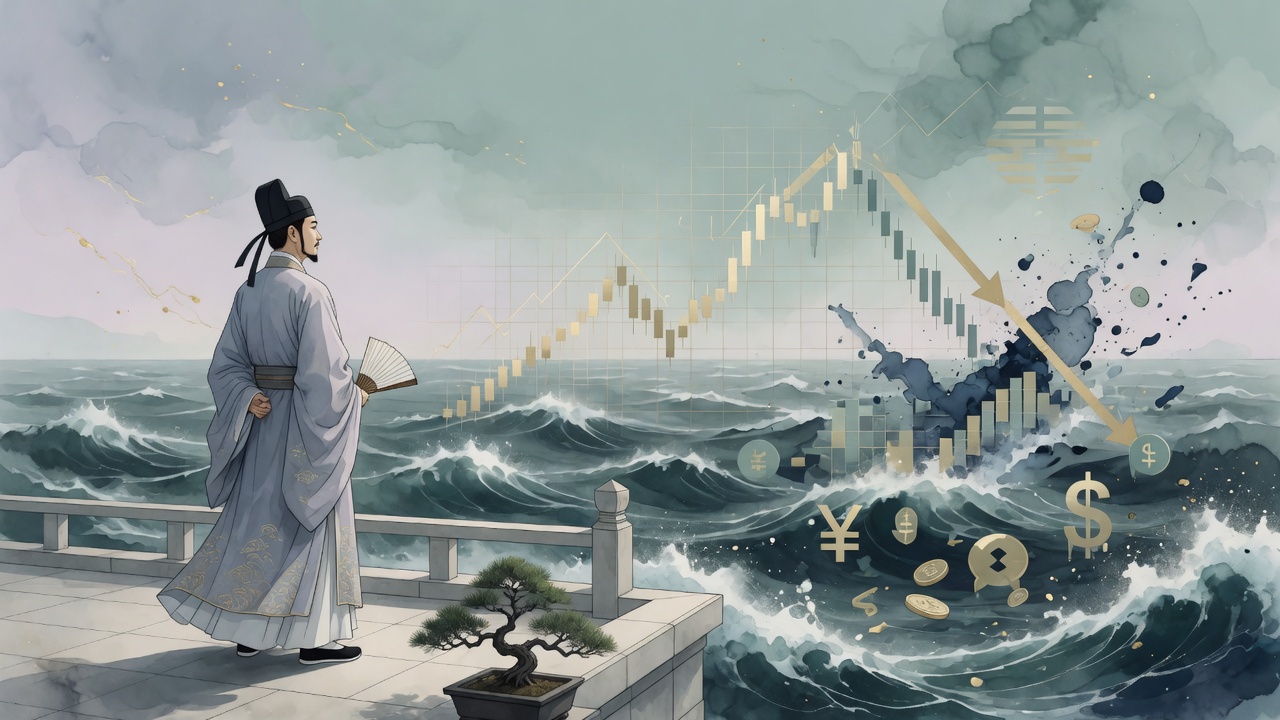
In August 2026, a breaking report of a sharp U.S. semiconductor stock plunge rattled South Korean market nerves, resurfacing the specter of inflation. When the external environment fluctuates violently, individuals often feel powerless. This is not a
Opening Introduction
When '인플레이션 (inflation)' becomes a headline and the South Korean market trembles with the sharp drop in U.S. semiconductor stocks, individual anxiety spreads. Bazi never predicts stock prices, but it offers an ancient framework for observing the interaction between person and circumstance. This article focuses on how different natal chart structures present vastly different character reactions and decision-making paths under inflationary pressure, helping you rationally understand yourself, not making fortune judgments.
Basic Clarification: What Bazi Reads, and What It Doesn't
Common Misconceptions
Many mistakenly believe Bazi can precisely predict when to get rich or avoid disaster. In reality, it is more like a character and energy analysis system. In the context of inflation, it reveals your instinctive reaction pattern when facing shrinking purchasing power, not which stock to buy.
- Misconception 1: Bazi determines a fixed destiny. Correction: Bazi depicts an innate energy map, which determines your reaction tendency, not the outcome of events. Facing the same inflation, one may panic-buy while another delays gratification; this is the difference in natal charts.
- Misconception 2: Good luck means you will definitely get rich. Correction: Good luck is a period of smooth energy flow, which may manifest as a calm mind and clear decision-making. In an inflationary period, it might lead you to hold cash calmly rather than blindly chase bubble assets.
- Misconception 3: A strong Day Master means a good life. Correction: The value of a chart lies in balance and flow. An overly strong Companion Star can intensify impulsive investments during inflation, while an overly weak Wealth Star might make a person prudent and conservative, each having its pros and cons.
Core Insights: The Bazi Character Spectrum Under Inflationary Pressure
1. Day Master Strength: The Internal 'Thermostat' in an Economic Chill
The Day Master is the Heavenly Stem of the birth day, representing the self. It acts like a person's core energy battery. Facing asset shrinkage and future uncertainty from inflation, the Day Master's strength directly correlates with psychological resilience and stress tolerance baseline.
A strong and prosperous Day Master typically has abundant energy and strong initiative. However, if overly strong and unchecked, it can easily morph into blind confidence under inflation anxiety, leading to premature heavy bottom-fishing or excessive consumption to 'fight' depreciation, resulting in a passive position.
- Strong Self with Robust Wealth: High energy and a strong desire for money coexist. In an inflationary period, such a person can become an active 'hedger,' but must beware of Companion Star Robbing Wealth, i.e., financial losses caused by friends, partnerships, or impulsive decisions.
- Weak Self with Prosperous Wealth: The pressure of Wealth Stars is overwhelming, making one extremely sensitive to price fluctuations. In inflation, they easily fall into analysis paralysis. While they rarely make major mistakes, they might miss reasonable allocation opportunities due to excessive conservatism.
- Balanced Day Master: Innately possesses good self-regulation mechanisms. They are better at finding a balance between panic and greed. In an inflationary period, they often show the composure to 'act according to plan,' not easily swayed by emotions.
2. The Ten Gods' Game: Decoding the Inner Drama of Spending, Saving, and Investing
The Ten Gods are symbols generated from the relationship between the Day Master and other stems and branches, representing different mental facets. Inflation acts as a mirror, clearly reflecting the internal conflicts among Wealth, Officer, Resource, and Output Stars.
Direct Wealth represents stable income; Indirect Wealth is speculative money. When the news flashes 'US semiconductor stocks plunge,' those with strong Indirect Wealth might feel their heart race, seeing an opportunity; those with strong Direct Wealth instinctively worry about job stability and tend to cut expenses first.
- Wealth Star Destroying Resource Star: The Resource Star represents rationality, security, and long-term planning. If, during an inflationary period, a too-strong Wealth Star overcomes the Resource Star, one easily abandons long-term investments like education and insurance for short-term gains. This is a classic 'shortsightedness trap.'
- Officer Star Attacking the Self: The Officer Star represents pressure and responsibility. As mortgage and child-rearing costs rise with inflation, those with heavy Officer Star can easily fall into excessive anxiety, suppressing spending and even harming health. Here, the Resource Star is needed to resolve this, transforming fear through knowledge and rational analysis.
- Output Star Generating Wealth: The Output Star represents talent, expression, and business acumen. These individuals think actively during inflation, possibly developing side gigs or innovative income models. But if the Output Star is too strong and unchecked, they may have many ideas but few implementations, leading to mere 'paper wealth.'
3. Luck Cycles and Annual Stars: The Resonance of Era Waves and Personal Cycles
The natal Bazi chart is an innate script, while the Luck Pillar (ten-year cycle) and the Annual Star (the current year) are the unfolding plot. Inflation does not affect everyone uniformly; the Five Elements energy it activates creates a unique chemical reaction with an individual's chart.
If inflation comes with excessive liquidity (a strong Water element), it can be a period of opportunity for those who favor Water, bringing clear thinking and sharp investment intuition. For those who fear Water, it's like a quagmire, leading to prone financial misjudgments and mental confusion.
- Luck Pillar Encountering Wealth: Regardless of whether it is favorable or unfavorable, this decade inevitably deepens one's interaction with money. If during inflation, the Luck Pillar's Wealth Star is favorable, one might use the crisis to accumulate assets; if it is unfavorable, financial disputes and anxiety will be significantly amplified.
- Annual Star Trigger: The year 2026 is Bing Wu, with vigorous Fire energy. If one's natal chart uses Fire as Wealth or Resource, and it is favorable, even amidst external news-driven panic, the individual can still maintain good cash flow or a strong learning state. This explains why personal feelings about the same news can differ so vastly.
- The Circumstance Resonance Model: Bazi never evaluates fate in isolation. It emphasizes the Three Powers of Heaven, Earth, and Human. Inflation is 'Heaven's Timing,' a personal chart is 'Human Harmony,' and the characteristics and regulations of the South Korean market are 'Earth's Advantage.' Wise decisions synthesize information from all three, not a singular fatalistic assertion.
Pitfall Avoidance Guide: Boundaries for Applying Bazi Wisdom in Inflation
Important Notes
- Do Not Use Bazi as an Investment Compass: The art reveals behavioral tendencies, not asset price movements. Seeing 'strong Indirect Wealth' and rushing to trade stocks is the same as seeing a 'strong Gourmet Star' and immediately opening a restaurant, ignoring real-world professional skills and market rules. This is the biggest mistake in using the gods.
- Beware of Self-Fulfilling Prophecies: Bazi saying you are 'weak under pressure' does not mean you are doomed to collapse. Awareness itself is the beginning of change. During inflation, the cultivation of the Resource Star—learning, meditation, and planning—is an 'acquired fortune' everyone can proactively strengthen.
- Cautious Interpretation of the Spouse & Wealth Palace: Inflation often triggers family financial conflicts. For a male chart, the Wealth Star also represents the wife. If the Wealth Star is clashed during inflation, it is easy to blame a partner's spending, when it actually reflects one's own anxiety about resources. Communication, not fatalistic blame, is the solution.
- Health is the Ultimate Direct Resource: The Resource Star also represents the body. Under inflationary pressure, cutting health spending (like insurance, check-ups, nutrition) is a classic crisis of Wealth destroying Resource. Remember, in any economic cycle, your body is your core, non-depreciable asset.
- Distinguish Between Fate Consultation and Psychological Counseling: If inflation anxiety seriously disrupts sleep or social life, Bazi analysis can serve as an auxiliary tool for self-awareness, but it absolutely cannot replace professional psychological assistance. A Bazi consultant should definitely not overstep and offer therapeutic advice.
Summary and Review
Inflation is like the tide; your Bazi chart is your inner vessel. It doesn't change the wind's direction, but it makes you more aware of your boat's structural characteristics—where it's sturdy and where it's vulnerable. Facing the South Korean market turmoil triggered by the 2026 semiconductor stock plunge, the rational path is to use Bazi to recognize your character's habitual reactions, apply the Resource Star's wisdom to formulate long-term financial plans, use the Wealth Star's pragmatism to manage current cash flow, and ultimately transcend panic and greed to steady your own helm. Key Conclusion: Bazi is a mirror for self-knowledge, not a magic mirror for predicting the future; true 'good fortune' is the ability to align your choices with your inner truth through any cycle.