From "I Am Solo" to Bazi Romance: The Attraction Codes of Peach Blossom, Spouse Palace, and Day Pillar
The Korean dating show "I Am Solo" continues to surge in popularity, and news of cast members leaving the show to get married only deepens the curiosity: why do some people spark instantly while others always miss each other? From the perspective of
Opening Introduction
The popular Korean dating show "I Am Solo" has fascinated countless viewers, not only because of the raw emotional collisions but also because of the recurring romantic endings where participants 'leave the show and get married.' News of Season 19's Youngsoo and Season 10's Oksoon tying the knot with people outside the show continues to fuel public curiosity about the code of fate.
From a traditional cultural perspective, romantic interactions, personality attraction, and ultimate union are not purely accidental. In Bazi destiny analysis, the Day Pillar, Spouse Palace, and Peach Blossom form an intriguing symbolic system for interpreting interpersonal attraction.
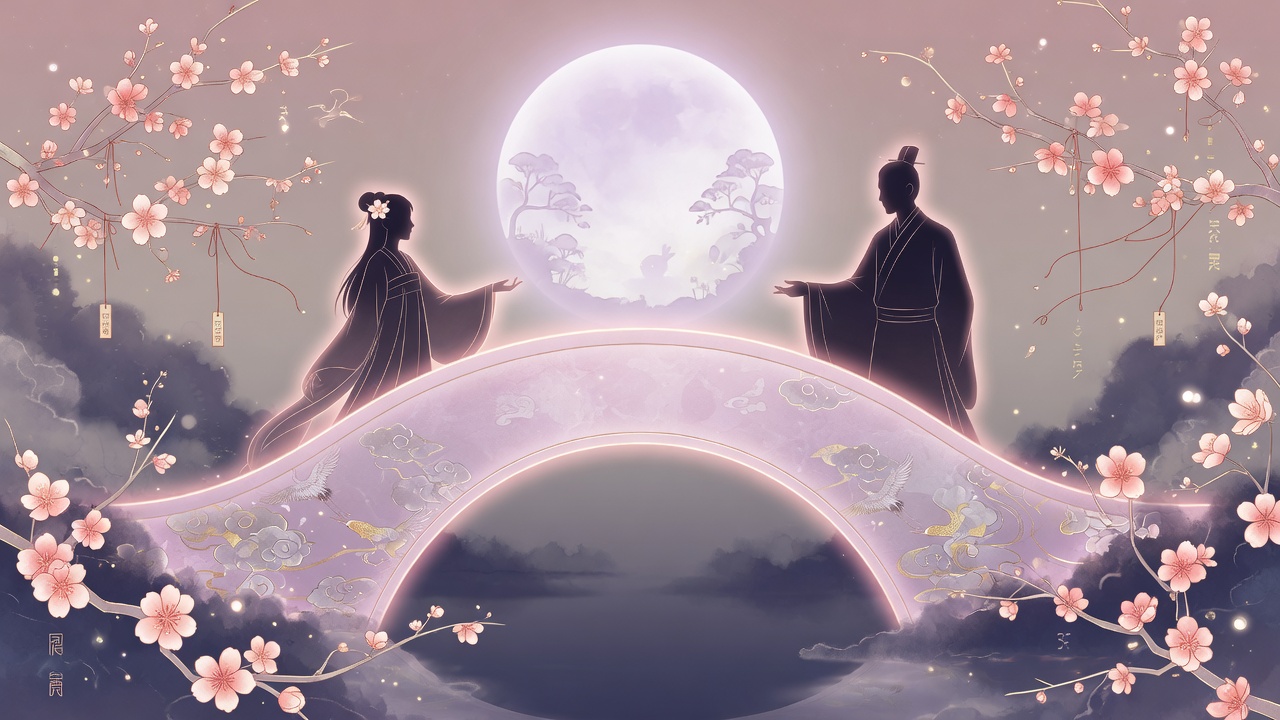
Basic Clarification: Bazi Looks at Fate, Not Just Zodiac Signs
Common Misconceptions
- Misconception 1: Zodiac compatibility is everything. Many people think that matching animal signs guarantees a smooth relationship, but the core of Bazi marriage matching lies in the Day Pillar and Spouse Palace. The zodiac is only the year branch, far less influential than the Day Pillar.
- Misconception 2: Having many Peach Blossoms means being unfaithful. Peach Blossom symbolizes opposite-sex attraction and social charm, not directly pointing to promiscuity. On the show, people with strong Peach Blossom simply attract more attention; it does not indicate marital instability.
- Misconception 3: Bazi determines everything and cannot be changed. Bazi is more of a map of personality and tendencies. Acquired choices and interaction patterns are equally important. Destiny analysis only provides a reference perspective.
What Does Bazi Really Look at in Marriage?
In traditional destiny analysis, evaluating marriage mainly observes three core aspects: the Day Pillar (the relationship between self and spouse), the Spouse Palace (the marriage position represented by the day branch), and the Ten Gods combinations (wealth, officer, seal, etc., reflecting personality interactions and attraction).
Additionally, the Peach Blossom Star (Zi, Wu, Mao, You) acts as a catalyst for popularity and charm and is often taken into consideration. These are all dynamic, combinatory interpretations, not single labels.
Core Points: The Attraction Codes in Bazi
Day Pillar and Spouse Palace: Your Marriage Script
The Day Pillar in Bazi consists of the Heavenly Stem (Day Master, representing oneself) and the Earthly Branch (Day Branch, i.e., the Spouse Palace). The Day Branch is like the 'home' of marriage, directly reflecting the spouse's traits, marital quality, and the couple's interaction pattern.
On "I Am Solo," some couples feel an instant chemistry upon first meeting. From a destiny perspective, it is highly likely that their Day Pillar stems and branches form a harmonious combination or like-element support. For example, if the man's Day Pillar is Jia Zi and the woman's is Ji Chou, the heavenly stems Jia and Ji combine, and the earthly branches Zi and Chou combine, forming a heaven-earth union. This combination is naturally attractive and easily sparks romance.
If the Day Branch is the Day Master's favorable element, it means the spouse provides positive support. In reality, this often manifests as the other person filling in one's personality gaps, making the relationship comfortable. The 'complementary' pairings on the show are precisely the expression of this energy.
- Day Branch is Zi, Wu, Mao, or You: The spouse is physically attractive with strong Peach Blossom, but caution is needed against external temptations—corresponding to charming yet hard-to-settle cast members.
- Day Branch is Yin, Shen, Si, or Hai: The spouse is independent and freedom-loving, easily finding resonance in fast-paced interactions, often seen in free-spirited participants.
- Day Branch is Chen, Xu, Chou, or Wei: The spouse is steady and pragmatic, valuing commitment, typically reflected in slow-to-warm-up types who become very devoted once they decide.
Peach Blossom Star: The 'Popularity King' Label in Dating Shows
The Peach Blossom Star is called Xianchi in Bazi, mainly referring to the four earthly branches Zi, Wu, Mao, and You. People with Peach Blossom in their chart usually have good social connections and infectious charm, easily becoming the center of attention in groups—exactly the portrayal of the 'popularity king' in dating shows.
The manifestation of Peach Blossom varies depending on its location: Peach Blossom in the Year Pillar indicates early or innate charm, like certain participants who draw all eyes the moment they appear; Peach Blossom in the Month Pillar represents sociability in youth, good at communication and lightening the mood; Peach Blossom in the Day Pillar directly affects marriage and romance, with the spouse often possessing a romantic temperament; Peach Blossom in the Hour Pillar represents later-life charm and external attraction, maintaining opposite-sex appeal even as one ages.
On the show, some guests may not be the most outstanding, yet they repeatedly receive multiple interest messages. This is often related to Peach Blossom Star in the Day or Month Branch. However, Peach Blossom also needs to be restrained. If it is clashed or punished, it can easily lead to emotional entanglements or love triangles, just like the occasional 'battlefield' plotlines on the show.
- Proper Peach Blossom (Inside-the-Wall Peach Blossom): Peach Blossom in the Day or Month Branch and favorable, representing faithful affection and positive charm, ultimately tending toward stable relationships.
- Improper Peach Blossom (Outside-the-Wall Peach Blossom): Peach Blossom in the Hour or Year Pillar and unfavorable, the individual is still highly charming but prone to emotional fluctuations, requiring more effort to harmonize.
Ten Gods Combinations: How Personality Interactions Create CP Chemistry
The Ten Gods are symbols formed based on the relationship between the Day Master and other stems and branches in the Bazi chart, each representing different personality facets and emotional patterns. In the dating show context, the interaction of different Ten Gods combinations often determines whether a CP is 'sparks flying' or 'politely distant.'
Direct Officer and Direct Seal: Direct Officer represents a sense of responsibility and principles, while Direct Seal symbolizes tolerance and wisdom. When a steady, responsible male guest (strong Direct Officer) meets a considerate, empathetic female guest (strong Direct Seal), they easily form a warm 'understood and protected' combination—the common 'ideal couple' template on the show.
Eating God and Hurting Officer: Eating God is gentle and expressive; Hurting Officer is talented and unconventional. Guests with strong Eating God or Hurting Officer are usually humorous and quick to break the ice, attracting partners who also seek novelty. However, if Hurting Officer is too strong without restraint, it may cause conflicts due to blunt words, leading to a plot that starts high but ends low.
Seven Killings and Indirect Seal: Seven Killings represent action and competitiveness, while Indirect Seal gives unique insight. This combination is full of tension, similar to the 'aggressive pursuer vs. calm observer' dynamic on the show. Once they successfully adjust, the relationship becomes profound.
Friend and Rob Wealth: People with strong Friend or Rob Wealth have a strong sense of self and like those similar to themselves. On the show, guests with similar interests and backgrounds often form alliances faster, but excessive Friend or Rob Wealth can also lead to competition, like the 'protagonist' dilemma of being pursued by multiple people simultaneously.
- Wealth Producing Officer: Strong Day Master, wealth producing officer, represents building stable relationships through communication and giving, corresponding to proactive giving-type guests on the show.
- Eating God Producing Wealth: Attracting partners with talent and charm, commonly seen in artistic or eloquent participants who pursue romance.
- Officer and Seal Mutual Production: Earning respect through responsibility and cultivation, a slow but long-lasting combination.
Day Pillar Marriage Matching: Why Tradition Values the Day Pillar So Much
In traditional marriage matching, the degree of Day Pillar harmony is regarded as the core indicator of marital quality. This is because the Day Pillar represents fortune after age 30, which is precisely the crucial stage of marriage and family. Heavenly Stem Five Combinations (Jia-Ji, Yi-Geng, etc.), Earthly Branch Six Combinations (Zi-Chou, Yin-Hai, etc.), or Three Harmonies often signify essential harmony between the two parties.
In the pairing results of "I Am Solo," some couples seem completely different on the surface yet display exceptional tacit understanding in deep interactions. This closely resembles the effect of Day Pillar Heavenly Stem combinations. For example, one party's Day Master is Jia Wood and the other's is Ji Earth; Jia and Ji combine into Earth, naturally blending—one willing to lead, the other willing to cooperate, making the relationship smooth.
If the Day Pillar Earthly Branches clash (such as Zi-Wu clash, Mao-You clash), the initial attraction may be strong, but long-term coexistence requires more adjustment. The cases on the show where 'early sweetness turns into constant arguments' might just be a projection of such clash and combination relationships.
- Heaven-Earth Union (both stem and branch combine): Extremely deep fate, ideal partner; on the show, often love at first sight and quickly locked in.
- Heaven Combines, Earth Produces: One party tolerates and supports the other, relatively stable, with feelings deepening gradually.
- Heaven Overcomes, Earth Clashes: Strong attraction but also great conflict, requiring mature management from both sides.
Pitfall Guide: Using Bazi to Look at Fate, Avoid These Traps
Precautions
- Do not draw conclusions based on a single symbolic star. Having many Peach Blossoms does not necessarily mean marital misfortune; it must be combined with the Spouse Palace, the overall chart structure, and the favorability of the Ten Gods.
- Avoid using Bazi to judge others. The choices made by participants on the show result from multiple factors. Bazi only reflects personality tendencies and must not be used as a tool to label someone as 'scum' or 'virtuous.'
- Day Pillar matching is not the only standard. In reality, even if Day Pillars clash, happiness can still be achieved through the adjustment of luck cycles and mutual effort. Destiny analysis is a reference, not a shackle.
- The position of the Peach Blossom Star gives it very different meanings. Inside-the-Wall Peach Blossom mainly signifies faithfulness, while Outside-the-Wall Peach Blossom requires attention to boundaries. Do not uniformly label all as 'rotten Peach Blossom.'
- Ten Gods combinations require holistic analysis. Hurting Officer meeting Direct Officer does not necessarily harm marriage. If there is an Indirect Seal to transform it, it can instead achieve talent and career, attracting a higher-quality partner.
- Approach destiny pairing with an entertainment mindset. Bazi analysis adds a dimension to understanding interpersonal interactions, but true fate requires sincere communication and management in real life.
Summary and Review
From the popularity of "I Am Solo" to the real marriages of its participants, we have used the lens of Bazi to see the fascinating projection of the Day Pillar, Spouse Palace, and Peach Blossom in interpersonal attraction. The Day Pillar stem-branch relationship sets the tone of marriage, the Spouse Palace reveals the partner's traits, the Peach Blossom Star catalyzes charm, and the Ten Gods combinations delicately depict the CP chemistry of personality interactions.
Please remember, all of this is a fun interpretation of traditional culture, not an inevitable destiny. True fate begins with the stars but is accomplished through effort.