Horse Racing and Ba Zi: From Hong Kong Racecourses to Highland Festivals, Exploring Personality, Choice, and Timing in Chinese Astrology
In the summer of 2026, a photojournalist ventured into northern Tibet, capturing the grandeur of highland horse racing on camera. Meanwhile, thousands of miles away in Hong Kong, horse racing has long pulsed through the city’s veins. Horses, jockeys,
Introduction
In August 2026, a vlog by a photojournalist documenting a grand horse racing festival on the northern Tibetan plateau caught widespread attention. Through the lens, riders and their horses galloped across grasslands over 4,000 meters above sea level, with spectators cheering passionately—conveying the raw appeal of competition. Meanwhile, in Hong Kong, horse racing is not merely a sport but a cultural symbol.
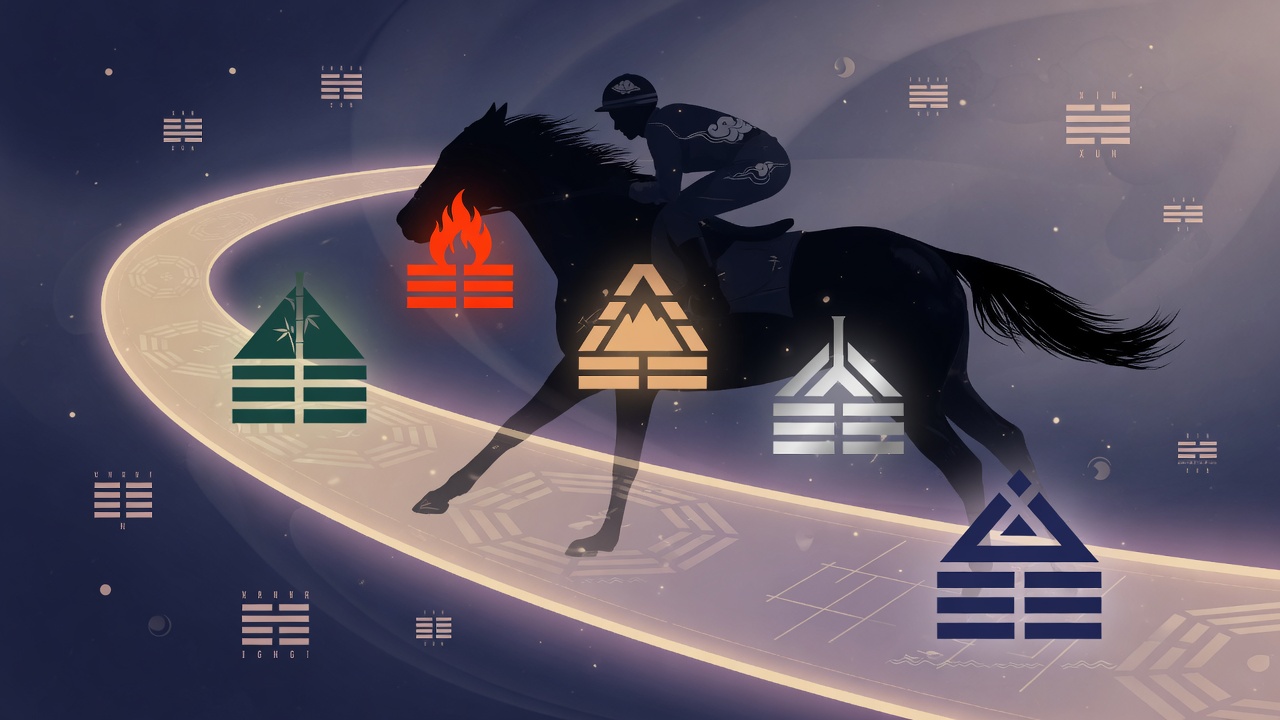
From a Ba Zi perspective, each person’s life resembles a horse race—we are born with an innate “horse” (the natal chart), navigate a specific “track” (the environment), guided by the “jockey” (our own choices), and wait for the “starting gun” (timely fortune) to fire. This article does not forecast any race results; it simply uses the metaphor of horse racing to explain the wisdom embedded in Ba Zi regarding personality, choice, and timing.
Clarification: Ba Zi Is Not a Horse Racing Predictor
Common Misconceptions
- Misconception 1: Ba Zi can predict which horse will win. Ba Zi analyzes a person’s innate endowments and life cycles, revealing general trends in personal development. It is not a tool for guessing race rankings or lottery numbers. Any claim of using Ba Zi to pick horse racing winners is a distortion of traditional culture.
- Misconception 2: A good chart guarantees success. In Ba Zi, the “destiny” chart is like a horse’s bloodline, while “luck” is like track conditions and weather. A thoroughbred may not beat an ordinary horse on a muddy track; similarly, even an excellent chart requires patience during unfavorable luck cycles.
- Misconception 3: Ba Zi determines everything; effort is useless. In reality, the birth chart only outlines the foundational palette. Environment, personal choices, and hard work are the true reins. At the Tibetan highland races, many champions are not the purest bloodline but the best trained and most attuned to their riders.
- Misconception 4: You can interpret a life just by looking at the Day Master. A complete Ba Zi reading requires synthesizing Ten Gods, Five Element strengths, Luck Pillars, Annual Luck, and other factors—much like judging a racehorse by more than just coat color; one must consider pedigree, past performance, and track suitability.
Core Points: How Ba Zi Interprets the “Horse Racing Life”
1. Ten Gods Personality: What Type of “Jockey” Are You?
In Ba Zi, the Ten Gods represent the ways a person interacts with the world, derived from the relationships between the Day Stem and other Stems and Branches. Different configurations of the Ten Gods create distinct competitive styles, just as every jockey has unique riding habits.
- Shoulder and Rob Wealth: symbolize self-reliance and competitive drive. A strong Shoulder person is like a jockey charging ahead alone—enduring and persistent, but prone to fighting solo. A strong Rob Wealth person excels at leveraging others and competing for resources within a team, but must guard against friction and conflicts of interest.
- Eating God and Hurting Officer: represent talent and creativity. A strong Eating God excels at strategic layout, like a calm trainer analyzing every horse and track condition, aiming for steady victories. A strong Hurting Officer dares to break conventions, often overtaking on a surprising bend, but excessive risk can mean a stumble.
- Direct Officer and Seven Killings: reflect discipline and boldness. A strong Direct Officer respects the rules and is a steady competitor, ensuring every step is solid. A strong Seven Killings is aggressive and daring, like a jockey squeezing through the inside rail on the final straight—full of drive but needing to manage risks.
- Direct Resource and Indirect Resource: relate to learning and intuition. A strong Direct Resource learns well from experience and continuously refines technique. A strong Indirect Resource possesses exceptional sixth sense, making precise judgments at critical moments, like a jockey instantly deciding to sprint from the outside gate.
- Direct Wealth and Indirect Wealth: reflect value pursuit and opportunity capture. A strong Direct Wealth tends to accumulate wealth through steady efforts, akin to long-distance horse racing. A strong Indirect Wealth prefers short-term opportunities, enjoying hunting high-odds “long shots,” but with greater volatility.
2. Five Elements and Horses: Discovering Your “Mount” Through Your Day Master
The Day Master’s Five Element (the Heavenly Stem of the day of birth) can be likened to a horse’s breed and traits. Knowing your element helps you choose the most suitable “track” and competitive approach.
- Wood people (Jia, Yi Day Master): akin to a steppe horse, needing freedom and room to grow. They thrive in long-term development and fields requiring creativity and patience. When Wood meets Water luck (Water nourishes Wood), they gain enduring momentum like a horse finding sweet springs.
- Fire people (Bing, Ding Day Master): like a hot-blooded racehorse—explosive speed but lower endurance. They excel at sprinting and suit short-term competitions or high-passion projects. Fire receives Wood luck (Wood fuels Fire) and blazes brighter, but must guard against overheating and restlessness.
- Earth people (Wu, Ji Day Master): comparable to a draft horse—steady and reliable. They do not chase speed, but every step is solid, suitable for stable investments or careers requiring long-term accumulation. Earth favors Fire luck (Fire produces Earth), which increases its carrying capacity.
- Metal people (Geng, Xin Day Master): resemble a warhorse—disciplined and goal-oriented. With strong execution, they excel in standardized competitions. Metal meets Earth luck (Earth generates Metal) and becomes more grounded and sharp-edged.
- Water people (Ren, Gui Day Master): like a water spirit steed—highly adaptable. They excel at improvising and finding breakthroughs in complex environments. Water encounters Metal luck (Metal produces Water) for a long, flowing source and multiplied wisdom.
3. The Traveling Horse Star: Your Starting Signal on Life’s Racecourse
The Traveling Horse symbol in Ba Zi is closely associated with movement, change, travel, and competition. Having the Traveling Horse in a chart, or encountering it in a Luck Pillar or Annual Cycle, often signals an accelerated pace of life and the emergence of new opportunities—much like the opening of a racing season.
- How to identify the Traveling Horse: Based on the Earthly Branch of the year or day. Shen-Zi-Chen meets Yin; Yin-Wu-Xu meets Shen; Hai-Mao-Wei meets Si; Si-You-Chou meets Hai. For example, if you were born in the year or day of Monkey, Rat, or Dragon, the appearance of Yin in your chart indicates the Traveling Horse.
- Traveling Horse in the natal chart: People with the Traveling Horse in their original chart are naturally active, love challenges, and are suited for work requiring frequent travel and rapid adaptation. They are like horses ever-ready to race, eager to leap at any opportunity.
- Traveling Horse in a Luck Pillar: When a 10-year Luck Pillar brings the Traveling Horse, it often heralds major environmental shifts—migration, job changes, entrepreneurship—marking a crucial “track-change period” in life. This is the time to act proactively rather than wait passively.
- Traveling Horse in an Annual Cycle: When a particular year brings the Traveling Horse and interacts with the natal chart through combinations or clashes, it often triggers specific events. Just as the northern Tibetan highland racing festival is set for a particular season, riders arrive from all directions at that time—this is the “Traveling Horse due period.”
- Traveling Horse combined with Ten Gods: The Ten God occupying the Traveling Horse determines the direction of change. A Traveling Horse with a Wealth star suggests movement for financial gain; with an Officer star, for career relocation; with a Resource star, possibly travel for study or documentation matters.
4. Luck Pillars and Annual Cycles: Seizing Your “Season” and “Track”
The Ba Zi natal chart is like the innate talent of a horse, while Luck Pillars are the “season” that changes every decade, and the Annual Cycle is the year’s “track condition.” Timing plays a critical role in outcomes—just as in Hong Kong racing, the same horse performs vastly differently across seasons and ground conditions.
- Luck Pillar transitions: Every ten years, a new Luck Pillar begins. When its Five Element is favorable to the Day Master, it’s like entering a golden season—the time to sprint and boldly expand. If unfavorable, it’s better to rest and refine skills, awaiting the next opportunity.
- Annual Cycle timing: The Heavenly Stem and Earthly Branch of the year interact through clashes, combinations, and harms with the natal chart and Luck Pillar, triggering specific events. For instance, encountering the Heavenly Nobleman in a year brings helpful people; Peach Blossom increases social connections; Robbery Sha warns of unexpected losses.
- Favorable Element arrives: When a Luck Pillar or annual cycle brings the Favorable Element your chart needs (e.g., a Water-deficient person encountering a Water year), it’s like a horse racing on its preferred yielding track—effort is halved, results doubled. Ride the momentum and expand gains.
- Unfavorable Element interference: Conversely, encountering an Unfavorable Element is like running against a headwind or on a boggy course; extra caution and avoidance of risky decisions are required. At the Tibetan highland races, riders also adopt conservative tactics in foul weather—mirroring the principle that during Unfavorable times, one should stay low.
- Double Luck convergence: When the Luck Pillar and Annual Cycle share the same Stem and Branch, it’s called “double Luck convergence,” doubling the energy. If favorable, double blessings; if unfavorable, pressure mounts. Extra clarity is needed, like the final preparations before a major race.
5. “Horse and Rider as One”: How to Choose Partners and Teams Based on Ba Zi
Horse racing is never a solo endeavor; jockey, horse, trainer, and owner form a team. In Ba Zi, Siblings (Shoulder and Rob Wealth), Resource stars, and Wealth stars correspond to peers, mentors, and resources. Leveraging these relationships wisely matters more than going it alone.
- Siblings as companions: Shoulder represents peers and partners. When Shoulder is favorable, teamwork flourishes and peer support is strong; when unfavorable, one may face undue competition or hindrance, so choosing the right partner is critical—like a jockey finding a horse that matches their style.
- Resource stars as mentors: Direct and Indirect Resource symbolize seniors, mentors, and knowledge. When Resource is strong and favorable, one easily encounters good teachers and benefits from others’ experience, much like a trainer’s guidance dramatically raising a jockey’s win rate.
- Wealth stars as resources: Direct and Indirect Wealth represent disposable resources and rewards. When Wealth is favorable, one integrates funding and assets effectively to support competition. In Hong Kong racing, the owner’s investment and stable facilities embody wealth stars.
- Eating God generating Wealth: A combination of Eating God or Hurting Officer generating Wealth stars means creating value through one’s talents. Such individuals are like “all-rounders” who can both ride and train, able to carve out success independently.
- Officer and Resource mutually producing: Direct Officer and Direct Resource mutually supporting each other indicate gaining recognition within established systems. These individuals thrive in large institutions or mature industries, akin to racing methodically at Sha Tin Racecourse with consistent results.
Avoiding Pitfalls: A Rational View of Ba Zi and Competition
Important Notes
- Do not use Ba Zi for gambling. Ba Zi reveals life trends, not specific winning numbers or race rankings. Any promise to predict race results using Ba Zi is fraudulent and betrays the original purpose of fate analysis—self-cultivation and understanding.
- Avoid fatalism. Even if the chart seems short of competitive “horse racing” stars, effort and choice can still alter the course. Luck Pillars can be awaited, but action should never stop. Many outstanding riders on the northern Tibetan plateau are not born prodigies but products of daily grind and harmony with their horses.
- Never ignore your team and environment. The Siblings, Resource, and Wealth stars in Ba Zi remind us that success is often a collective achievement. Behind every champion horse in Hong Kong stands a professional team; even the best chart needs to leverage environmental resources.
- Integrate practical judgment. The professional analysis in Hong Kong racing culture—bloodline, track record, going, jockey form—mirrors Ba Zi thinking: both rely on synthesizing multiple factors rather than one single omen. Rational analysis is always more reliable than blind superstition.
- Respect individual differences. The northern Tibetan plateau race and the Sha Tin race in Hong Kong have completely different rules and environments. The same is true for Ba Zi: there is no absolute good or bad chart, only whether one is placed on the right track. A Wood person is a steed in creative fields but may be a nag on rigid assembly lines.
- Consult a qualified Ba Zi practitioner. If you wish to delve deeper into your chart, seek a practitioner with solid theoretical grounding and professional ethics—not a street fortune-teller. Ba Zi is a tool, not a prophecy. A good practitioner helps you recognize strengths and risks, not make life decisions for you.
- View luck cycles dynamically. The ten-year-shifting Luck Pillars remind us that life has ups and downs. No need for self-deprecation during lows or arrogance during highs. Just like in racing, one loss does not mean perpetual failure; adjust your form, and victory may come in the next race.
Summary and Review
From the northern Tibetan plateau to Hong Kong’s racecourses, horse racing is not merely a sport—it is a symphony of character, choice, and timing. Ba Zi serves as a mirror, helping us see our own “jockey style” and “horse traits,” so we may assess the situation on life’s track and move when the moment is right.
Key conclusion: The birth chart is the vessel; luck is the water; the true helmsman is always you. Understanding Ba Zi is not about predicting the outcome of the next race, but about knowing yourself more clearly and making wiser choices before every starting bell.