Hong Kong's 'Two-Dish Rice' Craze Through the Lens of Bazi Wealth Star: The Fate Patterns Behind Spending Habits
When a box of two-dish rice becomes the talk of Hong Kong's streets, it reflects not just subtle shifts in the economic climate, but a collective pivot in consumer psychology. In traditional Bazi destiny analysis, a person's spending habits, savi
Opening Introduction
Recently, the two-dish rice phenomenon in Hong Kong has continued to heat up, with even supermarket budget lunchboxes being praised by netizens as 'a better deal than two-dish rice.' Value for money has become the core keyword in consumer decisions. From a Bazi perspective, this heightened price sensitivity and careful calculation is no coincidence.
A person's spending impulses, saving tendencies, and even their perception of material life are all closely related to the configuration of the Wealth Star in their fate chart. This article will start from the balance between the Day Master and the Wealth Star to explain how traditional fate analysis interprets the inner 'ledger' we all carry.
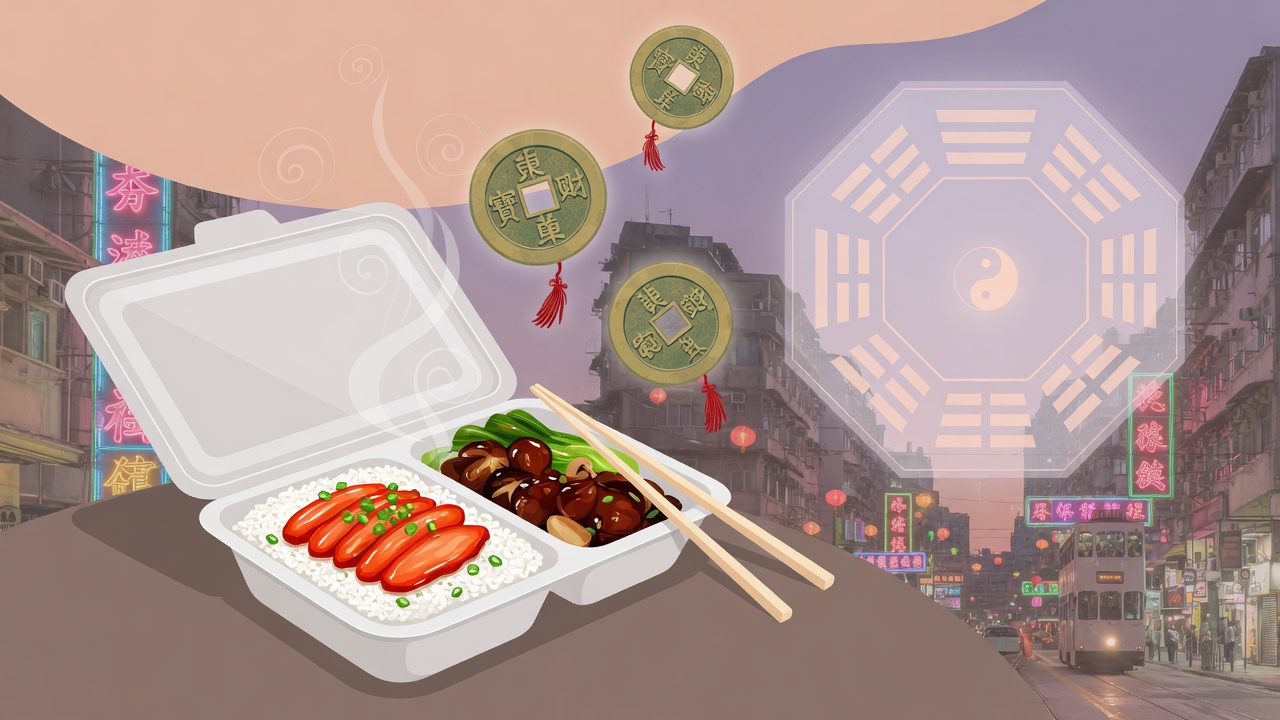
Basic Clarification: Bazi Is Not a 'Spending Verdict'
Common Misconceptions
Many mistakenly believe that Bazi can simply label someone as 'generous' or 'stingy,' or predestine them to poverty or wealth. This is an oversimplified misreading of destiny analysis.
- Misconception 1: A strong Wealth Star means one must be a big spender. A strong Wealth Star only indicates a deep affinity with money. Whether one can truly 'enjoy' wealth depends on the strength of the Day Master. A weak Day Master with a strong Wealth Star is often burdened by money, leading to extremely frugal behavior.
- Misconception 2: Fate analysis advocates fatalism. Bazi reveals innate tendencies and energy patterns. Acquired environment and self-cultivation can also make adjustments. The ancient saying 'frugality cultivates virtue' precisely means using behavioral modification to nurture one's character and transcend natal limitations.
Core Insights: The Spending Game Between the Wealth Star and Day Master
1. The Strength of the Wealth Star: The Fundamental Switch for Spending Impulses
In Bazi, the Wealth Star represents a person's desire to control and ability to acquire material things and money. When the Wealth Star appears openly in the Heavenly Stems with strength, the person usually has a high sensitivity to material life and relatively strong spending desires.
However, a stronger Wealth Star is not always better. If the Wealth Star is overly strong and the Day Master has no root, it is like a small person trying to shoulder a hundred-pound load. On the surface, they pursue wealth, but inwardly they are full of anxiety and dare not easily spend money.
Conversely, those with a very weak or absent Wealth Star have a lower dependence on material things. Their spending impulse is naturally subdued, and they incline toward a simpler life. This is not deliberate thrift but an inherent nature.
- Wealth Star appears openly with root: Spends generously, values quality of life, easily becomes a 'moonlighter,' but also possesses strong drive to earn money.
- Wealth Star deeply hidden in earthly branches: Cautious spender, habitually saves for a rainy day, highly price-sensitive—a classic 'value-for-money hunter.'
- Wealth Star as an overly strong忌神 (unfavorable god): Seems to have many financial opportunities, but actually experiences constant drain. Inner feelings toward money are a mix of desire and fear, and spending is often accompanied by internal struggle.
2. The Balance of Day Master and Wealth Star: Determining If You Can 'Shoulder Wealth'
The core of fate analysis lies in balance. The Day Master represents the self, and the Wealth Star represents wealth and desires. The power dynamic between the two directly shapes a person's consumption pattern.
When the Day Master is strong and has Output (Eating God/Hurting Officer) generating Wealth, the person is energetic, can actively create wealth, and can also enjoy the pleasures it brings. Such people might pursue two-dish rice purely for its convenience during a busy day, not because of price.
If the Day Master is weak and the Wealth Star is strong, forming a 'much wealth, weak body' structure, the person often cannot control money. Even with good income, they often feel money slips away easily. Thus, they instinctively seek low-cost, safe consumption methods. Two-dish rice becomes a subconscious 'financial safe haven.'
Most interesting is the chart where Day Master and Wealth Star are balanced. These people have an excellent sense of income and expenditure. They neither hoard excessively nor spend recklessly. Choosing two-dish rice is more often a rational value judgment, precisely weighing 'needs' against 'wants.'
- Strong body, strong wealth: Can earn and dare to spend. Consumption is a natural flow of energy, unbothered by small accounts.
- Weak body, strong wealth: Looks good on the surface, but the heart is trapped by money. Often gains a sense of security through meticulous budgeting and seeking high value for money.
- Strong body, weak wealth: Earning ability is not bad, but material desires are low and savings rate high, easily becoming a hidden 'mini-millionaire.'
- Weak body, weak wealth: Content with a simple life and few material demands. Budget dining is not a compromise to them, but the norm.
3. Ten Gods Combinations: Decoding the Psychological Motives Behind 'Value for Money'
While many pursue the high value for money of two-dish rice, the reasons given by different Ten Gods combinations vary drastically. Direct Wealth and Indirect Wealth represent different attitudes toward assets, while Eating God and Hurting Officer relate to the perception of life's quality.
A person with Direct Wealth as a favorable god values stable wealth accumulation. They choose budget dining because it aligns with their long-term plan of living within their means. Every penny saved is a brick in building their sense of security.
Those with a strong Indirect Wealth star are naturally sensitive to price fluctuations and adept at spotting 'bargains.' When they discover a lunchbox that 'beats two-dish rice,' the brain's reward mechanism is instantly activated. This thrill of 'having gained' far outweighs the food itself.
If the chart shows Eating God generating Wealth, there will still be a baseline requirement for the food's taste and appearance. They will seek the 'quality' options within the budget range, becoming the 'budget gourmet guru' in their social circle. In contrast, for those with Hurting Officer seeing Wealth, uniqueness might matter more. Even when choosing budget goods, they must express a distinctive taste.
- Direct Wealth frame: Frugality is self-discipline etched into the bones, pursuing long-term financial stability. Budget consumption is an active choice.
- Indirect Wealth frame: Finds joy in the game of spending. High value for money provides extra emotional value.
- Eating God generating Wealth: Creates maximum satisfaction within a limited budget, skilled at managing life aesthetics at low cost.
- Siblings (Rob Wealth) seizing Wealth: Prone to passive spending due to friends and socializing, therefore extra sensitive to daily dining prices to balance overall expenditure.
Avoidance Guide: Don't Let Fate Analysis Become an Excuse for Spending
Points to Note
- Reminder 1: Don't label yourself based on the Wealth Star alone. Bazi requires holistic analysis. Day Master strength, Ten Gods combinations, and Luck Pillar trends all alter spending tendencies. A person with a weak Wealth Star might become a big spender when walking an Output (Eating God/Hurting Officer) luck period.
- Reminder 2: Avoid using 'weak body, strong wealth' as a shield for reckless spending. Fate analysis reveals tendencies, not fixed outcomes. Through conscious financial management and mental cultivation, one can absolutely improve a situation of financial drain. This is the meaning of the ancient wisdom 'frugality cultivates virtue.'
- Reminder 3: Value for money is not the only measure. Excessively suppressing material desires can actually cause energy blockages for a person with a strong Day Master. Finding a spending rhythm suitable for your own fate chart is the healthy way to live.
- Reminder 4: The two-dish rice phenomenon reflects a phase of collective psychological adjustment. Understanding this change from a fate analysis perspective is for better self-acceptance, not for creating anxiety. Regardless of your fate chart, the sense of control over life ultimately comes from clear self-awareness.
Summary and Review
The Hong Kong two-dish rice craze, on the surface a collective choice under economic pressure, internally echoes the ancient game in Bazi between the Wealth Star and the Day Master. The strength of the body determines the confidence to spend, the waxing and waning of the Wealth Star influences material desires, and the Ten Gods combinations paint a diverse map of consumer psychology. Whether your fate chart inclines toward extravagance or thrift, the wisdom of the ancients has already provided the answer: Frugality cultivates virtue is not about relentless miserliness, but about finding a way, after truly understanding your own nature, to coexist gracefully with the material world.
Next time you hold a steaming hot box of budget rice, you might consider this: perhaps it is not just about filling your stomach, but a subtle resonance between the energy of your fate chart and the pulse of the times.