Officer and Seal in Harmony: The Changing Earth Luck of the Gwangju-Jeonnam Merger through the Lens of Bazi’s Officer Star and Seal Star
Recently, South Korea’s Honam region has been advancing the Gwangju-Jeonnam Integrated Special City, accompanied by the systematic overhaul of approximately 798 laws, drawing widespread attention. This large-scale administrative transformatio
Opening Remarks
Recently, South Korea’s Honam region has been advancing the Gwangju-Jeonnam Integrated Special City, accompanied by the systematic overhaul of approximately 798 laws, drawing widespread attention.
This large-scale administrative transformation, when viewed through the Officer Star and Seal Star of Bazi culture, serves as a vivid example of Officer and Seal in Harmony and the shift of Earth Luck. Using the lens of Chinese metaphysics, this article makes no political assessment but simply explains how traditional wisdom interprets institutional change.
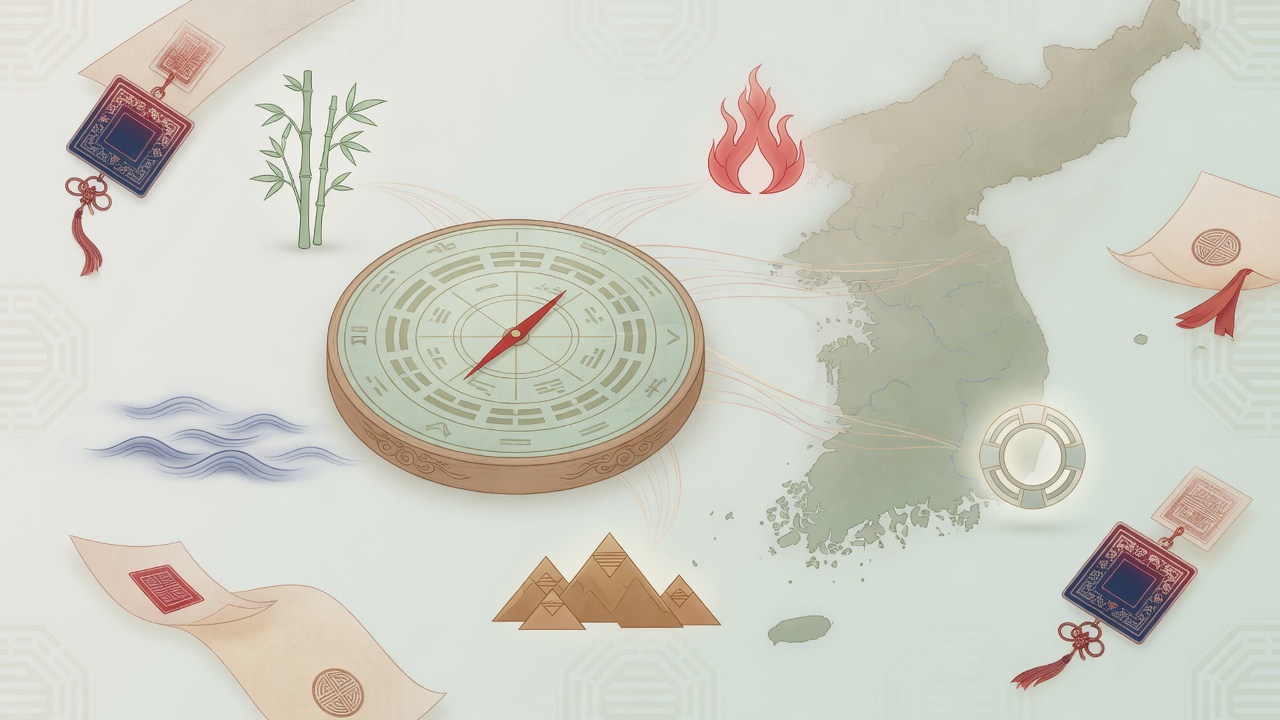
Basic Clarifications
Common Misconceptions
- Misconception 1: Believing that Bazi only deals with individual fate and has nothing to do with cities or regions. In fact, traditional Chinese metaphysics includes the concepts of national fortune and earth luck; changes in administrative divisions are adjustments of the environmental energy field.
- Misconception 2: Equating the “Officer Star” simply with government or officials. In reality, the Officer Star symbolizes order, rules, and binding force; the revision of laws is a manifestation of the Officer Star energy.
- Misconception 3: Mistaking the “Seal Star” for only academic degrees or stamps. On an institutional level, the Seal Star encompasses documents, regulations, and cultural inheritance—acting as a protective deity for stable systems.
- Misconception 4: Assuming that administrative mergers inevitably lead to turmoil. From the perspective of Officer and Seal in Harmony, orderly institutional renewal can instead transform power into protection, bringing long-term stability.
- Misconception 5: Treating metaphysical analysis as a practical decision-making tool. This is purely a cultural interpretation and does not involve any specific predictions of fortune or policy evaluations.
Clarifying Terminology
Among the Ten Gods in Bazi, the Officer Star is the energy that controls the Day Master, representing positions, rules, and external norms; the Seal Star is the energy that generates the Day Master, representing documents, knowledge, and inner support.
- The “Officer” in Officer Star goes beyond official posts to include any binding structure such as laws, institutions, and administrative hierarchies.
- The “Seal” in Seal Star is not just a stamp but any system of texts that provides credentials and protection, such as legal codes, contracts, and educational systems.
Historical Origins
Chinese metaphysics has long had the concepts of national destiny and earth destiny, bringing mountains, cities, and institutions into the same analytical framework.
Traditional Korean geomancy has been deeply influenced by this; the relocation or merger of administrative centers is often seen as a reconfiguration of earth energy.
- The Officer Star originates from “that which controls me,” initially referring to government decrees and expanding later to all institutional constraints.
- The Seal Star originates from “that which gives birth to me,” initially referring to official seals and documents, later extending to knowledge, culture, and systems of refuge.
- Officer and Seal in Harmony is often described in classical texts as “noble energy smoothly circulating,” indicating stability and transmission.
Core Insights
Officer Star & Seal Star: Metaphysical Symbols of Institutional Transition
In Bazi analysis, the Day Master is of foremost importance, while the Officer Star and Seal Star are two key energies surrounding it. The Officer Star controls the Day Master, representing rules, positions, and responsibilities; the Seal Star nourishes the Day Master, representing documents, knowledge, and shelter.
The merger establishing a Special City essentially involves the twin adjustments of management structure and jurisdictional boundaries, corresponding in Chinese metaphysics to a rearrangement of the Officer Star.
The legal overhaul of 798 statutes entails the large-scale revision and alignment of numerous institutional texts, falling under the concentrated operation of the Seal Star.
In traditional Chinese metaphysics, when the Officer Star is strong yet uncontrolled, it leads to heavy pressure; when the Seal Star serves as a conduit, pressure is transformed into support. Similarly, if an administrative merger is matched with timely supporting regulations, the transition will be smooth.
In traditional metaphysics, the interaction between the Officer Star and Seal Star determines the stability of a system. After a regional merger, if the Officer Star is clearly positioned and the Seal Star provides full coverage, the new system will take root more easily.
Conversely, if the Officer Star hangs in the void while the Seal Star is cluttered, or if the Officer Star is domineering while the Seal Star is weak, there may be predicaments such as “orders not carried out” or “rules conflicting.”
- Officer Star manifestation: New administrative centers, special city status, merged management authority.
- Seal Star manifestation: Legal amendments, regulatory alignment, updates to public documents.
- Officer and Seal in Harmony: The management framework and regulatory system reinforce each other, avoiding “authority without rules” or “rules without execution.”
- Officer and Seal imbalance: If the official system is restructured while regulations still lag, or if regulations advance but execution is absent, both indicate disharmony between Officer and Seal.
- Five Elements dynamics: The Officer Star belongs to the controlling cycle; the Seal Star belongs to the generating cycle; they seek balance in motion.
- Regional chart: The new administrative body can be viewed as a “macro Bazi chart,” with the year and month pillars determined by its founding time; the positions of Officer and Seal influence its initial configuration.
- Institutional texture: Legal provisions, like the lines of a seal, allow energy to flow smoothly when clear and orderly.
- Officer-Seal coordination: Governance authority and regulatory texts must be designed synchronously to avoid futility.
- Seal Star quality: Legal revision is not only a matter of quantity but requires internal logical consistency within the system.
- Officer Star foundation: The merged administrative center needs popular acceptance for the Officer Star to have vitality.
Officer and Seal in Harmony: The Energy Dynamics of Merger and Legal Reform
In the Five Elements principle, the Officer Star belongs to the energy that controls the self, while the Seal Star belongs to the energy that nourishes the self. Control constrains, nourishment supports—they form a unity of opposites.
If the Officer Star is overly strong, institutional pressure becomes excessive, leading to rigidity; at such times, transformation through the Seal Star can channel binding force into constructive outcomes.
The Honam region’s merger and simultaneous promotion of the overhaul of some 798 laws epitomizes the pattern of using the Seal to transform the Officer: institutional documents absorb administrative power, preventing the reform from going off track.
In Chinese metaphysics, the structure of Officer and Seal in Harmony most fears the Wealth Star breaking the Seal; in real terms, if vested interests interfere with legislation, stability is undermined—here stated only as an academic reminder, not a real-world speculation.
From the perspective of the Ten Gods, the Officer-Seal mutual generation pattern favors a strong Day Master, meaning the region itself must have sufficient resources and cohesion to receive the energy transformation of Officer and Seal.
After the merger, if the Special City can achieve Officer and Seal in Harmony with a robust Day Master, institutional dividends will be released; otherwise, it risks internal friction.
- Officer generating Seal: Administrative authority gives birth to institutional texts; after merger, rules are set first, then governance proceeds.
- Seal protecting Officer: Sound laws provide a basis for administrative power, reducing disputes and resistance.
- Beware of Wealth destroying Seal: If short-term interests override rule-building, it depletes the Seal Star, undermining the foundation.
- Favoring Peer support for the Day Master: Popular support acts like a Peer star, strengthening regional agency, but must work with an orderly Officer and Seal.
- Balance is key: Whether Officer strong, Seal weak or Seal strong, Officer weak, both affect the implementation of new policies; only harmony can go far.
- Officer-Seal circulation: Officer Star generates Seal Star, Seal Star generates the Day Master, forming a virtuous cycle, symbolizing institutions nourishing the people's livelihood.
- Day Master as the people: The cohesion of the regional population is equivalent to the Day Master in Bazi and cannot be ignored.
- Officer-Seal protecting people: The ultimate purpose of institutions and governance is to serve the people, corresponding to the flow from Officer-Seal generation to supporting the Day Master.
- Avoid heavy Seal, weak Day Master: Too many regulations with insufficient enforcement creates a heavy Seal, light body, dragging down development.
Earth Luck Transformation: The Spatiotemporal Significance of Major Administrative Changes
Traditional geography and Chinese metaphysics share the concept of qi circulation. Mountain and river topography forms earth qi, while administrative centers and boundaries represent human qi reordering the earth qi.
The Gwangju-Jeonnam merger into a Special City is equivalent to drawing a new configuration on the existing geographic map; earth luck enters a new cycle accordingly.
Major administrative changes are often regarded as a shift in earth luck because they simultaneously adjust the Officer Star (governance core) and the Seal Star (institutional texture), superimposing dual energies that trigger a restructuring of the regional energy field.
Such a transformation does not immediately determine good or bad fortune but opens a new spatiotemporal window; subsequent development depends on whether Officer and Seal in Harmony persists and whether the people’s hearts are aligned.
The transition of earth luck is not linear and often involves a period of adaptation. Traditional Chinese metaphysics calls this changing the luck period, a chaotic state during the alternation of old and new energies.
After the merger, short-term friction and resource redistribution in the Honam area can be viewed as part of this luck change process, requiring patient observation.
- Earth luck has cycles: Just like changing fortune pillars, regional development rises and falls; administrative adjustment can be seen as actively “changing the fortune pillar.”
- Changing fortune requires adaptation: A transitional period of temporary disorder between old and new systems is a necessary process of discarding the old and receiving the new.
- Look at the trend of earth luck: Chinese metaphysics sees fortune pillars in terms of trends, not isolated events; the long-term effect of a regional merger must be assessed over a longer timeline.
- Spatiotemporal alignment: Traditionally, date and time selection are used for major projects; if an administrative change aligns with celestial timing, it may enhance the positive energy of Officer and Seal in Harmony (stated here as a cultural observation, not a concrete prediction).
- Human agency: Earth luck is not predestination; human wisdom in governance and institutional design can guide the direction of the energy.
- Officer and Seal set the foundation: Once the Officer Star is in place and the Seal Star perfected for the new administrative entity, a new foundation for earth luck is established.
- Avoid reckless actions during luck change: After a major reform, one should not frequently adjust institutions again; rather, the Seal Star should be quietly nourished to consolidate the foundation.
- Earth luck is long-term: Chinese metaphysics uses a ten-year cycle for major fortune; the effect of regional reforms must also be evaluated within a medium- to long-term framework.
- Spatiotemporal resonance: If the merger coincides with an auspicious annual cycle for the region, Officer and Seal in Harmony becomes more effective more easily, but this is a cultural discussion, not a real-world prediction.
Pitfalls to Avoid
Points to Note
- Do not mechanically apply personal Bazi charts to a region: regional Chinese metaphysics is a macroscopic symbolic method; one cannot use an individual’s Officer-Seal pattern to predict administrative outcomes.
- Avoid over-mystification: Officer and Seal in Harmony is an analytical framework, not a supernatural force; the real-world effects of a merger and legal overhaul still depend on execution and consensus.
- No political assessments: This article interprets only from the angle of traditional culture; it makes no metaphysical assertions about any person, party, or specific policy.
- Distinguish earth luck from feng shui adjustments: Earth luck transformation is a long-cycle concept, not equivalent to short-term feng shui arrangements; one cannot simply use directional fortune to judge the success or failure of a merger.
- View the “798 laws” rationally: The number itself has no intrinsic auspice or inauspice; the key is whether the institutional framework forms a structure where Officer-Seal relation is harmonious.
- Beware of the “fatalism” trap: Metaphysical thinking is used to understand trends, not to replace scientific decision-making; the ultimate direction of administrative changes depends on practical efforts.
- Do not equate the Officer Star with specific institutions: The Officer Star is an abstract function; the concrete structures set up after the merger are merely one of its carriers.
- Focus on the process rather than the outcome: The metaphysical perspective values the smoothness of institutional articulation more than a simplistic declaration of future fortune.
Conclusion and Recap
Officer and Seal in Harmony is a cultural key to understanding large-scale administrative transformation. The Gwangju-Jeonnam Integrated Special City, accompanied by the overhaul of 798 laws, embodies the dialectical unity of institutional innovation and orderly stability.
From a Bazi perspective, regional restructuring is not a mechanical assembly but a recalibration of earth luck and human energy. Only when the Officer Star is tempered and the Seal Star is robust can one proceed steadily and far amid the changes of the times.