Bazi Basics: Understanding the Four Pillars and Day Master
Bazi is not vague fatalism, but a rigorous spatiotemporal coding system. Understanding the Four Pillars structure and the Day Master positioning is the first step to unlock the doors of destiny analysis. This article breaks down the compositi
Introduction
Bazi fate analysis, also known as the Ziping method, essentially transforms a person's birth time into a spatiotemporal model of Heavenly Stems and Earthly Branches. Facing the eight characters, beginners easily get lost.
This article focuses on just two things: how the Four Pillars are divided, and why the Day Master is the core. Grasp these two points, and you'll have the basic coordinates for analyzing a natal chart.
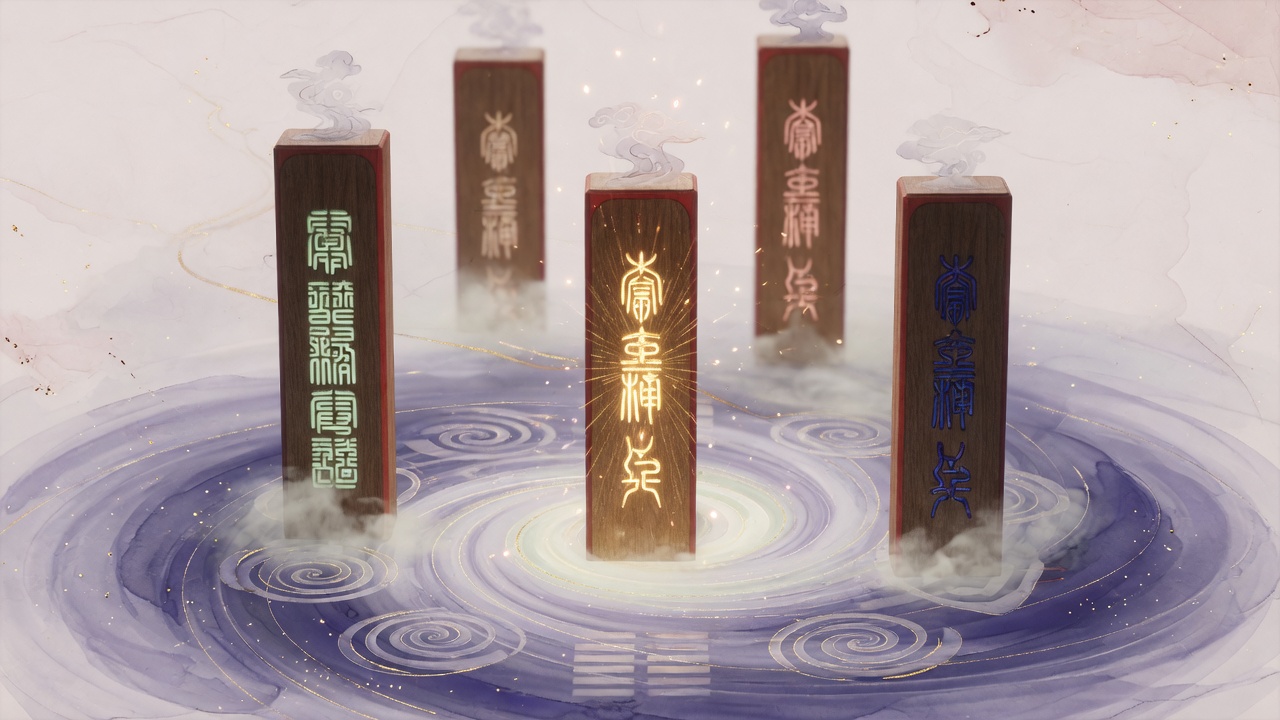
Basic Clarification
Common Misconceptions
- Misconception 1: The Day Pillar represents the entirety of “me.” In reality, the Day Pillar contains the Day Stem and the Day Branch; only the Day Stem represents the person themselves, while the Day Branch is the spouse palace.
- Misconception 2: The Year Pillar represents ancestors, so it's the most important. The Year Pillar indeed governs ancestral heritage and early life, but the center of the entire chart analysis is the Day Master, with the other seven characters revolving around it.
- Misconception 3: Bazi only looks at which Five Elements are missing. Deficient supplementation is superficial; the real core is examining the Ten Gods relationships and the balance of forces among the Five Elements.
Core Points
Breaking Down the Four Pillars: The Skeleton of Time
The Four Pillars are the Year Pillar, Month Pillar, Day Pillar, and Hour Pillar, each composed of one Heavenly Stem and one Earthly Branch, making eight characters in total.
The Year Pillar is determined by the Start of Spring (Lichun), not the first day of the lunar new year; the Month Pillar is marked by solar terms, each month beginning with a Jie (node) rather than Qi.
The Hour Pillar is converted from birth time, with each two-hour period as one ‘hour.’ For late Zi hour (after 23:00), special attention must be paid to the Day Pillar switching rules.
- Year Pillar: Reference point for ancestral foundation and childhood fortune, determines Chinese zodiac and Nayin attributes.
- Month Pillar: The outline pillar, the hub for determining the pattern (Geju), representing the seasonal climate that governs the strength of the Five Elements.
- Day Pillar: The self; the Day Stem is Me, the Day Branch is the spouse palace, the central axis of analysis.
- Hour Pillar: Projection window for later years, children's information, and ultimate achievements.
Positioning the Day Master: The Sole Reference Point of the Chart
The Day Master is the Heavenly Stem of the Day Pillar, the only character in the Bazi that directly represents the individual.
The Ten Gods (Zheng Guan, Shi Shen, etc.) of the other seven characters are all determined in relation to the Day Master. If the Day Master is Jia Wood, seeing Geng Metal makes it a Seven Killings; if the Day Master is Ding Fire, the same Geng Metal becomes Direct Wealth.
- The strength of the Day Master is not about quantity, but whether it receives seasonal Qi and has root in the pillars.
- The three main analytical threads — temperature adjustment, pattern, and useful god — all unfold with the Day Master as the center.
- Once the Day Stem is determined, its yin-yang nature (Yang Stem / Yin Stem) directly affects the names and intensity of the Ten Gods.
Starting from the Day Master: Building a Basic Analysis Chain
Given a Bazi chart, first check the Day Stem, then examine the Month Command to assess strength, then derive the Ten Gods.
The Ten Gods reveal the relational picture of various life aspects: Direct Officer represents rules, Eating God represents talent, Direct Resource represents knowledge.
Finally, integrate with Luck Pillars and annual cycles, observe changes in the Day Master's power, and determine auspicious or inauspicious timing.
- Step 1: Identify the Day Master's Five Elements and yin-yang, label the surrounding Ten Gods.
- Step 2: Examine the depth of the Month Command and the roots in the Earthly Branches to preliminarily judge the Day Master's strength.
- Step 3: Seek the Useful God that brings balance to the chart, distinguish favorable and unfavorable elements, and complete the basic structural framework.
Pitfall Avoidance Guide
Points to Note
- Reminder 1: Do not mistake the solar term boundaries when plotting the chart. The Year Pillar follows the Start of Spring, the Month Pillar follows the seasonal nodes; on days of solar term transitions, verify the specific time to avoid pillar misplacement.
- Reminder 2: Day Master strength is not equivalent to good or bad. A strong Day Master can shoulder wealth and authority; a weak one can be complemented by resource or parallel stars; the key lies in harmonious combination. Do not rush to supplement just because you see a weak Day Master.
- Reminder 3: Do not overlook the Hidden Stems in the Earthly Branches. The Earthly Branches are complex power reservoirs; the human elements stored in the Month Branch often determine the caliber of the pattern. Looking only at Heavenly Stems loses a wealth of information.
- Reminder 4: The names of the Ten Gods must be memorized, but applied flexibly. Direct Officer is not necessarily auspicious, Seven Killings is not necessarily inauspicious; fortune depends on the Day Master's capacity to bear and whether there is controlling or transforming influence. Do not judge by name alone.
Summary and Recap
The Four Pillars serve as a temporal skeleton, offering four observational dimensions: year, month, day, and hour. The Day Master is the sole axis of chart analysis, around which the Ten Gods, Useful God, and pattern revolve. Clarify the boundaries of the Four Pillars and firmly lock onto the Day Master, and you will hold the core key to interpreting Bazi charts.