Columbus Crew vs Pachuca: Understanding the Wisdom of Character, Choice, and Timing Through Ba Zi
When Columbus Crew and Pachuca meet in the Leagues Cup, the world’s eyes turn to the tactics and passion on the pitch. This matchup is not just a clash of strengths—it’s a perfect metaphor for the ancient art of Ba Zi (Eight Characters). Our **in
Opening Introduction
The Leagues Cup clash between Columbus Crew and Pachuca has become a trending topic, with search volume surging. Beyond victory or defeat, this match acts as a mirror, reflecting ancient wisdom about character, choice, and timing found in Ba Zi (Eight Characters).
Ba Zi is not fatalism; it’s a tool for analyzing individual potential and the rhythms of opportunity. Using this trending event, we rationally explore how these traditional cultural concepts can help us understand human behavior and decision-making.
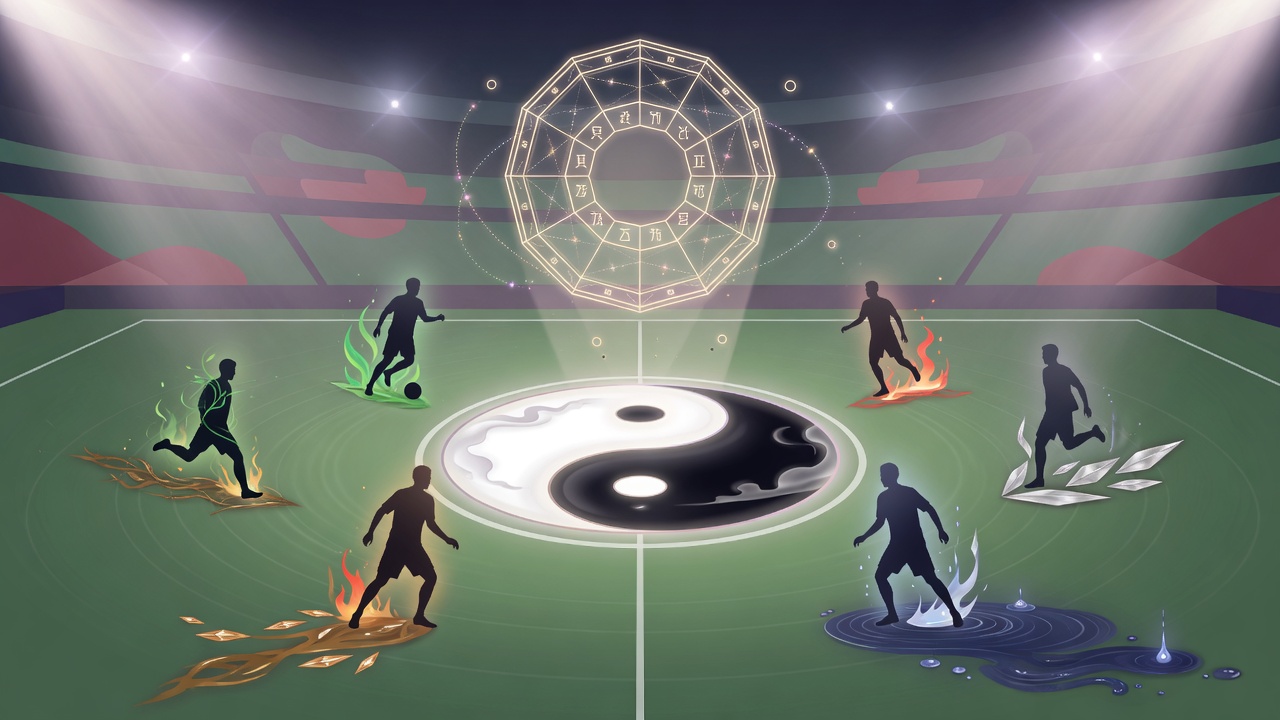
Basic Clarification: Ba Zi Is Not Magic for Predicting Matches
Common Misconceptions
- Misconception 1: Ba Zi can predict match results. Ba Zi analyzes an individual’s life rhythms and personality tendencies; it cannot directly compute highly variable, random sporting event outcomes. Any claim to predict scores using Ba Zi deviates from rational analysis.
- Misconception 2: Ba Zi determines everything, making effort meaningless. Ba Zi reveals innate energy configurations—your factory settings. Acquired environment, training, and teamwork are what truly determine athletic performance. Fate analysis is a map, not a verdict.
- Misconception 3: People born at the same time share the same destiny. Even with identical Ba Zi charts, different locations, family backgrounds, and choices lead to vastly different life paths. Ba Zi emphasizes common trends, not absolute fixed outcomes.
What Ba Zi Can Do
- Understand core personality: Through the Day Master (the Heavenly Stem of the birth day), we grasp a person’s core traits—such as the responsibility of Jia Wood, the passion of Bing Fire, or the decisiveness of Geng Metal.
- Seize timing rhythms: Luck Pillars and Annual Cycles act like climate periods, hinting at phases favorable for expansion or better suited for consolidation.
- Optimize team composition: The interactions of the Five Elements and the Ten Gods can be compared to team roles, helping to understand the roots of synergy and conflict.
Core Insights: Character, Choice, and Timing through the Lens of Ba Zi
1. Day Master Character: The Innate 'Operating System' on the Pitch
In Ba Zi, the Heavenly Stem of the birth day is called the Day Master, representing the self. Its Five Element attribute outlines the most fundamental character contours. Just as different players have distinct playing styles, the Day Master determines our initial reaction pattern when facing challenges.
The following analogy between Five Element Day Masters and on-field roles is purely to illustrate personality types, not to point to any specific individual.
- Jia Wood Day Master: Like a team leader or pillar—upright, forward-looking, and responsible. They excel at strategy but can be too rigid, needing Geng Metal to prune them into shape.
- Bing Fire Day Master: Passionate and influential, like a creative core in attack. They ignite team morale but need the regulation of Ren Water to avoid burning out from excessive passion.
- Wu Earth Day Master: Solid and steady, typical of defensive or holding midfield roles. Loyal and reliable but prone to conservatism, needing Jia Wood to break through and inject vitality.
- Geng Metal Day Master: Decisive and sharp, highly execution-oriented—like a lethal striker who storms the fortress. Highly goal-focused but must guard against excessive forging by Ding Fire that could turn them cold.
- Ren Water Day Master: Wise and fluid, like a midfield organizer. Adaptable but may become scattered without the dam of Wu Earth to provide structure.
2. The Ten Gods and Choice: Every Pass Reflects Generating and Controlling Dynamics
The Ten Gods in Ba Zi are ten roles defined by the relationship between the Day Master and other Stems and Branches—such as Direct Officer, Seven Killings, Direct Resource, Indirect Wealth, and so on. They simulate how various people, matters, and objects interact in life.
In a high-intensity match, a coach’s tactical layout and a player’s split-second decisions can all be likened to the generating and controlling cycles of the Ten Gods.
- Direct Officer represents rules, discipline, and defensive duties. A fullback who strictly follows tactical orders is exercising the Direct Officer role. It controls the Day Master, implying self-restraint.
- Seven Killings symbolizes pressure, challenges, and the opponent’s intense pressing. Confronted by Seven Killings, whether you meet force with force (a strong Day Master welcoming the challenge) or outsmart it (using the Resource star to transform the threat), determines success in transitioning between attack and defense.
- Direct Resource stands for learning, experience, and protection. A veteran’s on-field guidance or a goalkeeper’s stabilizing presence acts like Direct Resource, neutralizing the danger of Seven Killings and boosting the team’s sense of security.
- Eating God and Hurting Officer are expressions of talent and creativity. An exquisite through ball or a flash of brilliant dribbling embodies Eating God / Hurting Officer energy. However, excessive Hurting Officer can disrupt team structure and requires balancing by Direct Resource.
- Direct Wealth and Indirect Wealth can be viewed as goals and opportunities. Direct Wealth is a steady scoring chance built through disciplined play; Indirect Wealth is a lucky rebound. How you seize them depends on the strength of the Day Master and the timing.
3. Luck Pillars and Annual Cycles: How Timing Shapes Heroes, Explained by Ba Zi
The Columbus Crew vs Pachuca matchup occurs in the 2026 Bing Wu Annual Cycle. Bing Wu—both stem and branch are Fire, making for a fierce blaze. In Ba Zi, the Annual Cycle represents the macro energy field of the year.
Fire governs propriety, action, communication, and also symbolizes passion and competition. This resonates naturally with the high attention and high intensity of a football match. But this does not mean one team automatically benefits; rather, the overall timing carries Fire characteristics.
- Luck Pillars are ten-year life phases, like a team’s rebuilding or championship window. Walking a favorable Luck Pillar is like a well-gelled squad maturing—effort yields multiplied results. Walking an unfavorable Luck Pillar is like a wave of injuries, requiring more cautious handling.
- Annual Cycle is the specific yearly manifestation. In the 2026 Bing Wu year, those or teams whose charts favor Fire may perform at scorching levels; those averse to Fire may falter under excessive pressure. Actual performance, however, still hinges on the foundation of the natal chart and human adjustments.
- Timing cannot be chosen, but it can be aligned with. Ba Zi wisdom emphasizes 'go with the flow': in a strong Fire year, proactive efforts are favorable, yet one must guard against excess—too much fire burning wood or drying earth.
- Team synergy can alter individual fortunes. A team with smooth Five Element circulation and complementary Ten Gods can reduce risks for members having a difficult personal cycle through collective configuration. This is where Ba Zi moves from the individual to the systemic.
Pitfalls to Avoid: Applying Ba Zi Wisdom Rationally
Cautions
- Do not use Ba Zi to predict match results. Sports events are influenced by countless variables; Ba Zi can only analyze individual tendencies, not definitive outcomes of a collective competition.
- Do not guess players’ Ba Zi charts. Without publicly confirmed accurate birth times, any analysis is fictional. Respect privacy and maintain rational boundaries.
- Do not look at only one factor. Ba Zi analysis must integrate the Natal Chart, Luck Pillars, and Annual Cycles—sometimes even the Fetal Element and Life Palace. Isolating a single element easily leads to misinterpretation.
- Do not overlook post-natal effort. Ba Zi only indicates probability tendencies. True athletic achievement comes from sweat, tactics, and team chemistry.
- Do not absolutize the strength of the Five Elements. A strong Day Master is not necessarily good; a weak one is not necessarily bad. The key is balance and favorability. For example, a weak Day Master with booming Wealth stars may gain wealth when the Companion star luck arrives.
- Do not treat Ba Zi as a fatalistic excuse. Character can be fine-tuned, choices optimized, and timing leveraged. Ba Zi is a tool, not a chain.
- Cultural respect: In multicultural regions like Indonesia, Ba Zi education should emphasize its analytical value as traditional Chinese wisdom rather than superstitious overtones.
Summary and Takeaway
The Columbus Crew vs Pachuca match encapsulates the charm of competitive sports and serves as a vivid carrier for understanding Ba Zi culture. The Day Master outlines character, the Ten Gods model relational choices, and the Luck Pillars and Annual Cycles frame the background of timing. These three interweave to form each person’s unique life dynamic.
True wisdom lies not in foreseeing victory or defeat, but in knowing oneself and others, and aligning with the timing. When we learn to observe the world through a Ba Zi lens, we can more rationally appreciate personality differences, face life’s choices with greater composure, and perceive the rhythm of opportunity more keenly. This is the gift of thinking that traditional culture offers the modern individual.