Why Did Chiikawa's "Decision" Spark Debate? Understanding Personality, Choice, and Era Energy Through Bazi
In the 2026 summer movie Chiikawa, the protagonist's difficult choice left many parents exclaiming, "I can't show this to my kids." Bazi fate analysis teaches us that behind every major decision lies the interplay between our **innate character
Opening Introduction
In the summer of 2026, the ending of *Chiikawa the Movie* left countless viewers in deep thought. The protagonist's "decision" at a critical moment, touching on themes of sacrifice and protection, was considered "unsuitable for children" by some parents, sparking nationwide debate.
Setting aside the controversy, this choice itself offers an excellent lens through which to understand the ancient Chinese art of Bazi fate analysis. It does not predict fortune or misfortune; rather, it helps us see: how character shapes choice, and how the times influence choice.
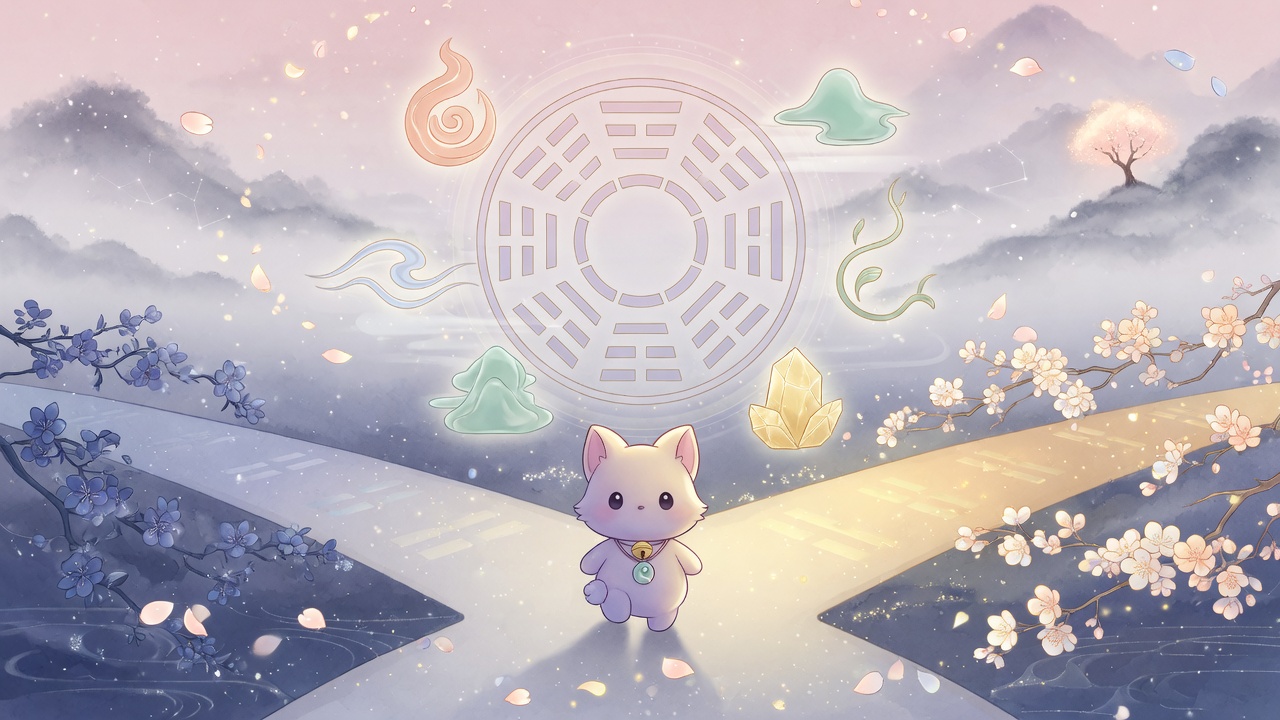
Basic Clarification: Bazi Is Not "Fortune-Telling," It's "Knowing Fate"
Common Misconceptions
- Misconception 1: Bazi can predict life and death with certainty. — The authentic Bazi classics that have been passed down, such as *Dripping Heavenly Essence* and *Three Minghuitonghui*, all focus on the circulation and balance of the five-element energies, not absolute answers.
- Misconception 2: People born in the same year, month, day, and hour have the same destiny. — Bazi provides only the innate chart; subsequent upbringing, personal choices, and historical context lead even identical charts down vastly different paths.
- Misconception 3: Bazi is fatalistic and negative. — A chart is more like an energy map that tells you which roads are uphill and which have storms, but which road you take and how you travel ultimately depends on your free will.
Core Insights: Understanding "Chiikawa's Decision" through Bazi
1. Day Master Five Element: Your Fundamental Character Hues
In the film, Chiikawa's choice reflects the responsibility of Jia Wood, the persistence of Ding Fire, and even the hesitation of Ji Earth. This complexity mirrors the interweaving of multiple Ten Gods in a real Bazi chart.
- Jia Wood Day Master: Like a towering tree, upright, benevolent, responsible, but tends to be straightforward and may sacrifice themselves to protect others.
- Yi Wood Day Master: Like vines and flowers, flexible and sensitive, strong empathy, but often trapped in indecision due to excessive concern for others' feelings.
- Bing Fire Day Master: Like the sun's rays, passionate and outgoing, highly infectious enthusiasm, but may make impulsive decisions under high pressure without enough cool-headedness.
- Ding Fire Day Master: Like a candle flame, introverted yet persistent, fiercely loyal to their beliefs, easily burning alone in the dark.
- Wu Earth Day Master: Like a city wall of thick soil, steady, trustworthy, tolerant, but sometimes overly stubborn; once a decision is made, it's hard to change.
- Ji Earth Day Master: Like garden soil, gentle, humble, and nurturing, yet may appear hesitant in major decisions and need external impetus.
- Geng Metal Day Master: Like swords and ores, resolute, bold, valuing loyalty, will stand up against injustice but tends to solve problems with a "hard against hard" approach.
- Xin Metal Day Master: Like pearl and jade, pursuing perfection, meticulous and sensitive, with high standards for details, often weighing gains and losses repeatedly when making choices.
- Ren Water Day Master: Like rivers and lakes, wise, adaptable, free-spirited, good at going with the flow, but sometimes appears too casual and evades responsibility.
- Gui Water Day Master: Like rain and dew, clever and reserved, with deep thoughts, often perceiving what others cannot see, but also prone to overthinking.
2. Ten God Combinations: The Psychological Drives Behind Decisions
Relating to the current topic, if a person's chart has strong Direct Officer and Direct Seal simultaneously, they might, like Chiikawa, struggle painfully between protecting companions and obeying certain rules, ultimately choosing a self-sacrificing form of responsibility.
If Seven Killings and Hurting Officer combine, they might break the impasse in a drastic, unconventional way, sparking even greater controversy. This is the energy clash behind the exclamation "I can't show this to children"—it's not about right or wrong, but different manifestations of the Ten Gods' power.
- Direct Officer: Represents a sense of responsibility and adherence to rules. A person with strong Direct Officer will suppress personal emotions for "what should be done" and make choices that benefit the collective.
- Seven Killings: Represents a sense of crisis and decisiveness. A person with prominent Seven Killings can summon tremendous courage under pressure, but may lean toward extremes and risky gambles.
- Direct Seal: Represents compassion and security. A person with abundant Direct Seal instinctively protects the weak and sees "taking care of others" as their mission.
- Indirect Seal: Represents unconventional thinking and detachment. A person with strong Indirect Seal may solve problems in ways beyond ordinary comprehension, appearing cold but holding a different kind of love.
- Eating God: Represents gentleness, enjoyment, and creativity. An Eating God type usually avoids conflict, but when forced to choose, they follow the principle of "minimal harm."
- Hurting Officer: Represents rebellion, breakthrough, and talent. A person with strong Hurting Officer is unconstrained and may make decisions that shock the public yet are extremely innovative.
- Friend and Rob Wealth: Represent peer consciousness and self-awareness. A person with strong Friend/Rob Wealth will value friends above all else and sacrifice everything for companions.
3. Luck Cycles and Annual Luck: Why "Now" Especially?
In the film, the moment Chiikawa makes the decision, from a fate perspective, it might be a certain annual luck activating its "Direct Seal" or "Rob Wealth," making the spirit of protection and dedication outweigh other considerations.
This is not predestination, but a resonance between celestial timing and human nature. Understanding this is far more valuable than arguing "should we show this to kids?"—it teaches us to see clearly our internal energy structure and the pressure of the current situation at critical moments.
- Annual luck merging with Day Master: In such a year, the person is more easily led by external forces and makes decisions that comply with others' expectations.
- Annual luck clashing the natal chart: Sudden events disrupt inner balance, forcing a person to make major trade-offs in a short time, often with a sense of "having no choice."
- Luck cycle entering Direct Officer or Seven Killings: Over a ten-year period, feelings of responsibility and crisis amplify, making one more decisive and more willing to take risks than before.
- Annual luck activating Friend/Rob Wealth: Cooperation or competition becomes focal; for the sake of partners or team, personal interests may be put aside.
Pitfall Guide: Using Bazi to View Life Choices – Avoid These Traps
Points to Note
- Don't use Bazi to label your own behavior. — Bazi is a tool for understanding yourself, not an excuse. Saying "I have strong Seven Killings so I have a bad temper" is just avoiding growth.
- Don't scare yourself with annual luck. — Getting anxious upon seeing "clashing Tai Sui" or "punishing Tai Sui" actually lowers your judgment. Annual luck merely highlights areas of focus, not a disaster forecast.
- Don't use Bazi to judge others. — Especially for public figures or fictional characters, never use Bazi for moral judgment. Every chart has higher and lower manifestations.
- Don't ignore acquired effort and environment. — The same Bazi will bear completely different fruits in different eras and families. Japanese culture's emphasis on "reading the air" also amplifies certain Ten God traits.
- Don't pit Bazi against psychology. — Bazi character analysis can complement Jungian archetypes and the Big Five personality traits; one from an energy perspective, the other from psychological mechanisms, both help us understand complex human nature.
- When facing big decisions, calm your mind before examining the chart. — If you find yourself in a dilemma like Chiikawa's, first take a deep breath and return to a calm Day Master state, then rationally examine which "Ten God voices" are shouting excessively and which energies are suppressed, thereby making a more integrated decision.
Summary and Review
Chiikawa's decision is a mirror, reflecting each of our own struggles at the crossroads of fate. Bazi does not provide a standard answer, but it offers an energy map: see clearly your Day Master's basic color, understand the psychological drives under your Ten God configuration, and grasp the surging currents of luck cycles and annual influences.
True "knowing fate" is recognizing that character can be refined, choices can be made consciously, and the times can be leveraged. Just like the discussions sparked by the film, what matters is not avoiding heaviness, but learning to make your own choices gently yet clear-eyed within that heaviness.