From Jake Paul to NFL: The Team Code in Bazi – Character, Timing, and Choice
Recently, Jake Paul revealed plans to join the NFL after boxing, claiming multiple teams are “interested.” This cross-sport move has sparked debate. In Japan, where destiny analysis is popular, people often turn to Bazi when pondering maj
Introduction
From internet-famous boxer to NFL player, Jake Paul’s cross-sport plan may seem abrupt, but it reflects the interplay of personal choice and timing. In Japan, similar career pivots often invite Bazi analysis: Does the configuration suit the new environment? Will the Five Elements flow smoothly?
Using this hot topic as a hook, we set aside celebrity privacy and focus on the foundational logic of Bazi regarding teamwork, character matching, and seizing the moment. Bazi is not fatalism; it is a dynamic model for observing energy and relationships.
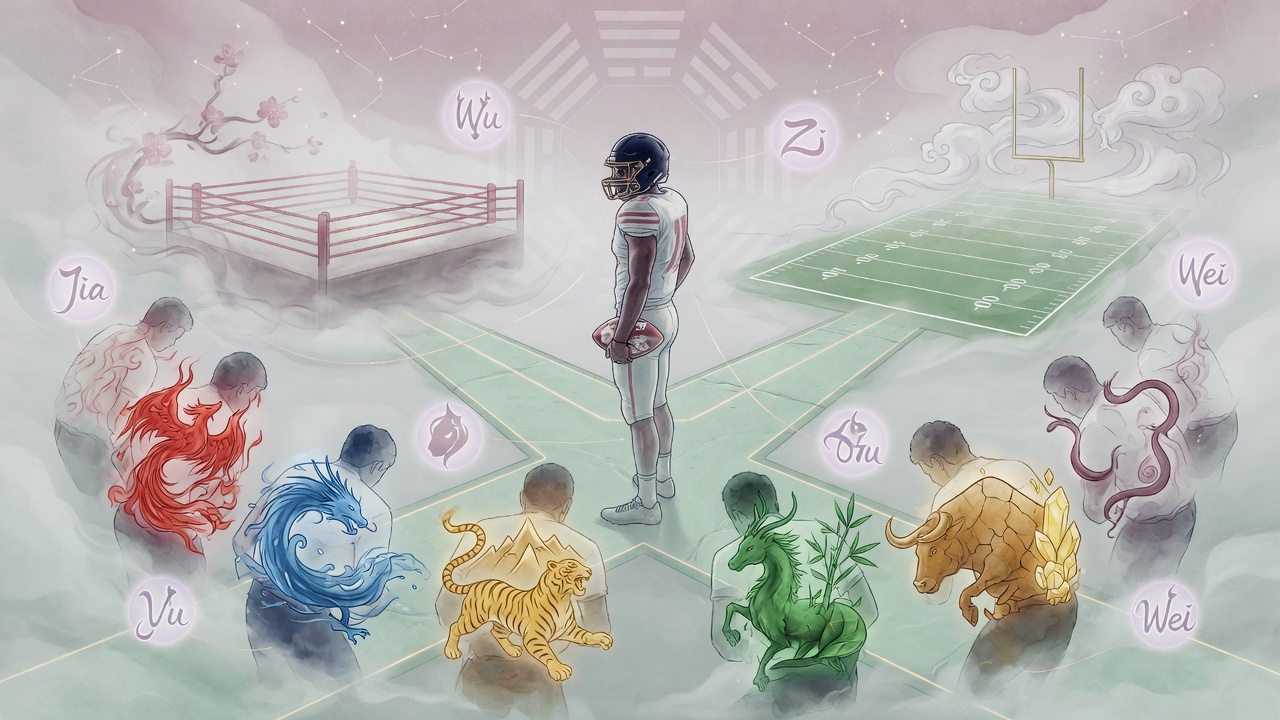
Basic Clarification: How Bazi Views “Teams”
Common Misconceptions
- Misconception 1: Bazi can directly predict whether someone will join a specific team. In reality, Bazi analyzes innate tendencies and alignment of trends; it does not replace real-world decision-making.
- Misconception 2: A single Ten Gods sign decides success or failure. Team dynamics result from multiple interactions and must be evaluated together with Day Master strength, favorable/unfavorable elements, and Luck Pillars / Annual Cycles.
- Misconception 3: Abundant Peers make a good teammate. Peer and Rival reflect peer relations, but an excess can also lead to friction and competition; they must be viewed dialectically.
Quick Guide to Ten Gods and Team Roles
The Ten Gods in Bazi symbolize interpersonal relationships and resource states. Understanding them is like having an “energy map” of team roles.
Below are common associations, but a complete picture always requires integrating the Five Elements of the whole chart.
- Peer (Friend): Teammates, same-level colleagues, representing cooperation and fairness.
- Rival (Rob Wealth): Competitors who can be both friend and foe; they may bring help or trigger resource struggles.
- Resource (Seal): Team culture, coaching guidance, protective system, providing a sense of security and growth space.
- Talent / Maverick (Eating God / Hurting Officer): Personal creativity, unique contribution to the team.
- Authority / Aggressor (Direct Officer / Seven Killings): Rules, discipline, leadership; can also become pressure or opponents.
- Wealth / Unconventional Wealth (Direct Wealth / Indirect Wealth): Shared goals, material rewards, a crucial bonding force for the team.
Core Insights: How Bazi Depicts Your Team DNA
1. Suitable Team Roles According to Ten Gods Combinations
The distribution of Ten Gods around the Day Master hints at one’s natural tendencies within a group. For example, a chart with abundant Peers/Rivals and lacking restraint may be naturally suited to highly collaborative team projects, though boundaries should be watched.
If Resource (Seal) is overly strong, the person may rely on team resources and suit a supporting role; those with Talent producing Wealth tend to drive team goals through creativity.
- Peers/Rivals flourishing with Officer/Killings: Leadership potential, able to coordinate same-level peers and face competition, like a team core player.
- Strong Seal, weak Day Master: Dependent on team shelter, suitable for enforcer or support positions, such as an offensive lineman.
- Talent (Maverick) appearing prominently: Provides creativity, suitable for tactical design or versatile positions, like a quarterback.
- Wealth and Officer mutually generating: Clear goals, discipline, steady output, fit for focused roles such as a kicker.
2. Five Elements Circulation and Team Chemistry
Beyond Ten Gods, the Five Elements’ generating and overcoming cycles also affect team integration. A Fire-dominant person joining a Metal-dominant team may create Fire overcomes Metal friction; if the team has Water to harmonize, then Water and Fire can balance.
This dynamic is analogous to the complementary offensive and defensive systems in a team: individual talent matters little without overall Five Elements flow.
- Wood and Fire flourish type: Enthusiastic and proactive, can set the team’s pace, but must guard against impatience.
- Metal and Water generate each other type: Calm and rational, suitable for strategic or defensive positions.
- Heavy Earth type: Steady and bonding, like an anchor on the line, but may lack flexibility.
- Note: Whether a certain element benefits you depends on the Day Master’s favorable/unfavorable; strength alone does not guarantee harmony.
3. Timing Code: Luck Pillars, Annual Cycles, and the Moment to Join
From a destiny perspective, Jake Paul’s planned move to the NFL may coincide with a Luck Pillar that favors change. A Luck Pillar spans ten years; the Annual Cycle influences the opportunities of a given year.
When the Annual Cycle causes combinations or gatherings with the Day Master, or resolves clashes and punishments in the natal chart, the team environment often becomes smoother. For example, a Yin–Wu–Xu Fire Trio for someone who favors Fire can bring a passionate team.
- Annual Cycle meets Heavenly Yi Nobleman: Easier to gain coach’s favor and teammates’ acceptance.
- Annual Cycle activates the Traveling Star: Often signals cross-field or cross-region team opportunities, such as transfers or switching sports.
- Peer/Rival in combination: Existing competitive relationships transform into cooperation, favorable for joining a new team.
- Annual Cycle clashes with the Day Master calls for caution; even if a team appears “interested,” internal friction may be high.
Avoid Pitfalls: Team Career Advice for Modern People
Cautions
- Don’t view Ten Gods in isolation: A single Peer sign means little; it must be weighed with seasonal strength, generating/overcoming, and palace position.
- Unfavorable Luck Pillar is not always bad: Pressure may unlock potential, but you need to assess your capacity; avoid forcing against the current.
- Don’t blindly trust “Nobleman” years: Nobleman energy is merely a catalyst; the key lies in your own ability and preparation. Bazi points the direction, not a substitute for action.
- Be mindful of cultural differences: In Eastern environments like Japan, the influence of Resource (Seal) (tradition, hierarchy) is strong; teams value harmony more, and excessive personal Talent (Maverick) may be suppressed.
- View team match dynamically: Bazi is the natal chart, the team is the environment. The same chart adapts vastly differently under different Luck Pillars; don’t limit yourself with static labels.
Summary and Reflection
Jake Paul’s NFL interest offers an interesting sample for observing timing and choice. Bazi culture teaches us that team compatibility arises from the interplay of innate energy patterns and acquired space-time.
Peer does not mean absolute cooperation, and Rival does not mean inevitable conflict; Five Elements flow, Ten Gods combination, and Luck Pillars / Annual Cycles together write the story of your team experience. Understanding this is not about fatalistically waiting, but about more consciously choosing when and where to enter the game.