Viewing Fair Play Through the Officer and Hurting Officer: Emotional Management from a BaZi Perspective
Recently, the Indonesian national team faced referee controversies at the ASEAN Championship, prompting calls for an AFF investigation and putting rule fairness and emotional management in the spotlight. In traditional BaZi, the Officer symbolize
Opening Introduction
Recent referee controversies involving the Indonesian national team at the ASEAN Championship have sparked public discussion on fair play and rule transparency.
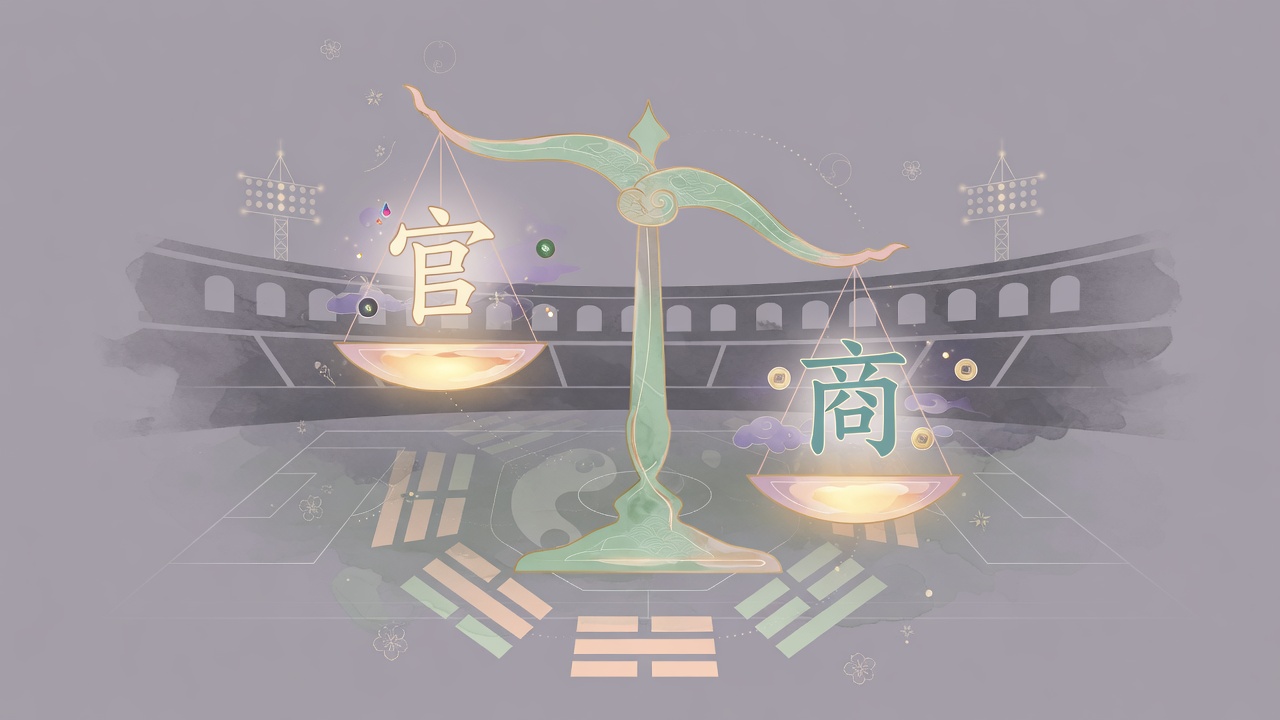
In traditional BaZi, the Officer represents rules, constraints, and authority, while the Hurting Officer represents questioning, breakthroughs, and expression.
This article does not address any specific calls or team characterizations. It only uses a metaphysical perspective to discuss emotional management and rational competition under rule-based pressure.
When disputes over rules arise, people often fall into a sense of grievance, feeling 'oppressed,' which shares similarities with the psychological state of an excessive Officer in BaZi.
Basic Clarifications
Common Misconceptions
BaZi is often misunderstood as a tool for fatalistic prediction, but it is closer to an analytical model for the interaction between personality and environment.
- Misconception 1: Thinking the Officer only brings oppression and bad luck. In reality, the Officer also represents order, responsibility, and protection.
- Misconception 2: Thinking the Hurting Officer is just rebellion and destruction. The Hurting Officer symbolizes independent thinking and talent; proper expression can drive improvement.
- Misconception 3: Using metaphysics as a tool to predict match results. Metaphysics does not predict specific events, only provides psychological and behavioral analysis.
- Misconception 4: Forcibly linking public events to personal birth charts. Without an accurate birth time, any structural judgment is speculation.
Basic BaZi Concepts
Understanding the interaction between the Officer and Hurting Officer requires clarifying foundational concepts like the Day Master and the Ten Gods.
- Day Master: The Heavenly Stem of the birth day, representing the self.
- Officer: The element that controls the Day Master, symbolizing rules and pressure.
- Hurting Officer: The element generated by the Day Master with a different Yin-Yang polarity, symbolizing expression and challenge.
- Strong or Weak Day Master: The energy level of the Day Master, determining one's capacity to withstand pressure.
- Seal: The element that generates the Day Master, representing learning, protection, and rationality.
- Companion: The same element as the Day Master, representing peers and support.
Core Insights
The Officer: The Metaphysical Archetype of Rules and Constraints
In BaZi, the Officer element controls the Day Master, representing systems, discipline, and authority. It acts like the referee and rules in a match, maintaining order.
When the Officer is at a moderate strength, a person can consciously follow rules and take responsibility, transforming constraints into motivation for growth.
However, if the Officer is excessive and the Day Master is overly controlled, a person easily feels targeted and oppressed, leading to a sense of grievance and powerlessness.
In a competitive context, this feeling is amplified: a single controversial call can be seen as a concentrated outbreak of 'unfair rules'.
- Officer Element: The one that controls the self is the Officer, divided into the Direct Officer and Seven Killings, symbolizing different intensities of constraint.
- Direct Officer: Gentle and orderly rules, like sportsmanship and competition regulations.
- Seven Killings: Tough and high-pressure rules, like strict penalties or sudden bans.
- Excessive Officer: Psychologically corresponds to high-pressure environments and a sense of over-control.
- Metaphysical Reminder: The Officer is neither good nor bad; the key is whether the Day Master can withstand and transform it.
- Real-world Mapping: Rule controversies often trigger a collective resonance with the internal pressure of the Officer.
Excessive Officer: Where Does the Sense of Oppression Come From?
In a BaZi chart, when the Officer is strong and the Day Master is weak, it is called the Officer excessively controlling the self. The individual is often sensitive to external authority and easily feels injustice.
This sense of oppression is not determined by the event itself, but by the internal psychological structure: the tougher the rules, the stronger the rebound.
In team sports, when players and fans face unfair calls, collective emotion is ignited, forming a narrative of 'we are being oppressed.'
Traditional metaphysics suggests that those with an excessive Officer should resolve it with the Seal (learning, elders, rationality) rather than confronting it head-on.
- Psychological Mechanism: An excessive Officer makes one interpret external rules as hostility.
- Seal Resolves the Officer: Understanding the rules and elevating cognition can alleviate the sense of oppression.
- Strong vs. Weak Day Master: A strong Day Master withstands pressure; a weak one is prone to emotional internal friction.
- Collective Emotion: Community resonance amplifies the individual's experience of Officer oppression.
- Key Conclusion: The sense of oppression comes from the gap between subjective feeling and objective rules.
- Metaphysical Application: Release Officer pressure through breathing, exercise, and communication.
The Hurting Officer: The Metaphysical Archetype of Questioning and Expression
The Hurting Officer is generated by the Day Master, representing talent, expression, and a critical spirit. People with a Hurting Officer in their chart are usually sharp-minded and dare to challenge authority.
When rules are unfair, the Hurting Officer energy drives one to speak out, appeal, and demand transparency. This is a healthy check-and-balance force.
However, when the Hurting Officer clashes with the Officer (a direct conflict between the two), it can easily turn into emotional accusations and even rule-breaking.
Properly channeling the Hurting Officer means transforming the critical spirit into legal, rational actions rather than mere venting.
- Hurting Officer Element: What the self generates is the Food and Hurting Officer; the Hurting Officer is generated by a different Yin-Yang polarity and is more outwardly expressive.
- Positive Manifestations: Independent thinking, rich creativity, outspokenness.
- Negative Manifestations: Loose talk, disregard for law and order, emotional loss of control.
- Hurting Officer Clashes with Officer: A conflict between rules and freedom that requires harmonization, not suppression.
- Emotional Outlets: Writing, debating, and artistic creation are healthy channels for the Hurting Officer.
- Application in Sports: If fans' voices go through proper channels, it is a positive expression of the Hurting Officer.
Dynamic Balance: From Conflict to Rational Competition
BaZi pursues harmony. An excessive Officer leads to suppression; an excessive Hurting Officer leads to disorder. The ideal state is one where rules have authority but also allow reasonable questioning.
In public events, calling for an investigation into referees and demanding fairness is essentially a rational feedback loop from the Hurting Officer to the Officer.
As long as the procedures are proper and evidence is sufficient, this check-and-balance can drive rule improvement and safeguard broader fairness.
From a personal perspective, when facing feelings of injustice, one can use the Companion (peer support) and the Seal (learning the rules) to enhance psychological stability.
- Role of Companion: Team, partners, and fan solidarity can alleviate feelings of isolation.
- Role of Seal: Understanding the rules can lower emotional reactions.
- Transformation Formula: Shift from 'I am a victim' to 'How can I respond legally.'
- Fair Play: Requires the Officer to guard the bottom line and the Hurting Officer to supervise transparency.
- Metaphysical Insight: Rules and freedom are not a zero-sum game but a dynamic balance.
- Ultimate Goal: Use rational expression to drive change while respecting the rules.
Avoidance Guide
Emotional Management Pitfalls
When facing rule disputes, emotional management is more important than arguing who is right or wrong.
- Avoid Instant Outbursts: Take a deep breath and wait 24 hours before making a public statement.
- Minimize Personal Attacks: Target the behavior, not the person, to avoid legal risks.
- Find a Support System: Discuss with friends and family to prevent emotions from festering in isolation.
- Healthy Catharsis: Exercise, writing, and artistic creation can transform Hurting Officer energy.
- Focus on Facts: Emotional states can exaggerate facts; verify information first.
- Set Boundaries: Do not project personal emotions onto an entire team or group.
Pitfalls in Using Metaphysics
BaZi knowledge is not a substitute for real-world judgment; maintain rational boundaries when using it.
- Do Not Force Structures: Without an accurate birth time, do not assign a chart structure to public figures.
- Do Not Make Predictions: Do not predict match results or legal rulings.
- Do Not Rely on Superstitious Remedies: Wearing lucky charms cannot replace a legitimate appeal.
- Do Not Stigmatize: Do not label any team or referee based on metaphysical concepts.
- Read Original Texts: Understand the generating and controlling cycles of the Five Elements to avoid taking words out of context.
- Stay Open-Minded: Metaphysics is an interpretive tool, not the sole truth.
Summary and Review
The Officer is the whip of rules; the Hurting Officer is the blade of freedom. Fair play requires a balance between the two: both respecting rules and daring to question.
When facing controversy, the highest form of response is not suppression or explosion, but transforming emotion into constructive action.