Earth Element in Power: Decoding the Land Rush and Personal Choices Through Bazi
South Korea's Ministry of Land and LH recently announced a 500 billion won investment to purchase land in the capital region, initiating the first public reserve of residential land. Land has become a social focus. In Bazi culture, the Earth
Opening Introduction
South Korea's Ministry of Land and LH recently announced a 500 billion won investment to purchase land in the capital region, initiating the first public reserve of residential land. Land has become a social focus.
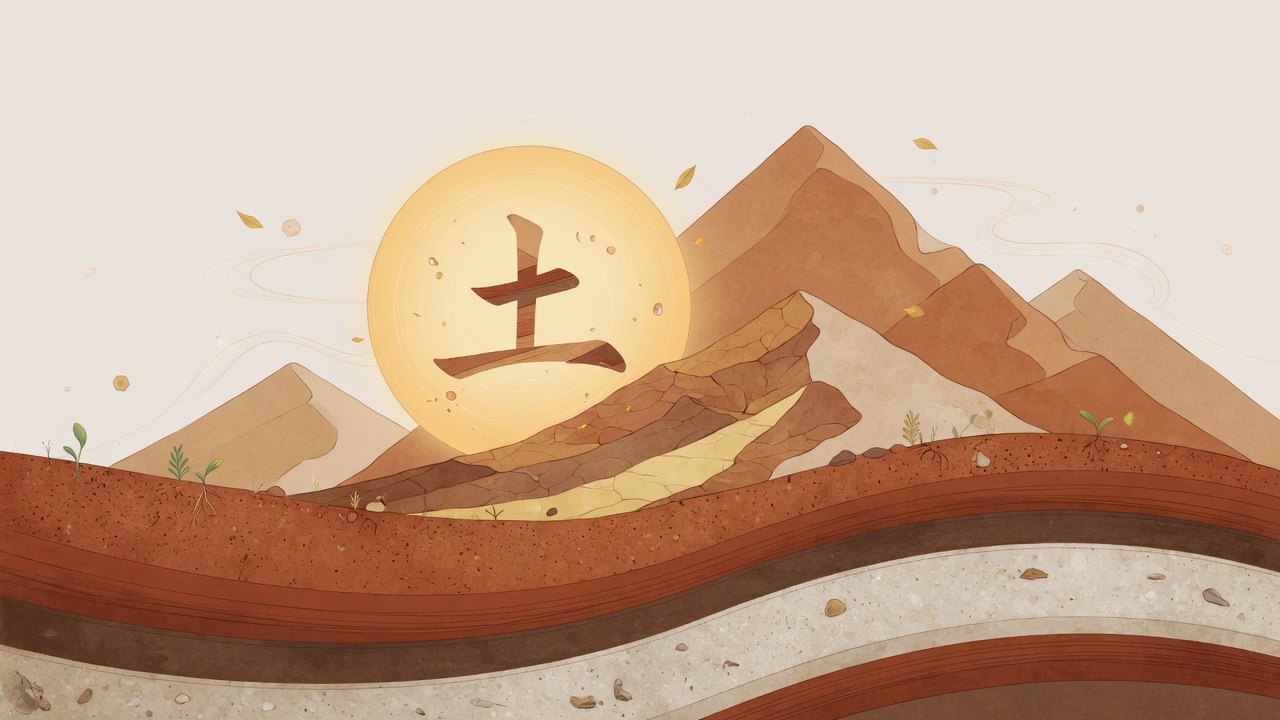
In Bazi culture, the Earth element corresponds to the ground, bearing, and transformation. This article does not predict fortune or misfortune, but only uses the qualities of the Earth element to discuss the rational connections between personality, choice, and the current climate.
Basic Clarifications
Common Misconceptions
The Five Elements in Bazi are not simply good or bad, but represent a dynamic balance. Having a lot of Earth doesn't mean one is suited to buy land, and a strong Earth element doesn't necessarily equate to being stable.
Bazi analysis requires a holistic view and cannot be taken out of context. The following misconceptions are worth being wary of.
- Misconception 1: A lot of 'Earth' in a Bazi chart means one is suited for real estate. The favorability of an element depends on the entire chart, not a single element.
- Misconception 2: A strong Earth element guarantees reliability. Excess is as bad as deficiency; overly strong Earth can also lead to stubbornness and conservatism, lacking flexibility.
- Misconception 3: Encountering Earth in the annual cycle is definitely favorable for property investment. The current climate and one's personal chart are two separate systems and cannot be simply correlated.
- Misconception 4: Bazi can directly predict housing price fluctuations. Bazi focuses on personal endowments and life rhythms, not a substitute for market analysis.
- Misconception 5: A public land reserve means individuals cannot engage in land-related affairs. Policy and personal choice are not in conflict; rational judgment is all that's needed.
Core Insights
Earth in Bazi: The Central Hub of the Five Elements
Bazi uses Heavenly Stems and Earthly Branches to record birth time, totaling eight characters. Among the Five Elements (Wood, Fire, Earth, Metal, Water), Earth occupies the center, governing bearing, tolerance, and transformation.
The Heavenly Stems Wu and Ji belong to Earth, and the Earthly Branches Chen, Xu, Chou, and Wei belong to Earth. Earth is the transition at the end of each season and the place where all things return and are stored.
In destiny analysis, Earth often symbolizes stability, trust, and boundaries, and also represents physical images like the spleen, stomach, and muscles.
The meaning of Earth varies by its position in the Four Pillars: in the Year Pillar, it represents ancestral roots; in the Month Pillar, the social environment; in the Day Pillar, the core self; and in the Hour Pillar, later life and descendants.
- Wu Earth: Like a city wall, thick and solid, symbolizing defense and responsibility.
- Ji Earth: Like garden soil, fine and nourishing, symbolizing cultivation and flexibility.
- Chen, Xu, Chou, Wei: The four storage Earths, with complex hidden stems, carrying the meaning of containment and transformation.
- Balanced Earth: Earth needs to be dredged by Wood, moistened by Water, and drained by Metal to thrive continuously.
- Excessively Strong or Weak Earth: Too strong leads to stagnation, too weak leads to emptiness; both require postnatal adjustment.
- Direction and Season of Earth: Earth is strong at the end of each season, its direction is the center, and it corresponds to the color yellow and sweet flavors.
The Personality Spectrum of Earth: From Stability to Stubbornness
People with a strong Earth element often appear steady, trustworthy, and pragmatic, with patience and a sense of responsibility. But if Earth is overly heavy, they may tend towards conservatism and a lack of adaptability.
People with a weak Earth element may lack stability and need postnatal cultivation. Those with balanced elements can combine firmness and flexibility.
Personality is not a fixed label but an adjustable tendency. Understanding one's own elemental bias helps in leveraging strengths and avoiding weaknesses.
In reality, those with strong Earth are suited for work requiring long-term persistence, like project management or administration; those with weak Earth are better adapted to flexible and creative fields.
- Strengths: Reliable and steady, highly tolerant, strong execution, honest and keeps promises.
- Weaknesses: Stubborn in opinion, slower to react, poor at adapting, prone to bottling up emotions.
- Adjustment Ideas: Those with strong Earth should engage more with the Wood element (e.g., green color, east direction) for dredging; those with weak Earth should engage more with the Fire element (e.g., red color, south direction) for support.
- Career Tendencies: Strong Earth suits management, planning, civil engineering; weak Earth suits creative, mobile, and educational fields.
- Team Role: Those with strong Earth are often the stabilizer in a team, but must be wary of becoming a point of resistance.
- Emotional Expression: Overly strong Earth easily leads to overthinking; overly weak Earth easily leads to a lack of security.
Current Climate and Choice: Bazi Insights from the Land Reserve Boom
South Korea's push for a public residential land reserve reflects the attribute of Earth as a public resource. The policy aims to stabilize housing supply and is a major trend.
If individuals are concerned about land or property, they can use Bazi thinking for self-examination rather than predicting price fluctuations.
The current climate is an external factor, while choice is an internal factor. Bazi culture reminds us: first understand yourself, then assess the environment.
The Earth element in a Luck Cycle or annual cycle represents a phased environmental energy. For example, encountering Earth in an annual cycle might bring opportunities or tests related to land and property, but the specific impact varies by person.
The link between public reserve policy and one's personal chart should not be simplified to 'buying a house in a strong Earth year guarantees profit.' Rational analysis is always the top priority.
- Earth Symbolism of Public Reserve: State-led land operation, similar to the thick and normative nature of Wu Earth, emphasizes public order.
- How Individuals Can Use Bazi Thinking: If one's chart favors Earth, a career in real estate might be smoother; if it avoids Earth, one must carefully assess risks.
- Rationality as the Foundation: Bazi culture provides a thinking framework, not a substitute for market analysis, financial planning, or policy interpretation.
- Current Climate and Personal Chart: Personal fortune has its ups and downs, but specific decisions should combine real-world conditions; do not be superstitious about annual cycles.
- Interpreting Luck Cycles: During an Earth-influenced period, it is suitable for consolidation and accumulation, not for aggressive speculation.
- Priority of Choice: First understand yourself, then observe the current climate, and finally make a choice.
Pitfall Avoidance Guide
Points to Note
Bazi culture is traditional wisdom, but it cannot replace real-world judgment. The following reminders help maintain rationality.
- Do not blindly follow trends: Avoid impulsive investment driven by the land rush, ignoring your own risk tolerance.
- Do not judge fortune yourself: Favorability of the Five Elements requires professional analysis; do not self-diagnose based on fragmented online information.
- Do not over-rely on Bazi: Major decisions should integrate policy, market, and personal finances; Bazi is only one reference dimension.
- Beware of fake masters: Do not easily believe absolute statements like 'strong Earth guarantees wealth.'
- Distinguish culture from prediction: Bazi is a traditional cultural wisdom, not a precise prediction tool.
- Protect your privacy: Do not casually provide your birth information to others to prevent misuse.
- View policy rationally: A public reserve is a long-term plan; personal investment must consider liquidity and opportunity cost.
- Learn the basics: Understand the generating and overcoming cycles of the Five Elements to avoid being confused by terminological packaging.
Summary and Review
Behind the land hotspot, Bazi culture reminds us: the Earth element symbolizes bearing and transformation. Personality can be stable but also stubborn. The current climate is an external factor, while choice is an internal factor.
Viewing the Five Elements and life rationally allows one to seek fortune and avoid misfortune without losing autonomy.