From the Emotional Storm of “กัญญา ไรวินท์”: Unlocking Ba Zi Character Codes – Choice, Timing, and Self-Reconciliation
A raw, tearful breakdown at a funeral ignited Thai social media. “Why didn’t you call?” “Were we not good enough friends?” – this is more than entertainment news; it’s a mirror reflecting the depths of human nature. In Ba Zi astrology, every pers
Opening Guide
When “หญิง กัญญา” sobbed beside a dear friend’s coffin, demanding “Why didn’t you call?”, that wrenching mix of self-blame and questioning touched a raw nerve about regret and responsibility.
In the Ba Zi system, such intense emotional outbursts are not random; they are closely linked to a person’s innate chart structure and the current Major Cycle and Annual Cycle they are passing through.
Without speculating about anyone’s birth date or making categorical predictions, this article uses the public emotional event as a lens to explain how Ba Zi culture helps us understand the delicate dance between character, choice, and timing.
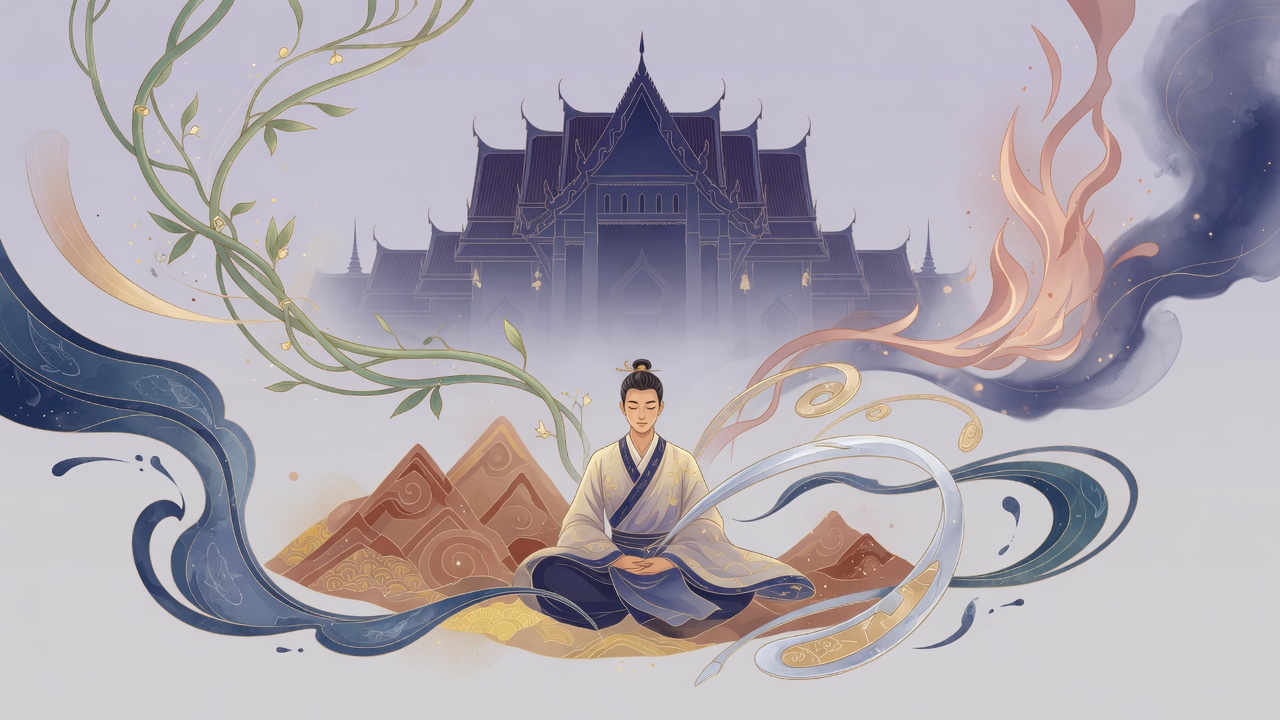
Basic Clarification: Ba Zi Is Not a “Verdict of Fate”
Common Misconceptions
- Myth 1: Ba Zi dictates everything, and people can only passively accept it. In reality, Ba Zi reveals innate energy tendencies and fortune curves, much like a weather forecast. Knowing rain is likely, you can choose to bring an umbrella or reschedule.
- Myth 2: Ba Zi can predict specific events, such as when someone will pass away. Ba Zi reads the Five Elements interactions and Ten Gods combinations as broad patterns, reflecting character traits and spatiotemporal energy fields – it is never a precise event recorder.
- Myth 3: People born on the same day in the same year share the same destiny. Even with identical Ba Zi charts, postnatal factors such as upbringing, personal choices, name, and feng shui lead to vastly different life paths.
What Ba Zi Can Actually Do
- Self-awareness: Through the strength of the Day Master and the configuration of Ten Gods, you can see your own thinking patterns, emotional triggers, and instinctive reactions.
- Rhythm management: Based on the Five Elements changes in Major Cycles and Annual Cycles, you can identify periods suitable for advancing and periods better for holding back, reducing the risk of impulsive decisions.
- Understanding others: When people around you display intense emotions, a Ba Zi perspective offers an extra layer of compassion and less blame, recognizing that their innate temperament may have been triggered by current timing.
Core Insights: Character Codes, Fortune’s Ebb and Flow, and the Wisdom of Choice
1. Ba Zi Character Decoding: Why Some Erupt Like Volcanoes and Others Remain Deep as the Sea
It is worth noting that most people’s charts contain a mix of Ten Gods, so emotions are often compound. For example, having both the self-critical edge of Officer/Killing and the kinship bonding of Companion/Rob Wealth is what made that scene so authentically complex.
- Those with strong Officer / Killing: Overwhelming sense of responsibility, but also prone to self-imposed pressure. When they believe they failed in their duty, they sink into deep remorse, sometimes externalizing the pain as accusations toward others, much like the cry “Why didn’t you call?”
- Those with strong Companion / Rob Wealth: Loyal, action-oriented, yet when emotions erupt, they flood like a broken dam. They care deeply about “being one of us,” so losing a companion doubles the sense of tearing loss, expressed directly through wailing and tears.
- Those whose Resource star is unfavorable and uncontrolled: Overthinkers who internalize problems, ruminating endlessly on “What if I had…”. They struggle to pull free from grief and often need much longer to process it.
- Those whose Output star shines through: Express emotions directly and intensely, without suppression. They vent through words, tears, even dramatic gestures – which is, in fact, an instinctive form of self-healing.
2. Fortune’s Flow: How Major Cycles and Annual Cycles Flip the Emotional Switch
Thus, a person who is usually mild-mannered can make drastic moves in certain years. This is not “becoming a different person,” but the innate character revealing another face under the catalysis of acquired fortune. Understanding this allows us to extend greater compassion to others.
- When an Officer/Killing year meets a weak Day Master: External pressures, rules, and interpersonal conflicts peak. If compounded by the grief of losing a friend, the originally high-standard sense of duty can instantly turn into sharp self-criticism and outward blame.
- When a Companion/Rob Wealth year meets a clashed Wealth star: The Wealth star representing emotional bonds (especially Indirect Wealth for father/ friends) is damaged. The Companion’s group consciousness generates intense guilt – “We failed” – and behavior easily becomes uncontrolled.
- Years of Fu Yin or Fan Yin: For instance, when the Annual Cycle is identical to a pillar in the natal chart (Fu Yin), or when Heaven Clash Earth Conflict occurs (Fan Yin), these often correspond to major separations or sudden environmental shifts, with emotional turbulence far beyond the usual.
- Stirring of the Tomb/Storage Branch: Chen, Xu, Chou, Wei are the four Tombs. When a Major Cycle or Annual Cycle activates the Tomb in the natal chart, it is often linked to hidden grief and unresolved knots, easily plunging a person into whirlpools of memory and regret.
3. The Wisdom of Choice: How to Use Ba Zi to “Anchor” Yourself amid Emotional Storms
The ultimate purpose of Ba Zi culture is not to make people resigned to fate, but to help them see more clearly at every crossroads. When immense grief strikes, the Ba Zi perspective can offer support on at least three levels.
- Recognize energy peaks: If you know you are currently running an unfavorable Companion/Rob Wealth cycle, beware of “impulsive alliance” or “excessive taking on of responsibility.” It’s okay to cry and to hurt, but avoid making irreversible decisions – cutting ties, quitting a job – at the emotional peak.
- Find the mediating Five Element: Ba Zi emphasizes mediation. For example, if Metal and Wood clash, Water can harmonize. Applied to emotional management, this means finding the “element” that can calm you – possibly solitude (Metal), confiding (Water), exercise (Wood), music (Fire), or nature (Earth).
- Redefine “responsibility”: Those with strong Officer/Killing need to understand that true responsibility is not post-event self-torture through regret, but doing your best beforehand. In the chart, the Resource star represents wisdom and introspection; use it to transform Officer/Killing pressure, turning regret into nourishment for growth.
- Accept the impermanence of timing: The circulation of the Five Elements in Ba Zi is itself the embodiment of impermanence. The forces that clash and suppress you today will eventually pass. Realizing this stops you from treating a passing emotion as a permanent sentence.
Pitfall Guide: Using Ba Zi to Illuminate Emotions, Not Hijack Life
Points to Note
- Do not use Ba Zi to “convict” others: Seeing someone lose emotional control and declaring “Your Companion star is too strong, so you harm friends” is the gravest misuse. Ba Zi is a bridge of understanding, not a blade of attack.
- Avoid over-reading the chart during emotional lows: In grief, everything can look like an ill omen. Studying a chart at such times can easily lead to self-fulfilling prophecies. Wait until emotions have settled before analyzing objectively.
- Never substitute real-life care with Ba Zi: Astrology cannot replace a hug, a phone call, or professional psychological support. When a friend is deep in mourning, companionship is always more important than analysis.
- Beware of “fortune-telling addiction”: Seeking a reading for every setback weakens your own decision-making power. Ba Zi is meant to broaden your perspective, not to hand off your power of choice.
- Respect privacy – do not fish for birth data: Especially with public figures, refrain from prying into their birth details under the guise of concern to satisfy curiosity. True wisdom in Ba Zi begins with respect.
Summary and Recap
The “กัญญา ไรวินท์” incident acts like a prism, refracting human vulnerability and deep affection. Looking back through the lens of Ba Zi culture, character is the innate backdrop, fortune is the external wind and waves, and choice is the only rudder in our hands.
Studying Ba Zi is not about foreseeing every storm, but about being able to read your own emotional map when the storm arrives, to accept the impermanence of timing, and ultimately to find the path toward self-reconciliation between regret and responsibility.
Key takeaway: Ba Zi does not judge good or bad fortune; it merely reflects patterns. It reminds us that behind every intense reaction lies the push of Five Elements energy, and true freedom resides in seeing it, understanding it, and then making a conscious choice.