Character and Timing in the Ba Zi Lens: Traditional Wisdom Behind a Public Appointment
In August 2026, the Indonesian Attorney General's Office (Kejaksaan Agung) conducted a centralized appointment of 15 High Prosecutors (Kajati) and several second-echelon officials, drawing public attention. From the perspective of Eastern des
Opening Guide
When a state institution makes key personnel appointments, the public's gaze naturally turns to the appointees' qualifications and abilities. However, from the perspective of Ba Zi Destiny Analysis, we are drawn to a more fundamental question: Why do certain individuals step into roles of greater responsibility at specific points in time? This phenomenon of 'circumstances shaping the person' or 'the person fitting the time and position' lies at the very heart of Ba Zi culture.
This article does not engage in auspicious or inauspicious predictions for any specific individual or event. Instead, using the shell of a public event, it rationally dissects how Day Master character, the Ten Gods and Six Relations, and the Luck Pillars and Annual Cycles weave together a 'web of possibilities.'
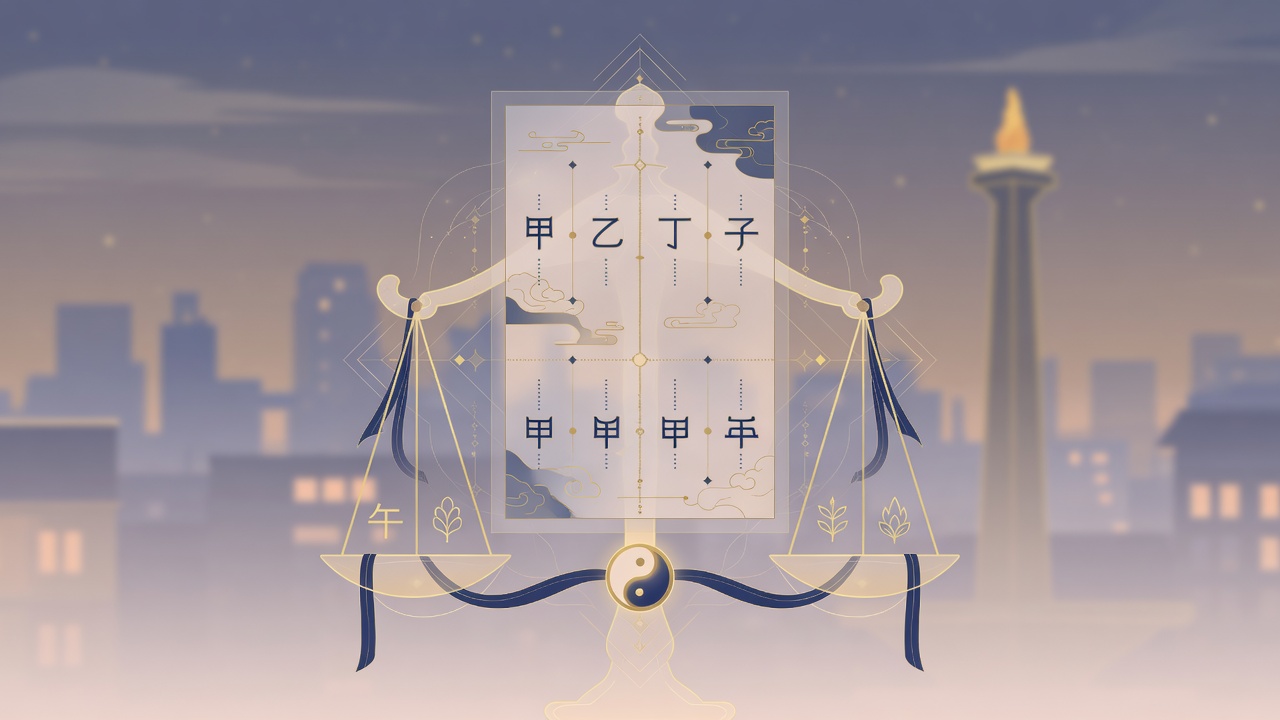
Basic Clarification: Ba Zi is Not a Verdict of Fatalism
Common Misconceptions
Many people misunderstand Ba Zi as an unchangeable fate script, where every detail is predetermined. This completely deviates from the core essence of traditional wisdom.
- Misconception One: Ba Zi determines the entirety of one's destiny. In reality, Ba Zi reveals an individual's innate energy blueprint—their character foundation and potential tendencies—not a precise script for specific events.
- Misconception Two: People with the same Ba Zi chart have identical destinies. The life paths of twins often diverge significantly because variables like postnatal environment, personal choices, and family background are equally crucial.
- Misconception Three: The purpose of Ba Zi consultation is to seek fortune, avoid misfortune, and take shortcuts. Its true value lies in self-awareness, understanding one's strengths and weaknesses, and thereby making more prudent choices aligned with one's nature at life's crossroads.
What It Can Tell Us
Ba Zi is more like a life energy map. It can indicate the hills, rivers, and climate, but it does not specify which exact path you must take.
By analyzing the strength of the Day Master, favorable and unfavorable gods, and the combination of the Ten Gods, we can objectively discuss a person's decision-making style, stress resilience, interpersonal relationship patterns, and the thematic trends of different life stages—for instance, whether a particular Luck Pillar is conducive to pioneering or to consolidation.
Core Insights: The Trio of Character, Choice, and Timing
Character Foundation: The Prime Mover in the Chart
In Ba Zi, the Day Master (the Heavenly Stem of the birth day) represents the individual self and is the symbol of their core character. Understanding the Day Master is the cornerstone of all interpretation.
Different Day Masters carry distinctly different temperaments. For example, a person with a Jia Wood Day Master is often described as upright, growth-oriented, and responsible, like a towering tree, inherently possessing leadership and pioneering potential.
In contrast, a Ding Fire Day Master is more akin to a civilized flame—meticulous, perceptive, and influential. They might lead from the front or strategize behind the scenes, playing a massive role in either capacity.
- Day Master Strength: If born in a commanding month with abundant support, the Day Master is strong, indicating high action-orientation and stress resistance. Conversely, a weak Day Master suggests deeper contemplation, skill in leveraging resources, and high resilience.
- Five Elements Attributes: Wood governs benevolence, Fire governs propriety, Earth governs trustworthiness, Metal governs righteousness, and Water governs wisdom. Different elemental attributes profoundly influence a person's value hierarchy and behavioral style.
- Ten Gods Combination: The other stems and branches surrounding the Day Master are defined as the Ten Gods—Direct Officer, Seven Killings, Direct Resource, Indirect Resource, Eating God, Hurting Officer, Direct Wealth, Indirect Wealth, Friend, and Robber. They reveal a person's typical response patterns when facing power, rules, wealth, and interpersonal relationships.
Power and Rules: When 'Direct Officer' and 'Seven Killings' Enter Life
For individuals holding public office, the Ten Gods 'Direct Officer' and 'Seven Killings' are of the greatest analytical value. Together, they symbolize power, discipline, responsibility, and challenge.
Direct Officer represents legitimate, stable rules and positions. A person with a strong Direct Officer in their chart is typically self-disciplined, reputation-conscious, and methodical—a defender of rules and an excellent executor.
Seven Killings symbolizes unstable pressure, disruptive change, and unconventional methods. It endows a person with boldness, decisiveness, and the ability to control situations in a crisis, but it can also bring tension with the external environment.
- Combination and Balance: Ba Zi emphasizes the restraint and transformation of the Five Elements. Excessive Seven Killings without control may lead to tyranny; if controlled by the Eating God, this pressure can be transformed into superior strategy and problem-solving ability. This is known as 'Eating God Controlling Seven Killings,' a noble formation.
- The Role of the Resource Star: The Direct and Indirect Resource stars represent knowledge, contemplation, and benefactors. A configuration where the Officer and Resource mutually generate suggests an ability to combine power with wisdom, exerting influence in a gentler, more rational manner.
- Cultural Difference Perspective: The Ba Zi analytical framework is universal, but its application must consider different national governance cultures. In an environment emphasizing consultation and cooperation, the power of the Friend and Direct Resource stars may be more critical than the Officer and Killing stars alone.
The Current of Time: The Symphony of Luck Pillars and Annual Cycles
Even if a person possesses certain character traits, without the cooperation of the Luck Pillars (ten-year fortune cycles) and Annual Cycles (yearly fortune), their potential can hardly be ignited. This is the importance of 'timing.'
The Luck Pillar is the phased theme of a life. When a person enters an Officer and Killing Luck Pillar, they are pushed into a decade closely related to power, responsibility, and pressure. During this period, opportunities to handle public affairs and make major decisions will significantly increase.
The Annual Cycle is the trigger point. The lunar calendar year 2026 is a Bing Wu year, with abundant Fire energy. If a person's Ba Zi chart happens to favor Fire, the Bing Wu year will bring immense energy and opportunities, potentially catalyzing a significant career leap.
- The Phenomenon of Fortune Synchronicity: The macro-environment of an era (national fortune) resonates with individual fortunes. A group of people with similar energy requirements may simultaneously encounter career turning points, which, on a macro scale, manifests as concentrated personnel changes.
- Response Timing and Choice: The Annual Cycle provides a possibility, but a person's subjective choice is the decisive link. Facing the same Annual Cycle, one person might seize authority amidst a crisis (the image of Seven Killings), while another chooses to apply for further studies (the image of the Resource Star), ultimately leading to completely different paths.
- Insights from the Bing Wu Year: The keywords for this year are fervor, prominence, and change. It favors pioneering and demonstrative endeavors. However, for professions requiring calmness and introspection, it reminds those involved to pay extra attention to emotional management and interpersonal relationships.
Pitfall Avoidance Guide: A Rational View of Ba Zi and the Public Sphere
Cognitive Reminders
- Do Not Label: Ba Zi analysis aims to understand complexity, not to measure everyone with a single yardstick. Do not use Day Master or Ten God characteristics to slap simple 'good' or 'bad' labels on real-life figures.
- Beware of Hindsight Attribution: After an appointment occurs, deducing from the result that 'his Ba Zi chart destined him for this' is a logical fallacy. Analysis only holds speculative value within a framework of ex-ante hypothesis and ex-post verification.
- Respect Privacy and Boundaries: Never conduct a specific chart reading for a public figure without a publicly verified accurate birth time. All discussions should remain at the level of archetype and categorical analysis.
- Dynamic Observation: Ba Zi is a static model; life is a dynamic practice. The same character foundation may manifest as stability in peacetime but as conservatism in times of change. A dialectical view that incorporates the times is necessary.
- Avoid Fatalistic Implications: It is strictly forbidden to imply in any popular science content that 'someone was destined for this position.' This is neither scientific nor respectful of the person's real-world achievements based on effort.
- Distinguish the Individual from the System: Use Ba Zi to understand personal choices, but do not magnify it to explain the operation of a complex legal system, which is the result of a synthesis of institutions, culture, and history.
Summary and Review
A public appointment can serve as a window to revisit traditional wisdom. What Ba Zi culture offers us is not an answer about who is competent, but a speculative language for understanding the dynamic relationship between character tension, pivotal choices, and the opportunities of the era. Regardless of location or position, the true core lies in this: Recognize the foundation of your self (Day Master), skillfully use your methods for facing challenges (Ten Gods), and soberly make responsible choices within the currents of the time (Luck Pillars and Annual Cycles).