Champions League Draw with Bayern? Understanding Character, Choice, and Timing Through the Lens of BaZi Culture
The 2026 Champions League group stage draw was unveiled, with Manchester United drawn alongside Bayern Munich and Atletico Madrid in the same group, while Manchester City faces Paris Saint-Germain and Barcelona. These heavyweight clashes spark heated
Opening Introduction
The 2026 Champions League group stage draw was unveiled, with Manchester United drawn alongside Bayern Munich and Atletico Madrid in the same group, while Manchester City faces Paris Saint-Germain and Barcelona.
These heavyweight clashes spark heated debate among fans: how do a team's character, choices, and circumstances interact when facing different opponents?
This article does not predict any match outcomes; it merely uses the observational framework of BaZi culture to rationally examine the relationship among these three factors.
BaZi is not a mysterious fate, but rather a traditional wisdom that analyzes tendencies and decision-making styles.
From Day Master to Ten Gods, from Luck Pillars to Annual Cycles, these concepts can help us understand the interaction between a team and its environment.
It is hoped that after reading, viewers will adopt a more calm and rational mindset toward the draw results and subsequent matches.
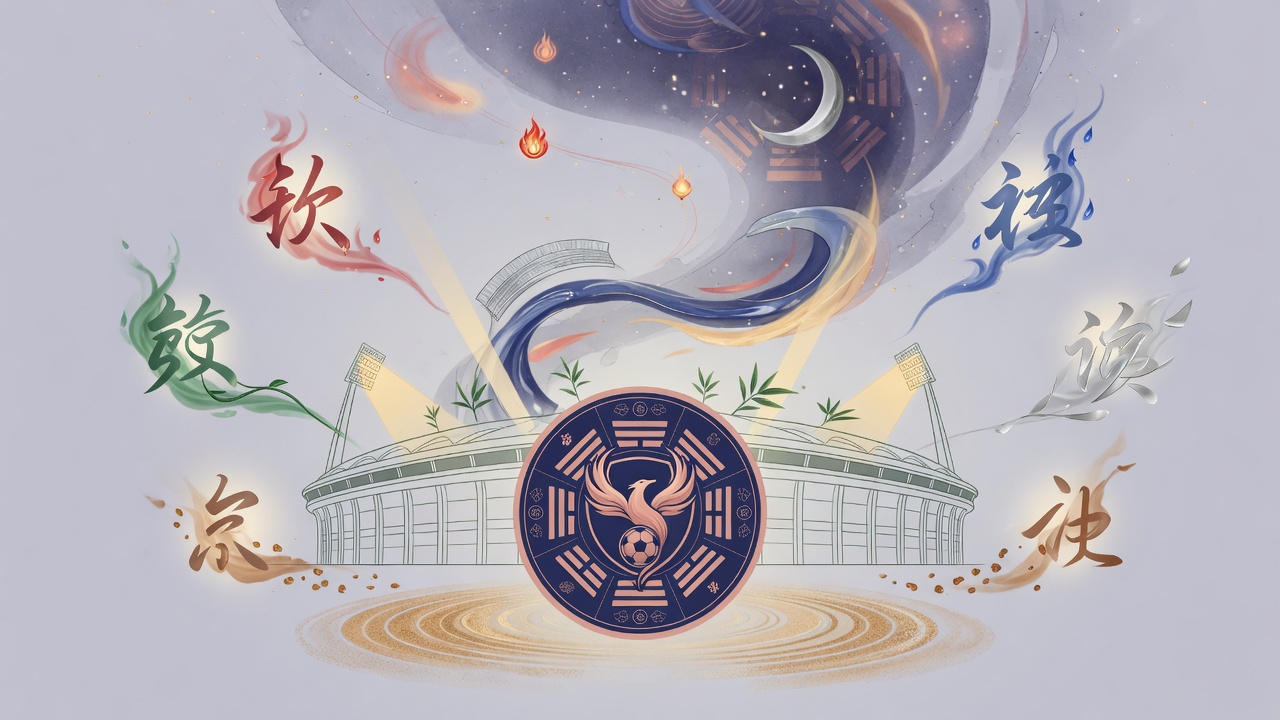
Basic Clarifications
Common Misconceptions
BaZi is not a fatalistic prophecy, nor is it a tool for betting odds.
It focuses on the interplay among character inclinations, decision-making logic, and temporal background.
- Misconception 1: BaZi can predict match outcomes. In reality, BaZi only provides trend assessments, not specific results.
- Misconception 2: Since a team does not have a birth chart, BaZi cannot be applied. Team culture can be analogized to the configuration of Day Master and Ten Gods.
- Misconception 3: The luck of the draw determines destiny. Environment is only an external condition; human action can alter the course.
- Misconception 4: An unfavorable annual cycle means inevitable failure. BaZi emphasizes dynamic balance; adjusting strategies is equally crucial.
- Misconception 5: BaZi can replace professional analysis. It is only an auxiliary perspective and cannot substitute for tactics and data.
- Misconception 6: Treating BaZi as a universal formula. Practical application requires integrating specific context.
- Misconception 7: BaZi is a rigid classification system. In fact, combinations are infinitely varied and require specific analysis.
- Misconception 8: Only Chinese people can use BaZi. As a cultural symbol, its logic of thought has universal inspiration.
Basic Logic of BaZi
BaZi consists of four pillars—Year, Month, Day, Hour—each containing a Heavenly Stem and an Earthly Branch, making eight characters in total.
The Day Master represents oneself; the other seven characters describe the environment and relationships.
The Five Elements' generating and overcoming cycles are the core rules: Metal generates Water, Water generates Wood, Wood generates Fire, Fire generates Earth, Earth generates Metal; Metal overcomes Wood, Wood overcomes Earth, Earth overcomes Water, Water overcomes Fire, Fire overcomes Metal.
The Ten Gods are defined by the generating and overcoming relationships between the Day Master and the other Stems and Branches, such as Direct Officer, Seven Killings, Direct Resource, Indirect Resource, etc.
- Day Master: The core self, determining fundamental attributes.
- Month Branch: The birth month, influencing the vigor or decline of the Five Elements.
- Luck Pillars: Ten-year cycles, reflecting life stages.
- Annual Cycle: Yearly changes, providing external stimuli.
- Heavenly Stems and Earthly Branches: Not just time markers, but also symbols of heaven-earth interaction.
- Generating and Overcoming Relationships: Not simple oppositions, but coexisting restriction and promotion.
Core Insights
The BaZi Character Model: Day Master, Five Elements, and Ten Gods
In BaZi, the Day Master represents the core self, analogous to a team's tactical soul or club DNA.
The Five Elements correspond to different character tendencies: Metal signifies decisiveness, Wood growth, Water fluidity, Fire passion, and Earth stability.
The Ten Gods describe how an individual interacts with the external world, comparable to a coach's management style or a player's on-field role.
For example, the Direct Officer type emphasizes discipline and order, the Seven Killings type dares to take risks and break through, and the Eating God type favors technique and creativity.
Different combinations of the Five Elements form unique temperaments: interplay of Metal and Water might lean toward quick passing, while flourishing Wood and Fire might stress offensive creativity.
A team's historical tradition and youth academy system are also similar to the Resource Stars in BaZi, representing learning and inheritance.
Understanding the character model is not about labeling, but about maximizing strengths and compensating for weaknesses.
- Direct Officer Type: Emphasizes defensive systems and tactical discipline, similar to teams known for stable control.
- Seven Killings Type: Bold and aggressive, favoring high pressing or rapid transitions.
- Eating God Type: High creativity, inclined toward possession-based play and intricate combinations.
- Hurting Officer Type: Unconventional, possibly employing unorthodox tactics or featuring maverick stars.
- Friend Type: Strong team cohesion, but needs to balance internal competition.
- Rob Wealth Type: Strong execution, but attention to resource allocation and collaboration is needed.
- Direct Resource Type: Focuses on learning and tactical inheritance, suitable for long-term building.
- Indirect Resource Type: Unique thinking, may bring surprise tactical variations.
- Direct Wealth Type: Pragmatic and steady, concerned with efficiency and outcomes.
- Indirect Wealth Type: Flexible and adaptable, adept at seizing market opportunities.
- Elemental Imbalance: An over-dominant or excessively weak element suggests possible structural imbalance within the team.
- Day Master Strength: Determines whether the team suits taking the initiative or solid defending and counterattacking.
- Ten Gods Combinations: For instance, Eating God Controlling Seven Killings may mean using technical skill to defuse pressure.
Circumstances and the Luck Pillars & Annual Cycles: Opportunity Windows and a Sense of Periodicity
In BaZi, Luck Pillars change every ten years, while Annual Cycles change yearly, combining to form different spatiotemporal backgrounds.
The Champions League draw result is akin to an Annual Cycle environment: a group of strong opponents or a relatively easier path, but environment does not equal outcome.
Traditional destiny study emphasizes acting according to the trend: advancing proactively during favorable cycles, and defending steadily with adjustments during unfavorable ones.
A team's transfer window, coaching change timing, and match schedule density are all related to a sense of periodicity.
However, BaZi does not provide fixed dates, only hints at trend intervals.
For instance, a year where Hurting Officer clashes with Direct Officer may indicate increased disputes or tactical controversy, requiring enhanced communication.
A year with strong Resource Stars may be suitable for cultivating young players and tactical consolidation.
These correspondences are analogies, not mechanical equivalents.
- Favorable Annual Cycles: Team morale, transfer effectiveness, and tactical integration are more likely to manifest.
- Unfavorable Annual Cycles: Requires reducing internal friction, strengthening defense, and avoiding radical changes.
- Critical Nodes: Such as coaching changes or key player transfers, need to align with the team's current Useful God needs.
- Cyclical Mindset: There is no everlasting trough or peak; dynamic adjustment is the norm.
- Draw Grouping: Can be seen as an external environment, but team style and on-field performance matter equally.
- Fixture Congestion: Similar to Fu Yin and Fan Yin in BaZi, requiring attention to squad rotation and injury management.
- Transfer Market: When the Annual Cycle's Wealth Star is strong, it may be more conducive to investment in signings.
- Youth Academy Output: When the Annual Cycle's Resource Star is favorable, young players are more likely to emerge.
- Annual Cycle Clashes: For example, a Zi-Wu clash may symbolize sudden changes, requiring contingency plans.
- Luck Pillar Transitions: Often accompanied by volatile periods around the shift, suitable for observation and adjustment.
- Three Harmonies and Six Harmonies: Symbolize cooperation and support, possibly corresponding to good team chemistry.
Choices and the Useful God: The Path of Balance
The Useful God in BaZi is the key to regulating the balance of the Five Elements, similar to a team's reinforcement direction in lineup and tactics.
Choices are not about more being better, but about being just right: filling gaps while leveraging strengths.
Fans see showdowns when Bayern meets Manchester United and Atletico, but from a BaZi perspective, the focus is more on style matching and targeted adjustments.
For example, if the team's defense is weak, reinforcement or tactics need to increase stability (Earth element).
If attacking power is strong but rhythm is chaotic, then fluidity (Water element) and organization (Metal element) are needed.
Choosing the Useful God requires holistic judgment, not just focusing on a single position.
In traditional destiny study, the Useful God adjusts with changes in Luck Pillars; a team's tactical focus should likewise adapt to the times.
Over-pursuing perfection may instead disrupt the original balance.
- Filling Gaps: When defense is shaky, increase Earth element elements, such as discipline and positional training.
- Leveraging Strengths: When attack is potent, maintain Water element fluidity and Wood element creativity.
- Avoid Overreaction: Refrain from completely overturning the existing system due to short-term setbacks.
- Dynamic Fine-tuning: Just as the Useful God in BaZi changes with Luck Pillars, tactics must adjust based on opponents and schedule.
- Management Choices: Transfer market decisions are akin to Selecting the Useful God in BaZi—requiring precise judgment.
- Coach's Style: More important than simply pursuing a famous coach is whether it matches the team's current temperament.
- Squad Depth: Similar to Root Qi in BaZi; critical positions need sufficient reserves.
- Injury Management: Similar to avoiding Punishments, Clashes, Harms, and Obstructions; reduce unnecessary wear and tear.
- Annoying God: Over-tendencies to avoid, like excessive aggressiveness potentially leading to a exposed backline.
- Mediating Useful God: When two forces conflict, a harmonizing element is needed, akin to a balancing midfielder in tactics.
Pitfall Avoidance Guide
Important Notes
- Note 1: Do not use BaZi analysis to predict match results; this violates rationality and easily leads to superstition.
- Note 2: Do not fabricate birth charts for clubs or players; team analysis can only use analogy methods and cannot specifically calculate individual destinies.
- Note 3: Avoid over-interpreting the luck of the draw; any outcome requires specific analysis.
- Note 4: BaZi culture is a thinking framework, not a basis for replacing professional sports analysis.
- Note 5: Focus on the match between character and choice, not on uncontrollable circumstances.
- Note 6: Rationally view hot topics, and enjoy the charm and uncertainty of football itself.
- Note 7: Do not use BaZi to label teams; every team is a complex system.
- Note 8: Respect players' privacy and do not publicly discuss any details of personal destiny charts.
- Note 9: Integrate traditional wisdom with modern management, avoiding mysticism interfering with decisions.
- Note 10: Do not use BaZi to explain everything; the football world is full of randomness.
- Note 11: Respect different cultural backgrounds; traditional wisdom should be open and inclusive.
Rational Application
BaZi culture can serve as an observational tool, but critical thinking must be maintained.
For example, using the Five Elements to analogize team styles can help fans understand tactical differences.
But it must never replace statistical data and professional coaching judgments.
- Application 1: Use the Ten Gods to analyze coaching management styles and aid in understanding team atmosphere.
- Application 2: Use the concept of Luck Pillars and Annual Cycles to remind oneself that every team experiences cyclical ups and downs.
- Application 3: Use the Useful God mindset to consider recruitment strategies, but always combine with real-world data.
- Application 4: View victories and defeats through the concept of balance to avoid emotional reactions.
- Application 5: Understand team rebuilding with cyclical thinking to avoid short-termism.
- Application 6: Integrate the balance concept into match-viewing mentality to reduce extreme emotions.
Summary and Review
The Champions League draw generates buzz, but BaZi culture reminds us: character determines tendencies, choices influence pathways, and circumstances provide the backdrop.
There is no absolute good or bad fortune, only dynamic balance and rational adjustment.
The charm of football lies precisely in its uncertainty, and the BaZi perspective is simply one more way to understand it.
Character can be refined, choices can be made, and circumstances can be utilized—this is the rational grounding of BaZi wisdom in football discourse.