ASEAN Cup Singapore vs Thailand: Viewing Team Dynamics and Pressure Mindset Through the BaZi Lens of the Companion Star and Officer Star
Using the ASEAN Football Championship match between Singapore and Thailand as a springboard, this article explores the traditional BaZi concepts of the Companion Star and Officer Star to offer a cultural perspective on teamwork and competitive psycho
Opening Introduction
The ASEAN Football Championship features a spotlight match tonight between Singapore and Thailand.
Beyond the on-field confrontation, the BaZi concepts of the Companion Star and Officer Star offer another lens for observation.
This article is purely a general cultural and sports psychology overview, and does not involve any match result predictions.
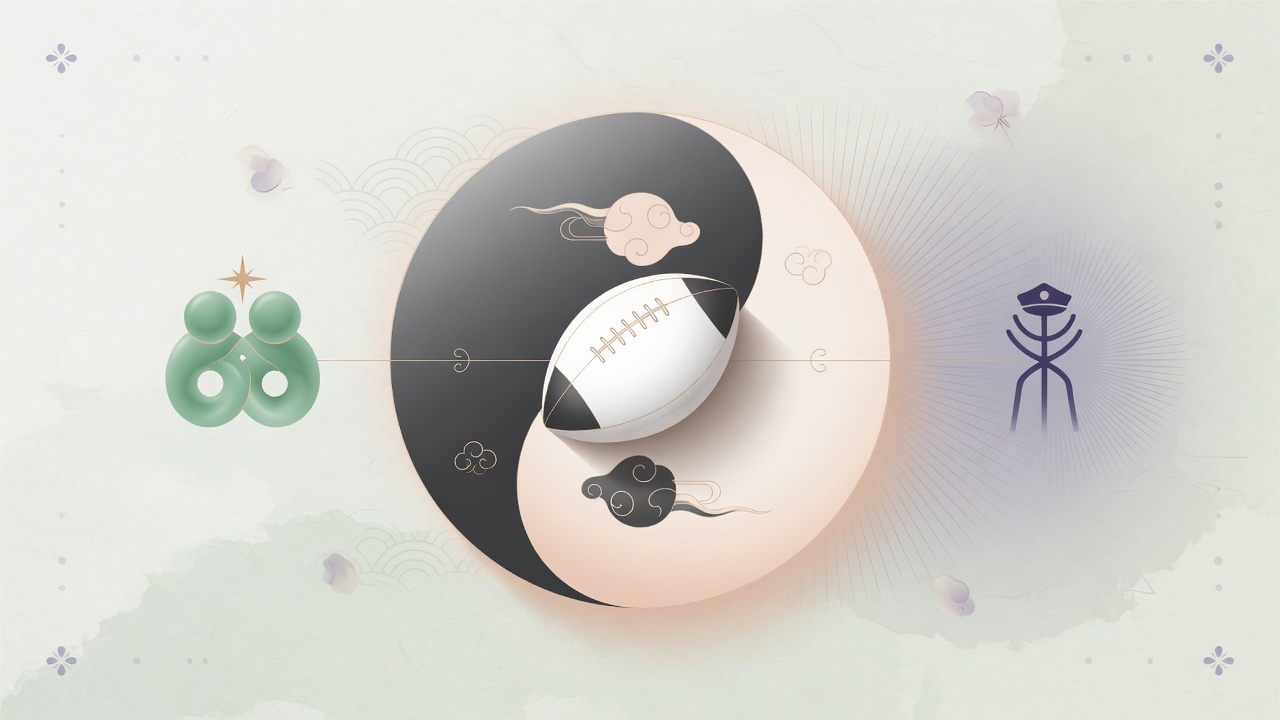
Basic Clarifications
Common Misconceptions
Many people mistakenly believe that BaZi can directly calculate a match's outcome.
In reality, metaphysical analysis focuses more on personality tendencies and coping patterns.
- Misconception 1: Equating the Companion Star with 'guaranteed victory.' It represents peer support, but is not a decisive factor; team results are also influenced by tactics, form, and luck.
- Misconception 2: Viewing the Officer Star as purely negative. It also symbolizes rules, responsibility, and pressure; a moderate amount can unlock potential and enhance discipline.
- Misconception 3: Assuming a single Day Pillar or Ten God determines an athlete's performance. A chart must be viewed holistically, with Luck Pillars and Annual Cycles being equally important.
- Misconception 4: Using BaZi to interpret a match is an overextension of the practice; it can only serve as cultural talking point, not a substitute for professional sports analysis.
- Misconception 5: Ignoring modern football's scientific training systems and attributing everything to metaphysical mystery is irrational.
Boundaries of the Metaphysical Perspective
BaZi analysis focuses on the person, not specific events.
In a sports context, it is better suited for understanding team atmosphere and individual stress response tendencies.
- Boundary 1: Do not predict scores or determine winners and losers; BaZi does not possess this precise function.
- Boundary 2: Do not calculate charts for specific players or coaches, to avoid privacy violations and fabricating information.
- Boundary 3: Treat the Companion Star and Officer Star as personality symbols, not mystical forces; they are relational models within traditional culture.
- Boundary 4: Modern sports are multi-factorial systems; BaZi offers only a cultural perspective and cannot replace data analysis or tactical research.
- Boundary 5: Discussing BaZi and football is suitable as a casual, fun topic, but should not be taken overly seriously or superstitiously.
Core Concepts
The Companion Star: Teamwork and Peer Support
The Companion Star in BaZi represents peers, partners, and competitors, sharing the same element and yin-yang polarity as the Day Master.
Football is a quintessential team sport; individuals with strong Companion Star energy naturally value coordination and shared endeavor.
- Companion Star Traits: Emphasizes equal collaboration and dislikes solo efforts; in a team, those with a strong Companion Star are often more willing to share possession and actively provide support, leading to fluid passing combinations.
- On-Field Mapping: Passing interplays, mutual covering, and collective defending among players embody the Companion Star spirit; without such trust, tactical board plans are just empty theory.
- Balanced Companion Star: Enhances team cohesion, giving individuals a sense of security and belonging within the group, an effect especially pronounced when facing pressure during away games.
- Excessive Companion Star: May cause unclear responsibilities and dependency, ultimately reducing team efficiency; if everyone wants to be the playmaker, no one executes the final strike.
- Real-World Parallel: When every player on a team is willing to run an extra step or shout a warning for a teammate, it creates an energy field of Companion Star support, often more valuable than individual skill.
- Companion Star and Competition: It also represents competitors; teammates are peers, but opponents are also Companion Stars. The key to team management is transforming this competitive aspect into on-field effort rather than internal friction.
The Officer Star: Pressure, Rules, and Opponents
The Officer Star represents pressure, constraints, and challenges, also symbolizing opponents, referees, and external expectations.
The intensity of physical duels, tactical discipline, and the pressure to win or lose in a match can all be seen as manifestations of Officer Star energy.
- Direct Officer Traits: Orderly pressure, such as tactical discipline, rule adherence, and coach's arrangements; players with a strong Direct Officer often exhibit high execution ability, suited for systematic football.
- Seven Killings Traits: Sudden, intense challenges, like an opponent's fierce attack, an unexpected error, or a red card decision; those with a strong Seven Killings may have explosive power but can be emotionally volatile.
- Excessive Officer Star: Easily leads to nervousness, impatience, and technical breakdowns, affecting on-field performance; akin to making repeated passing errors from the back under a high press.
- Officer Star as a Resource: Can transform pressure into focus, enabling greater calmness and decisiveness at critical moments; many big-match players are adept at harnessing Officer Star energy.
- Chart Coordination: If the Officer Star is controlled or transformed, pressure becomes motivation; without such control, one is easily crushed by it. 'Control' can be understood as having channels to relieve pressure, like team support or personal regulation.
- Officer Star and Opponents: The strength of the opponent and the referee's strictness are external manifestations of the Officer Star; how one faces a strong rival is fundamentally a question of one's attitude toward the Officer Star.
Companion Star Reinforcing the Self: The Traditional Logic of Enhancing Stress Resistance
In BaZi, when the Day Master is relatively weak and the Officer Star is strong, the Companion Star is needed to reinforce the self, sharing the pressure and strengthening one's own power.
This is similar to how, when a team is trailing, encouragement and support among teammates can steady the ship and prevent a collapse.
- Weak Day Master: Has limited endurance and is prone to panic when facing strong opponents or high-pressure environments; at such times, individual willpower alone is hard to sustain for the full match.
- Companion Star Reinforcing the Self: Increases personal strength, giving the individual more confidence to cope with the Officer Star's restraint; in football, a teammate's movement to offer a passing option is the most direct form of this support.
- The Team's Role: Teammates are the real-world Companion Stars; mutual support raises the overall stress threshold. No one is an island, and pressure can be shared.
- The Principle of Balance: More Companion Stars are not always better; an excess can lead to mutual dependency and a lack of a clear focal point in attack. A team needs organizers and finishers, not just workhorses.
- Chart Scenario Example: A player with a weak Day Master and strong Officer Star needs more team support; a player with a strong Day Master and abundant Companion Star must avoid individualism, or risk disconnecting from the team.
- Cultural Wisdom: Traditional BaZi emphasizes the Golden Mean; any Ten God in excess or deficiency will affect performance. The ideal state for the Companion and Officer Stars is mutual checks and balances, each finding its proper place.
- Modern Application: Players can artificially enhance the 'Companion Star reinforcing the self' effect through deliberate mental resilience training and building locker-room trust, a more pragmatic approach than simply looking at a BaZi chart.
Practical Guidance and Pitfalls
Mindset for Watching the Game
- Reminder 1: Do not use BaZi to predict specific scores or outcomes; it only provides a reference for personality tendencies. Match results are determined by countless live variables.
- Reminder 2: A strong Companion Star does not guarantee a team victory; the control and coordination of the Officer Star and overall teamwork must also be considered. Underdog wins often stem from more efficient collaboration.
- Reminder 3: As a spectator, avoid over-applying Ten God analysis while watching; enjoying the game itself is more important. If your mind is full of Companion and Officer Stars, you might miss the brilliant moments.
- Reminder 4: Focus on teamwork and sportsmanship, rather than mystifying the match result. Football's charm lies in its unpredictability, which is, in itself, another manifestation of the Officer Star.
- Reminder 5: When discussing players' charts, do not casually disclose others' private information, and never fabricate birth times for sensationalism; this is a matter of basic respect.
Personal Application
- Reminder 6: If you are under significant pressure yourself, borrow the 'Companion Star reinforcing the self' mindset and proactively seek peer support. When the load is too heavy to bear alone, talk to a trusted friend.
- Reminder 7: When facing competition, distinguish between positive pressure (Direct Officer) and malignant drain (uncontrolled Seven Killings). The former should be accepted, the latter transformed and resolved.
- Reminder 8: BaZi is a cultural tradition, not a scientific tool. View it rationally and avoid superstition. Invest your energy in controllable actions, not in waiting for fate to arrange things.
- Reminder 9: Cultivate your own Companion Star network—reliable teammates, colleagues, and friends—to effectively enhance your stress resistance. Good interpersonal support is real-world 'self-reinforcement.'
- Reminder 10: When the Officer Star is strong, learn to set rules and boundaries, transforming pressure into disciplined execution; just as a team uses tactical discipline to neutralize an opponent's press.
- Reminder 11: In a team, both exert the collaborative spirit of the Companion Star and avoid over-dependence. Everyone must shoulder their own role to form a synergistic force.
- Reminder 12: Do not label yourself or others based on the abundance or scarcity of a particular Ten God in a chart. A chart requires holistic judgment, and humans possess subjective initiative.
Summary and Reflection
The Companion Star represents team support, while the Officer Star symbolizes pressure and challenge.
Athletic victory and defeat are influenced by multiple factors, but maintaining a balanced mindset can draw inspiration from traditional wisdom.
Beyond just watching the match, consider bringing the collaborative spirit of the Companion Star into your life and transforming the constraints of the Officer Star into fuel for growth.