Bazi on Life: Character, Choice, and Timing Through the Lens of the Argentina vs. Burkina Faso Friendly Match Uncertainty
A scheduled Argentina vs. Burkina Faso friendly match remains uncertain even after the visiting team took a late-night private flight, becoming a hot topic online in Japan. The variables on the pitch mirror the ups and downs of a **Day Master
Opening Introduction
Recently, the Burkina Faso national team hurriedly boarded a private plane late Friday night to travel to the match, yet the friendly against originally scheduled opponent Argentina remains full of uncertainty. This sudden situation reminded Japanese netizens of life’s twists that seem accidental but often follow hidden patterns.
In Bazi culture, we similarly face the interaction between the Natal Chart (innate endowment) and the Annual Luck Cycle (acquired circumstances). Using this trending event, this article unfolds a rational exploration of the relationship between character, choice, and timing, without making any real-world assertions of fortune or misfortune.
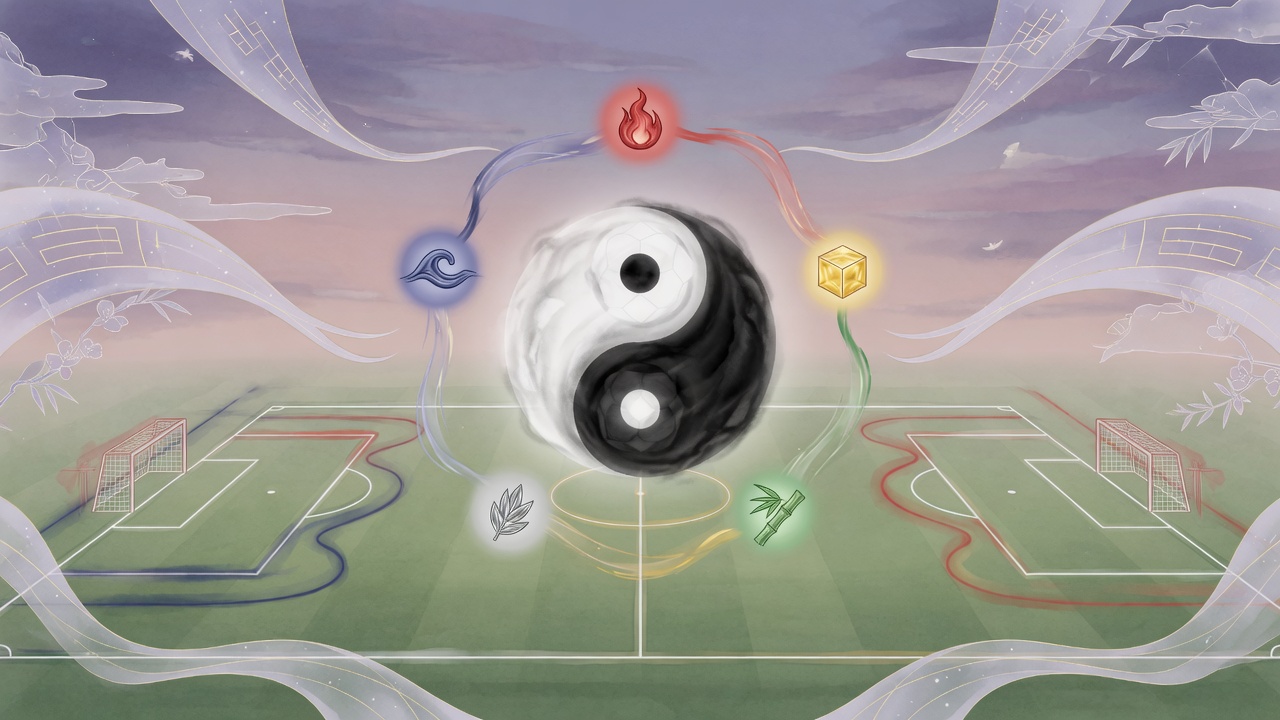
Basic Clarification: Bazi Is Not Fatalism
Common Misconceptions
Many people mistakenly think Bazi can precisely predict the outcome of a match or determine a player’s career. This completely deviates from the original meaning of traditional destiny analysis.
- Misconception 1: Bazi equals prophecy. In reality, Bazi reveals innate energy tendencies and cyclical patterns, much like a weather forecast provides probabilities rather than absolute conclusions.
- Misconception 2: Same Bazi means same fate. Even if two teams were founded at the same time, their Luck Pillars direction, environmental Feng Shui, and human effort differ enormously, leading to inevitably different outcomes.
- Misconception 3: Only judge fortune by the Day Master’s strength. True analysis requires integrating multiple dimensions such as Five Element interactions, Ten Gods combinations, and Seasonal Adjustment Useful God—a complex systemic deduction.
Core Points: Character, Choice, and Timing in Bazi
1. Innate Character: How the Day Master and Ten Gods Shape Action Styles
The Day Master in a Bazi chart represents a person’s core temperament. If we analogize to teams, a Jia Wood Day Master is like a team that advocates offense and rapid advancement—full of vitality but prone to impatience.
A Geng Metal Day Master resembles a disciplined, defensively solid team: decisive and resolute, but sometimes a bit stubborn. The Ten Gods further refine character: those with strong Direct Officer value rules and tactical discipline, while those with strong Hurting Officer are highly creative and play with flexibility.
- Day Master Five Elements: Wood governs benevolence and progress, Fire governs passion and outburst, Earth governs stability and tolerance, Metal governs righteousness and decisiveness, Water governs wisdom and adaptability. Different styles of teams are just like the manifestations of different Day Masters.
- Ten Gods Temperament: Direct Resource represents learning and experience, corresponding to a coach adept at summarizing tactics; Eating God represents talent and enjoyment, corresponding to an entertaining technical style of play; Seven Killings represents boldness and pressure, often bursting with astonishing energy in crucial matches.
- Chart Structure Quality: It’s not that a certain character is absolutely dominant, but whether a smooth and harmonious flow pattern can be formed. For example, a team with balanced offense and defense and seamless coordination embodies the harmony of Five Element interactions.
2. Critical Choices: How the Useful God and Seasonal Adjustment Guide Tactical Decisions
The Useful God in Bazi is the key force that balances the entire chart. Just like in a match, when the opponent attacks fiercely (excessive Officer and Killing), you need the Resource star (defensive organization) to dissolve it, or the Eating and Hurting stars (flexible counterattacks) to restrain it.
Seasonal Adjustment concerns environmental adaptability. Hot weather (excessive Fire) requires Water to regulate, just as playing in high temperatures requires proper hydration and rhythm control; cold seasons (excessive Metal and Water) need Fire to warm the chart, corresponding to active running and passionate fighting spirit.
- Selecting the Useful God: When the Bazi is weak and Seven Killings attack the body, it’s like a team’s core being tightly marked; at this time the Resource star (team support) and Companion star (teammate support) are the best Useful Gods.
- Seasonal Adjustment Priority: When environmental factors become the main contradiction, the Seasonal Adjustment Useful God takes priority. For example, in a high-altitude away game (dry Earth environment), Water-type players with strong adaptability often perform better.
- Luck Cycle Trigger: Good choices need timing. When the Luck Pillar meets the Useful God, tactical adjustments yield twice the result; when the Annual Luck meets the Annoying God, conservative responses are needed to avoid aggressive substitutions. Burkina Faso’s sudden itinerary change is like an unexpected Monthly Luck impact, testing the team’s adaptive wisdom.
3. The Flow of Circumstances: How Luck Pillars and Annual Luck Influence Form Fluctuations
Any team has form cycles, which highly resemble the Luck Pillars (ten-year shifts) and Annual Luck (yearly influence) in Bazi. Luck Pillars determine long-term trends, while Annual Luck triggers short-term fluctuations.
When the Luck Pillar harmonizes with the Natal Chart, team building proceeds smoothly and results steadily rise; if the Luck Pillar clashes with the Natal Chart, the team may face rebuilding pains. The arrival of Annual Luck is like the immediate factors of a single match—injuries, red cards, weather—that can instantly change the situation.
- Luck Pillars Emphasize Earthly Branches: Each ten-year Luck Pillar sets the tone. A young team (strong Wood) entering a Fire Luck Pillar (Wood generates Fire) often ushers in a golden generation; entering a Metal Luck Pillar (Metal overcomes Wood) may encounter bottlenecks.
- Annual Luck Focuses on Heavenly Stems: Yearly triggers are relatively superficial. For example, when the Annual Wealth Star emerges, it corresponds to increased commercial value, but if the Natal Chart cannot sustain wealth, it may also cause distraction from external affairs and affect on-field focus.
- Simultaneous Luck Pillar and Annual Luck: When the Luck Pillar and Annual Luck are the same, their forces superimpose, doubling fortune or misfortune. For a team, this could be a historic season of achievement or a crisis moment of erupting conflicts.
- Circumstances Cannot Be Reversed: Bazi emphasizes going with the flow. When a strong team falls into a low Luck Pillar, it’s better to bide time than fight stubbornly; when a weak team encounters good luck, it must dare to seize opportunities. The suspense around the Argentina vs. Burkina Faso friendly is a vivid portrayal of the uncertainty of circumstances.
Avoidance Guide: Rationally Viewing the Mapping Between Bazi and Reality
Points to Note
- Never use Bazi to predict match results. Destiny analysis examines trends and character, not the outcome of a single event. Any claim of being able to calculate the score deviates from the original meaning of traditional culture.
- Avoid drawing direct parallels. Do not publicly deduce charts based on a player’s birth date. This not only involves privacy but easily falls into the determinism trap. Bazi is a tool for self-understanding, not a label.
- Value human effort. The Useful God in Bazi can be understood as the correct strategy, but strategy requires execution. Even the best Annual Luck cannot realize potential without hard training and team collaboration.
- View chart structure dynamically. A poor Natal Chart does not mean lifelong failure; Luck Pillar transitions can bring turning points. Similarly, a team’s temporary struggles may be the build-up before the next peak.
- Respect cultural differences. Bazi is rooted in Eastern philosophy and does not contradict Western data analysis. It can be seen as a thinking model to help understand dynamic balance in complex systems.
Summary and Recap
From the variables in the Argentina vs. Burkina Faso friendly match, we see the uncontrollability of circumstances; and Bazi destiny analysis provides a wisdom framework for analyzing character and choice.
The key lies in: recognizing the Day Master’s innate nature, making the right choices at the right time, while accepting the fluctuations of Luck Pillars and Annual Luck. Not superstitiously predicting, but wisely using patterns—this is the inspiration Bazi culture offers for modern life.